
Guide to Where English Speakers Live in Israel
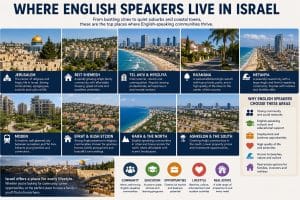 Israel has become one of the main destinations for English-speaking immigrants, investors, retirees, students, and religious communities from countries such as the United States, the United Kingdom, Canada, South Africa, and Australia. Over the past several decades, large English-speaking populations have developed across different parts of the country. Understanding Where English Speakers Live in Israel is important not only for people planning aliyah, but also for investors, employers, educators, and anyone considering relocation.
The question of Where English Speakers Live in Israel does not have one simple answer. English-speaking communities are spread throughout the country, but they tend to cluster in areas offering strong employment opportunities, religious infrastructure, international communities, educational options, and housing suited to foreign buyers. Some areas attract wealthy overseas investors, while others attract young families looking for affordability and community life.
This guide examines the major cities and neighbourhoods where English speakers live in Israel, the reasons behind these settlement patterns, housing trends, costs, advantages, disadvantages, and the long-term implications for the Israeli real estate market.
Why English Speakers Choose Israel
Before analysing Where English Speakers Live in Israel, it is necessary to understand why English-speaking immigrants move to Israel in the first place.
For many Jewish immigrants, aliyah is motivated by religious identity, Zionism, security concerns abroad, or a desire to raise children in a Jewish environment. Others move for lifestyle reasons, climate, educational opportunities, or retirement. Some relocate temporarily for yeshiva studies, gap years, or remote work opportunities.
English speakers often seek several specific conditions:
- Existing Anglo communities
- English-speaking schools or support systems
- Synagogues with English-speaking rabbis
- Employment opportunities
- International-friendly bureaucracy
- Access to healthcare
- Familiar cultural environments
- Real estate markets understandable to foreign buyers
As a result, English-speaking populations in Israel tend to cluster geographically rather than distribute evenly across the country.
Jerusalem: The Largest English-Speaking Hub
When discussing Where English Speakers Live in Israel, Jerusalem remains the dominant centre.
Jerusalem has attracted English-speaking Jews for generations. The city combines religious significance, strong community infrastructure, international culture, and educational institutions that appeal to immigrants from English-speaking countries.
Neighbourhoods with large Anglo populations include:
- Baka
- German Colony
- Arnona
- Rehavia
- Katamon
- Talpiot
- Ramat Beit Hakerem
- Har Nof
- Old Katamon
Many of these neighbourhoods have synagogues offering English-language lectures, English-speaking doctors and lawyers, and businesses accustomed to overseas clients.
Why English Speakers Prefer Jerusalem
Jerusalem appeals strongly to:
- Religious Zionists
- Orthodox Jews
- Retirees
- Seminary and yeshiva families
- Investors purchasing second homes
- Wealthy foreign buyers
English-speaking immigrants often feel less culturally isolated in Jerusalem because Anglo infrastructure already exists.
The city also contains numerous educational institutions serving English-speaking populations, including:
- International schools
- Seminaries
- Yeshivot
- Colleges with English programmes
Real Estate in Jerusalem
The housing market in Jerusalem is expensive by Israeli standards. Demand from foreign buyers has significantly influenced pricing in certain areas.
In neighbourhoods popular with Anglos:
- Small apartments can exceed ₪3 million
- Larger family apartments may reach ₪6–12 million
- Luxury properties often sell for substantially more
This creates a structural challenge. Jerusalem attracts English speakers culturally and religiously, but affordability increasingly pushes younger families elsewhere.
Beit Shemesh: The Anglo Family Expansion City
Over the past twenty years, Beit Shemesh has become one of the most important answers to the question of Where English Speakers Live in Israel.
The city grew rapidly due to:
- Lower housing prices than Jerusalem
- Large new construction projects
- Strong religious communities
- Growing English-speaking infrastructure
- Train access to Jerusalem and Tel Aviv
Areas such as:
- Ramat Beit Shemesh Aleph
- Ramat Beit Shemesh Gimmel
- Ramat Shilo
- Sheinfeld
contain major Anglo populations.
Why Anglos Moved to Beit Shemesh
The primary driver was affordability relative to Jerusalem.
Young families priced out of Jerusalem could purchase:
- Larger apartments
- Duplexes
- Garden apartments
- Townhouses
while still maintaining access to religious and educational institutions aligned with Anglo lifestyles.
Challenges in Beit Shemesh
Despite rapid growth, there are real structural issues:
- Traffic congestion
- Infrastructure strain
- School shortages
- Political tensions between different religious groups
- Rising housing costs
Housing prices increased dramatically over the last decade. Areas once considered affordable are now expensive relative to average Israeli salaries.
Still, Beit Shemesh remains one of the strongest concentrations of English-speaking families in the country.
Tel Aviv and Herzliya: The International Professional Centres
For secular or career-focused immigrants, Tel Aviv and Herzliya are major centres for English-speaking residents.
Unlike Jerusalem or Beit Shemesh, the attraction here is not primarily religious. Instead, these areas attract:
- High-tech professionals
- Entrepreneurs
- Remote workers
- Diplomats
- International company employees
- Investors
Why English Speakers Choose Tel Aviv
Tel Aviv offers:
- International atmosphere
- Strong employment market
- Nightlife and entertainment
- Beach lifestyle
- Extensive English usage
- Startup ecosystem
English is commonly spoken in many workplaces, restaurants, and social circles.
Neighbourhoods with significant international populations include:
- Old North
- Neve Tzedek
- Florentin
- Ramat Aviv
- Lev Tel Aviv
Herzliya and Herzliya Pituach
Herzliya attracts wealthy English speakers due to:
- Luxury housing
- International schools
- High-tech industry proximity
- Coastal lifestyle
Herzliya Pituach in particular contains many foreign-owned homes.
The Main Limitation: Cost
Tel Aviv is one of the most expensive cities in the Middle East.
Rental costs can exceed:
- ₪8,000–₪15,000 monthly for family apartments
Purchase prices often exceed:
- ₪70,000–₪100,000 per square metre in prime areas
This limits long-term accessibility for middle-class immigrants.
Ra’anana: The Classic Anglo Suburb
Ra’anana is often considered one of the most traditionally Anglo-friendly cities in Israel.
4
When analysing Where English Speakers Live in Israel, Ra’anana consistently appears near the top.
Why Ra’anana Attracts English Speakers
The city offers:
- Strong educational system
- Quiet suburban environment
- Large English-speaking population
- Proximity to Tel Aviv
- Strong municipal services
- High quality of life
Many immigrants from:
- South Africa
- United Kingdom
- United States
- Australia
settled there over decades.
Community Structure
Ra’anana developed extensive Anglo infrastructure:
- English-speaking synagogues
- Community centres
- Schools
- Social organisations
- Medical professionals
- Real estate agencies specialising in overseas buyers
For new immigrants, this reduces integration friction significantly.
Housing Market
Ra’anana is expensive but generally less costly than central Tel Aviv.
Housing options include:
- Apartments
- Cottage homes
- Luxury penthouses
- Family neighbourhoods
Demand from English-speaking buyers continues supporting prices.
Netanya: Coastal Living for Anglos and French Immigrants
Netanya has become a major destination for English speakers and French-speaking immigrants alike.
7
Why English Speakers Choose Netanya
Key attractions include:
- Coastal location
- Relatively lower prices compared to Tel Aviv
- Strong immigrant infrastructure
- Retirement-friendly atmosphere
- Large synagogue network
- Elevator buildings suited to older residents
Many retirees choose Netanya because it combines:
- Mediterranean lifestyle
- Urban convenience
- Strong English-speaking communities
Different Areas Within Netanya
Popular areas include:
- Ir Yamim
- Poleg
- South Netanya
- City Centre
- Ramat Poleg
Luxury towers near the beach are especially popular with overseas buyers.
Risks and Limitations
Netanya’s market depends heavily on foreign demand in some sectors. This can create:
- Volatility
- Seasonal vacancy issues
- High luxury pricing disconnected from local salaries
Nevertheless, Netanya remains one of the strongest answers to Where English Speakers Live in Israel.
Modiin: Modern Planning and Young Families
Modiin attracts many English-speaking young families seeking modern urban planning and central location.
Why Anglos Choose Modiin
Advantages include:
- Between Jerusalem and Tel Aviv
- Modern infrastructure
- Family-oriented environment
- Parks and schools
- Train connections
- Secular and religious communities
Modiin appeals particularly to:
- Educated professionals
- Commuters
- Families wanting newer housing stock
Anglo Presence
While less heavily Anglo than Jerusalem or Ra’anana, the English-speaking population is still substantial and growing.
Community infrastructure includes:
- English-speaking synagogues
- Youth movements
- Schools with immigrant support
- Anglo social networks
Real Estate Trends
Housing in Modiin is expensive but still somewhat below Jerusalem and Tel Aviv prime markets.
Demand remains high due to:
- Geographic location
- Quality of life
- Limited housing supply
Efrat and Gush Etzion
Many English speakers live in communities beyond the Green Line, particularly in Gush Etzion.
Why English Speakers Move There
Motivations include:
- Religious ideology
- Community atmosphere
- Larger homes
- Lower costs relative to Jerusalem
- Strong educational systems
Efrat in particular has a substantial Anglo population.
Housing Characteristics
Compared with Jerusalem:
- Homes are often larger
- Detached housing is more common
- Family-oriented planning is stronger
Political and Security Considerations
Living in these areas carries:
- Political complexity
- International legal controversy
- Security considerations
- Financing complications with some foreign institutions
These realities must be evaluated carefully rather than ignored.
Smaller Anglo Communities Across Israel
The discussion of Where English Speakers Live in Israel extends beyond major cities.
English-speaking communities also exist in:
- Ashkelon
- Ashdod
- Haifa
- Pardes Hanna
- Zichron Yaakov
- Caesarea
- Tiberias
- Kiryat Gat
- Negev communities
- Northern development towns
Some communities attract:
- Budget-conscious immigrants
- Religious pioneers
- Retirees
- Remote workers
Others attract people specifically seeking quieter lifestyles outside dense urban centres.
Anglo Communities in the North
Northern Israel contains smaller but growing English-speaking populations.
Popular Northern Areas
These include:
- Zichron Yaakov
- Pardes Hanna
- Haifa
- Tzfat
- Tiberias
Reasons for moving north include:
- Lower housing costs
- Green environments
- Slower lifestyle
- Remote work flexibility
Structural Weaknesses
However, the north also faces:
- Fewer high-paying jobs
- Weaker infrastructure
- Lower liquidity in real estate
- Distance from major economic centres
For some families these limitations outweigh affordability advantages.
Anglo Communities in Southern Israel
Southern Israel has smaller Anglo populations but some growing communities.
Cities include:
- Ashkelon
- Netivot
- Be’er Sheva
- Ofakim
Why Some English Speakers Move South
Main reasons include:
- Lower property prices
- Investment potential
- Government incentives
- Larger housing options
The Major Risk Factor
Security remains a major consideration in southern communities near Gaza.
This affects:
- Property values
- Insurance
- Demand
- Long-term planning
Ignoring this variable would produce an unrealistic analysis.
Housing Patterns Among English Speakers
Understanding Where English Speakers Live in Israel also requires examining housing preferences.
English-speaking immigrants often prioritise:
- Larger kitchens
- Balconies
- Storage
- Air conditioning
- Elevator access
- Parking
- Anglo-style community infrastructure
Demand from foreign buyers sometimes influences:
- Luxury tower development
- Holiday apartment markets
- Renovation trends
- Short-term rental sectors
The Economic Impact of English Speakers on Israeli Real Estate
English-speaking immigrants influence several parts of the housing market.
Positive Effects
They contribute:
- Foreign capital
- Property tax revenue
- Urban renewal demand
- Local spending
- Entrepreneurship
In some areas, foreign demand helped finance major construction projects.
Negative Effects
There are also criticisms:
- Rising prices
- Reduced affordability for locals
- Empty holiday apartments
- Market distortion in luxury sectors
Jerusalem is one example where foreign purchasing significantly affected pricing in specific neighbourhoods.
Challenges English Speakers Face in Israel
Even in areas with large Anglo populations, integration challenges remain.
Language
Many immigrants underestimate how important Hebrew remains in:
- Bureaucracy
- Healthcare
- Employment
- Education
- Legal systems
Employment
Professional licensing can be difficult for:
- Lawyers
- Therapists
- Teachers
- Medical professionals
Salary expectations often differ dramatically from North American or British markets.
Cost of Living
Israel’s housing costs remain extremely high relative to local wages.
Many immigrants underestimate:
- Mortgage costs
- Arnona
- Renovation expenses
- School costs
- Transportation expenses
Future Trends: Where English Speakers Live in Israel
The geography of English-speaking communities is still evolving.
Several trends are visible:
Continued Movement to Peripheral Areas
As Jerusalem and Tel Aviv become increasingly unaffordable, more immigrants may move toward:
- Northern communities
- Southern cities
- Secondary suburban markets
Remote Work Expansion
Remote employment allows some English speakers to live farther from economic centres.
This may strengthen:
- Northern towns
- Coastal secondary cities
- Rural communities
Rising Demand From Overseas Buyers
Political instability abroad and rising antisemitism continue encouraging aliyah and second-home purchases.
This supports ongoing foreign demand in certain Israeli markets.
Infrastructure Pressures
Rapid population growth creates:
- Traffic congestion
- School shortages
- Healthcare strain
- Transportation problems
Communities unable to expand infrastructure may face declining quality of life despite growing popularity.
Conclusion: Where English Speakers Live in Israel
The question of Where English Speakers Live in Israel reflects far more than geography. It reflects economics, religion, immigration patterns, employment realities, and housing affordability.
Jerusalem remains the symbolic and cultural centre of English-speaking Israel, especially for religious communities. Beit Shemesh has become the major expansion city for Anglo families seeking affordability and community. Ra’anana remains a strong suburban option with established infrastructure. Tel Aviv and Herzliya dominate among international professionals and high-income immigrants. Netanya continues attracting retirees and coastal buyers. Modiin appeals to young families wanting modern planning and central access.
At the same time, newer patterns are emerging in northern and southern Israel as affordability pressures intensify.
No single city is universally ideal. Each location involves trade-offs involving:
- Housing cost
- Employment
- Community
- Security
- Lifestyle
- Education
- Transportation
Anyone evaluating Where English Speakers Live in Israel should therefore analyse both emotional and financial realities carefully rather than relying on idealised assumptions. The Israeli housing market is highly regional, politically sensitive, and structurally expensive. Communities that appear attractive culturally may carry major financial burdens, while more affordable locations may involve weaker employment or infrastructure.
The most successful relocation decisions usually occur when immigrants realistically assess:
- Budget
- Career prospects
- Family needs
- Religious lifestyle
- Long-term housing sustainability
rather than simply following existing Anglo migration patterns.