
Investment Index Israel: The Complete Guide for Property Buyers and Investors
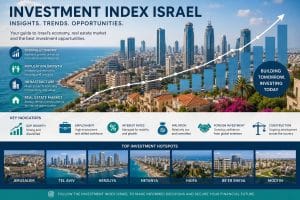 The Investment Index Israel is one of the most valuable tools for understanding the country’s economic health and identifying investment opportunities. Whether you are a first-time overseas buyer, an experienced property investor, or someone planning Aliyah, following the Investment Index Israel can help you make informed financial decisions.
Israel has earned a reputation as one of the world’s most resilient economies. Despite regional challenges, the country continues to attract billions of shekels in local and foreign investment every year. Strong technology industries, expanding infrastructure, a stable banking system, and limited land supply all contribute to Israel’s appeal.
However, not every city, region, or property performs equally. Investors who understand the Investment Index Israel gain a clearer picture of where capital is flowing, which areas are growing, and what economic trends may influence future returns.
This guide explains how the Investment Index Israel works, what affects it, and why it matters when investing in Israeli real estate.
What Is the Investment Index Israel?
The Investment Index Israel is not one official government index. Instead, it describes a combination of economic, financial, and property indicators that investors use to evaluate investment conditions throughout Israel.
These indicators include:
- GDP growth
- Inflation
- Interest rates
- Employment
- Construction activity
- Property prices
- Rental demand
- Population growth
- Foreign investment
- Infrastructure development
- Business confidence
When viewed together, these measurements create an overall picture of investment attractiveness.
For property buyers, the Investment Index Israel helps answer important questions:
- Is now a good time to buy?
- Which regions are growing fastest?
- Are prices likely to increase?
- Is rental demand strengthening?
- How affordable are mortgages?
- Are foreign investors returning to the market?
Instead of relying solely on headlines or market rumours, investors use these measurable indicators to make better decisions.
Why the Investment Index Israel Matters
Every investment carries risk.
The purpose of the Investment Index Israel is to reduce uncertainty by identifying measurable trends before making major financial commitments.
Consider two investors purchasing identical homes.
One buys simply because prices have been rising.
The second studies:
- employment growth
- infrastructure spending
- migration trends
- mortgage costs
- housing supply
The second investor is more likely to choose an area with stronger long-term fundamentals.
That is why institutional investors, pension funds, banks, developers, and experienced private investors all monitor indicators included within the Investment Index Israel.
The index provides insight into long-term value rather than short-term market sentiment.
Israel’s Strong Economic Foundation
One reason the Investment Index Israel consistently attracts attention is Israel’s highly diversified economy.
Unlike countries that depend heavily on a single industry, Israel benefits from several major economic sectors.
These include:
- High technology
- Cyber security
- Artificial intelligence
- Medical research
- Pharmaceuticals
- Agriculture
- Defence technology
- Financial services
- Tourism
- Manufacturing
This diversification creates resilience during global economic slowdowns.
When one industry weakens, another often continues expanding.
For property investors, a healthy economy generally means:
- higher employment
- stronger housing demand
- increased salaries
- better mortgage repayment ability
- growing business investment
All of these factors positively influence the Investment Index Israel.
Population Growth Supports Long-Term Investment
Population growth remains one of Israel’s greatest investment strengths.
Israel’s population continues to expand through:
- natural population growth
- immigration (Aliyah)
- internal migration
- younger demographics compared with many Western countries
Every additional household requires housing.
That demand supports:
- apartment construction
- new neighbourhoods
- commercial development
- schools
- transport
- shopping centres
Investors closely monitor these demographic trends because they directly influence future property demand.
Areas experiencing strong population growth often outperform the national average over time.
Examples include:
Jerusalem
Jerusalem continues expanding through new residential neighbourhoods and infrastructure improvements.
Demand comes from:
- local families
- students
- government workers
- overseas buyers
- religious communities
Tel Aviv
Tel Aviv remains Israel’s financial and technology centre.
High salaries create continued housing demand despite premium property prices.
Many investors monitor Tel Aviv carefully when assessing the Investment Index Israel because it often reflects confidence in Israel’s wider economy.
Haifa
Haifa benefits from:
- major universities
- hospitals
- technology parks
- port expansion
These drivers support both residential and commercial property markets.
Be’er Sheva
Be’er Sheva has transformed into a technology and cyber-security hub.
Government investment continues attracting businesses, universities, and military facilities.
Many analysts believe Be’er Sheva still offers attractive long-term growth potential.
Netanya
Netanya attracts:
- French buyers
- English-speaking immigrants
- retirees
- holiday-home purchasers
Its Mediterranean coastline continues making it attractive for both lifestyle buyers and investors.
Interest Rates and the Investment Index Israel
Interest rates have one of the largest impacts on the Investment Index Israel.
When mortgage rates increase:
- borrowing becomes more expensive
- monthly repayments rise
- purchasing power falls
- demand often slows
When interest rates decrease:
- mortgages become more affordable
- buyers return
- prices often strengthen
- development activity increases
Because of this relationship, investors closely follow decisions made by the Bank of Israel.
Interest rates affect nearly every part of the housing market.
Inflation and Investment Performance
Inflation measures how quickly prices increase across the economy.
Moderate inflation is generally considered healthy.
Very high inflation reduces purchasing power.
Very low inflation can indicate slowing economic activity.
The Investment Index Israel incorporates inflation because it affects:
- building materials
- labour costs
- mortgage rates
- rental income
- consumer confidence
Property has historically acted as a hedge against inflation because rents and property values often increase over time.
This is one reason many investors include Israeli real estate within diversified portfolios.
Employment and Wage Growth
Employment remains one of the strongest indicators within the Investment Index Israel.
When employment rises:
- more people qualify for mortgages
- household income increases
- rental demand strengthens
- consumer spending rises
Higher wages also improve affordability.
Technology workers, engineers, healthcare professionals, and finance employees typically earn salaries well above the national average.
These higher incomes help support demand in cities including:
- Herzliya
- Ra’anana
- Ramat Gan
- Petah Tikva
- Tel Aviv
Investors often compare employment growth alongside new housing supply before making purchase decisions.
Infrastructure Development Drives Property Values
Infrastructure is one of the most powerful long-term drivers included in the Investment Index Israel.
Major transport projects can significantly increase property values by reducing travel times and improving accessibility.
Recent and ongoing investments include:
- Light rail systems
- Railway expansion
- New highways
- Business districts
- Hospitals
- Universities
- Industrial parks
Improved transport links often transform previously overlooked locations into highly desirable residential communities.
For example, better rail connections between central Israel and cities such as Ashkelon, Ashdod, and Be’er Sheva have expanded commuting options, increasing their appeal to both homebuyers and investors.
Similarly, infrastructure upgrades around Jerusalem and the Tel Aviv metropolitan area continue to support long-term demand for housing and commercial real estate.
When evaluating opportunities, experienced investors do not only assess today’s prices—they also consider future public investment. Planned transport, education, and healthcare projects can have a substantial effect on local property values over the coming decade.
For this reason, infrastructure spending is an essential component of the Investment Index Israel, helping investors identify regions with strong long-term growth potential before prices fully reflect that future development.
Foreign Investment and the Investment Index Israel
Foreign investment is another important component of the Investment Index Israel.
Every year, overseas buyers invest billions of shekels into Israel’s economy through:
- residential property
- commercial real estate
- office buildings
- industrial facilities
- development projects
- technology companies
International investment helps stimulate economic growth while increasing confidence in Israel’s long-term future.
Many foreign buyers are attracted by Israel’s:
- stable banking system
- highly educated workforce
- strong legal framework
- innovative economy
- resilient property market
These strengths continue supporting the Investment Index Israel even during periods of global economic uncertainty.
For property investors, overseas demand often provides additional market stability.
Many international purchasers are buying for:
- future Aliyah
- retirement
- holiday homes
- rental income
- long-term capital growth
Because these buyers often hold property for many years, they contribute to long-term market demand rather than short-term speculation.
Cities Popular With International Investors
Several cities consistently attract overseas buyers.
Jerusalem
Jerusalem remains one of Israel’s most popular investment destinations.
Demand comes from:
- religious buyers
- overseas families
- investors
- students
- government employees
Limited housing supply combined with consistent demand has supported property values over many years.
Tel Aviv
Tel Aviv continues attracting investors seeking premium real estate.
The city benefits from:
- high salaries
- technology companies
- international businesses
- tourism
- strong rental demand
Because Tel Aviv is considered Israel’s economic centre, performance here often influences confidence in the wider Investment Index Israel.
Herzliya
Herzliya combines luxury residential neighbourhoods with one of Israel’s leading business districts.
The city attracts:
- technology executives
- entrepreneurs
- foreign professionals
- luxury home buyers
Its marina, beaches and business parks continue supporting demand for high-quality housing.
Netanya
Netanya remains particularly popular among buyers from:
- France
- the United Kingdom
- North America
- South Africa
The combination of Mediterranean beaches, modern neighbourhoods and strong community life continues attracting international purchasers.
Exchange Rates and Investment Decisions
Currency movements also influence the Investment Index Israel.
When the Israeli shekel weakens against other major currencies:
- overseas buyers gain greater purchasing power
- Israeli property becomes relatively more affordable
- foreign investment often increases
When the shekel strengthens:
- acquisition costs rise
- purchasing power declines
- some investors delay purchases
Although exchange rates are only one factor, experienced investors consider them alongside:
- interest rates
- inflation
- housing demand
- employment
- economic growth
Looking at several indicators together provides a more complete picture of investment opportunities.
Government Policy and the Investment Index Israel
Government decisions can significantly influence the Investment Index Israel.
Policies affecting the property market include:
- purchase tax
- planning regulations
- zoning approvals
- infrastructure investment
- mortgage rules
- housing construction incentives
Changes in these areas can affect both housing supply and buyer demand.
For example, increased investment in new transport links may encourage residential development in previously overlooked areas.
Similarly, government initiatives designed to increase housing construction can influence future property prices.
Investors therefore monitor policy announcements alongside economic indicators before making purchasing decisions.
Why Investors Monitor Multiple Indicators
No single statistic tells the complete story.
Successful investors analyse a combination of indicators before making major financial decisions.
These include:
- population growth
- employment
- wage growth
- interest rates
- inflation
- infrastructure development
- foreign investment
- housing supply
- rental demand
Together, these indicators create a clearer picture of the Investment Index Israel.
Rather than reacting to short-term headlines, experienced investors focus on long-term fundamentals.
By understanding the economic forces driving different cities and regions, buyers can make better-informed investment decisions and identify opportunities with strong potential for sustainable long-term growth.
Real Estate and the Investment Index Israel
Real estate remains one of the strongest components of the Investment Index Israel.
Property is often viewed as a long-term investment because it can generate both rental income and capital appreciation. Unlike many financial assets that can fluctuate significantly over short periods, residential and commercial real estate generally respond to long-term economic trends.
When investors analyse the Investment Index Israel, they pay close attention to the housing market because it reflects many aspects of the wider economy.
These include:
- employment levels
- population growth
- mortgage affordability
- construction activity
- household income
- consumer confidence
- government housing policy
Strong demand combined with limited housing supply has historically supported property prices across many parts of Israel.
Although the market experiences periods of slower growth, long-term demand continues to be driven by demographic trends and economic development.
Housing Supply and Demand
Supply and demand remain fundamental to the Investment Index Israel.
Israel has one of the fastest-growing populations among developed countries.
Every year additional housing is required to accommodate:
- young families
- immigrants making Aliyah
- internal migration
- smaller household sizes
At the same time, available land for residential construction is limited in many desirable areas.
Planning approvals, infrastructure requirements and environmental considerations can all delay new housing developments.
When housing demand grows faster than supply, property prices and rental values often increase.
This relationship explains why many investors continue to view Israeli real estate as an attractive long-term asset.
Rental Demand Across Israel
Rental demand is another important indicator within the Investment Index Israel.
Many people choose to rent because:
- they are saving to buy
- they have recently moved to Israel
- they work in another city temporarily
- they are students
- they prefer flexibility
Strong rental demand benefits investors by providing regular income while waiting for long-term capital growth.
Cities with particularly strong rental markets include:
- Tel Aviv
- Jerusalem
- Haifa
- Be’er Sheva
- Herzliya
- Ramat Gan
- Petah Tikva
Each city attracts different tenant profiles.
For example, Jerusalem attracts students, government employees and religious families.
Tel Aviv attracts technology professionals, young professionals and international workers.
Be’er Sheva benefits from university students, military personnel and employees working in the expanding cyber-security sector.
Understanding these local markets helps investors interpret the Investment Index Israel more accurately.
Commercial Property and the Investment Index Israel
Although residential property receives much of the attention, commercial real estate also plays an important role in the Investment Index Israel.
Commercial property includes:
- office buildings
- retail centres
- shopping malls
- logistics facilities
- warehouses
- industrial buildings
- medical centres
Demand for commercial space is closely linked to economic growth.
When businesses expand, they require additional office space, warehouses and retail locations.
Strong business investment generally reflects confidence in Israel’s economy.
Technology companies have become major drivers of commercial property demand.
Large business districts continue expanding in:
- Tel Aviv
- Herzliya
- Ra’anana
- Petah Tikva
- Ramat Gan
- Haifa
These areas attract multinational companies, start-ups and research centres.
As employment grows, surrounding residential neighbourhoods often benefit from increased housing demand.
Regional Investment Hotspots
Different regions contribute differently to the Investment Index Israel.
Understanding local market characteristics helps investors identify opportunities that match their investment goals.
Jerusalem
Jerusalem offers one of Israel’s most diverse property markets.
Demand comes from:
- local families
- students
- overseas buyers
- government employees
- religious communities
Many investors value Jerusalem because housing demand remains relatively stable throughout economic cycles.
Premium neighbourhoods often experience limited housing supply, supporting long-term values.
Tel Aviv
Tel Aviv remains Israel’s financial capital.
The city benefits from:
- high salaries
- international businesses
- technology companies
- tourism
- entertainment
- strong rental demand
Although purchase prices are among the highest in Israel, many investors believe long-term demand will remain strong due to limited land and continued economic growth.
Herzliya
Herzliya combines luxury housing with one of Israel’s leading technology centres.
The city attracts:
- executives
- entrepreneurs
- international companies
- foreign investors
Properties close to business parks and the marina remain particularly popular.
Netanya
Netanya continues attracting both Israeli and international buyers.
The city offers:
- Mediterranean beaches
- modern residential neighbourhoods
- excellent transport links
- growing commercial activity
Many overseas buyers consider Netanya an attractive balance between lifestyle and investment potential.
Haifa
Haifa offers a diversified economy supported by:
- universities
- hospitals
- technology parks
- manufacturing
- the Port of Haifa
Property prices remain lower than in Tel Aviv, making Haifa attractive for investors seeking long-term growth opportunities.
Be’er Sheva
Be’er Sheva has undergone significant transformation during the past decade.
Major investment has supported:
- cyber-security industries
- universities
- military facilities
- research centres
- transport infrastructure
Many analysts believe Be’er Sheva still offers room for further growth as employment continues expanding.
Emerging Investment Areas
Experienced investors do not only focus on Israel’s largest cities.
Many also monitor emerging communities that could outperform over the coming decade.
Several areas have benefited from improving infrastructure and population growth.
Examples include:
- Ashdod
- Ashkelon
- Modi’in
- Yokneam
- Karmiel
- Afula
- the Western Galilee
- the Upper Galilee
- the Negev
Improved transport connections have made many of these communities increasingly attractive to commuters.
New business parks, industrial zones and educational facilities have also encouraged local economic development.
As these regions continue growing, they become increasingly important within the Investment Index Israel.
For long-term investors, purchasing before an area reaches full maturity may provide greater capital appreciation than investing in already established premium markets.
However, careful research remains essential.
Investors should evaluate:
- employment opportunities
- planned infrastructure
- population growth
- housing supply
- local services
- transport accessibility
These indicators help distinguish genuine growth opportunities from areas experiencing only temporary market activity.