Guide to Living in Netanya for French Buyers
Overview & Key Characteristics
Explanation Living in Netanya for French Buyers: Insights for Understanding the Market
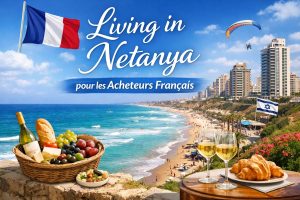 For many French-speaking immigrants and second-home buyers, living in Netanya has become the closest thing to a Mediterranean compromise between Parisian comfort and Israeli coastal dynamism. The city sits along brokersa long cliff overlooking the sea, offering a mix of modern towers, calmer family districts, and well-established French-speaking communities, all benefiting from accessible transportation. While other coastal cities have their own identities, living in Netanya delivers a specific blend: beaches, walkability, cafés, French bakeries, and neighbourhoods where French is heard almost as often as Hebrew.
Living in Netanya for French Buyers offers a unique blend of comfort and cultural familiarity, making it an attractive option for those relocating.
Netanya developed unevenly over the last three decades, making it a unique destination for foreign buyers interested in property purchases. The older centre is dense, mixed, and lively; the newer northern districts such as Ir Yamim, Ramat Poleg, and Nof Hatayelet cater more heavily to French buyers with modern buildings, underground parking, and proximity to the sea. This has created a dual city: one offering everyday affordability, the other aimed at middle- and upper-middle-class families seeking comfort and quality of life. For foreign residents, especially those coming from France, living in Netanya feels familiar yet rooted in Israeli reality, with a vibrant community of new immigrants.
For many, living in Netanya for French Buyers means being part of a vibrant and welcoming community.
The city’s coastline shapes daily routines. Residents take morning walks on the promenade, families gather at the beaches after school, and retirees enjoy the relaxed Mediterranean rhythm. Unlike Tel Aviv, Netanya offers this lifestyle without the intensity, noise, and relentless pace of a major metropolitan hub. This calmer environment is crucial for many French families who want the benefits of Israel without abandoning cultural habits. For them, living in Netanya means neither fully reproducing French life nor jumping straight into the intensity of central Tel Aviv.
Ultimately, living in Netanya for French Buyers combines the best of both worlds: a serene lifestyle with easy access to rich cultural experiences.
Key Data Points
Population: roughly 230,000 and growing, with a significant French-speaking segment.
Large French-speaking population in Ir Yamim, Poleg, City Centre (north) and some streets closer to the promenade.
Around 12 kilometres of coastline with developed beaches, promenades, and lookout points, all easily accessible via transportation.
Multiple French cultural institutions, synagogues, schools, and community groups.
Train access to Tel Aviv and Haifa from two stations, plus direct road access to Highway 2 and Highway 4.
Practical Implications
A French buyer will find it simpler to integrate here than in most Israeli cities. Supermarkets carry imported products, children can join bilingual programmes, and support networks assist with paperwork. Doctors, dentists, and lawyers who speak French make everyday life less stressful. However, this comfort also raises prices in the most desirable districts, especially in buildings near the sea or in projects that have become known as “French buildings,” attracting many Jewish immigrants. Anyone considering living in Netanya must assess whether community convenience outweighs the price premium and whether they are prepared to live slightly further from the beach in exchange for better value.
Therefore, living in Netanya for French Buyers presents a real opportunity to blend life in Israel with cherished French traditions.
Examples Relevant to Israel
As a result, living in Netanya for French Buyers is increasingly seen as a desirable option for those looking to settle in Israel.
Ir Yamim resembles parts of Herzliya Pituach but is more French-oriented and generally slightly cheaper than Herzliya’s most exclusive streets.
Poleg is quieter, with low-rise housing, and ideal for newcomers or semi-retired couples who want comfortable living in Netanya without the bustle of central tourism zones.
Central Netanya is lively, more affordable, and more traditionally Israeli, with shuks, older cafés, and a stronger sense of local urban life.
Prices, Affordability & Market Data
Explanation living in Netanya for French buyers
Prices in Netanya fluctuate dramatically across neighbourhoods. The premium areas attract French-speaking buyers who prefer modern buildings, sea views, generous balconies, and organised maintenance, often facilitated by tailored services for Jewish families. This pushes property purchases upward and creates competition that resembles parts of Tel Aviv’s coastal market, attracting foreign buyers. Yet affordability remains possible for buyers willing to explore older areas or districts further inland, proving that living in Netanya is not only for wealthy retirees or luxury buyers, but also for Jewish families looking for a home.
In conclusion, living in Netanya for French Buyers is not just about purchasing property; it’s about embracing a lifestyle.
The city also benefits from long-term demand: French aliyah has remained stable for over a decade, with new arrivals each year seeking community support and Mediterranean living. Local Israelis from the centre and the Sharon region also see Netanya as an appealing option. As long as these trends continue, living in Netanya will remain attractive for owner-occupiers and investors, particularly those interested in new projects that cater to diverse communities.
Thus, living in Netanya for French Buyers ensures a blend of community support and Mediterranean lifestyle.
Key Data Points
New-build 4-room apartment in Ir Yamim: roughly 3.8–5 million NIS, depending on floor, view, and project.
Second-hand 4-room apartment in the city centre: often 2.1–2.9 million NIS, sometimes lower in older buildings requiring renovation.
Luxury tower apartments near the promenade: 5.5–9 million NIS for large units with open sea views.
Semi-detached homes in Poleg and nearby low-rise areas: usually 5–8.5 million NIS in the Netanya real estate market, appealing to both local buyers and Jewish families from abroad.
Rental market:
– Older 3-room flats: roughly 5,200–7,000 NIS per month in the Netanya real estate market, providing affordable options for Jewish immigrants.
– Newer 4-room flats: typically 8,000–11,500 NIS per month.
– Short-term and seasonal rentals near the sea: much higher during peak tourist months.
Practical Implications
Because the spread between new and old buildings can reach millions of shekels, buyers must be very clear about their priorities. Many French families focus only on polished lobby buildings close to the sea for comfortable living. That can make living in Netanya much more expensive than it needs to be for new immigrants, particularly those from the former Soviet Union. A strategic buyer might choose:
– A renovated second-hand flat in an older building with strong management and an elevator can be a great option for Jewish families.
– A slightly inland district such as Kiryat Hasharon, which offers parks, schools, and better prices;
– A property one or two streets back from the seafront, where you still enjoy the breeze but avoid the full premium.
French-speaking lawyers and mortgage brokers familiar with this profile of client can streamline transactions, especially where income or assets are abroad. They know how to present French payslips, tax documents, and company accounts to Israeli banks, which is crucial for Jewish immigrants navigating the local real estate market. Without this support, the process of buying and then living in Netanya can become frustrating and drawn out.
Examples Relevant to Israel
Ramat Gan or Givatayim may cost more for similar-sized apartments but have no direct sea access and weaker French community infrastructure.
Haifa may be cheaper but does not provide the same level of French-specific services, cafés, and schools that make living in Netanya particularly comfortable for this group, especially for Jewish families.
A budget-conscious family might prefer Kiryat Hasharon or Neot Shaked—still living in Netanya, still within reach of the sea, but at a very different price point to Ir Yamim.
Demographics & Lifestyle Factors
This is especially true for those choosing to prioritize living in Netanya for French Buyers as their new home.
Explanation
The demographic mix in Netanya is richer than outsiders expect, providing a unique opportunity for foreign buyers. French communities coexist with veteran Israelis, Russian speakers, Anglos, religious families, and secular professionals, creating a diverse environment for newcomers. This diversity influences local culture and allows French families to integrate gradually while maintaining familiar social networks.
Ultimately, living in Netanya for French Buyers leads to creating lasting memories in a culturally rich environment.
French residents often describe living in Netanya as a “soft landing” into Israeli reality. The city balances comfort with authenticity: cafés serve French pastries, but markets sell traditional Israeli produce; Hebrew surrounds residents, but French is widely understood in key districts. Over time, many residents report that their children become bridges between cultures, speaking fluent Hebrew at school and French at home, which helps integrate Jewish families into the community.
Key Data Points
Significant French-speaking communities in Ir Yamim and Poleg, plus scattered buildings closer to the promenade.
Growing young Israeli families in Kiryat Hasharon and several eastern neighbourhoods.
Multiple bilingual schools, religious institutions, and after-school programmes.
A strong commuter population that works in Tel Aviv, Herzliya, Raanana, or the industrial zones around Netanya itself.
Practical Implications
In essence, living in Netanya for French Buyers is about finding a place where they truly belong.
Living in Netanya provides new arrivals with community infrastructure that simplifies cultural transition. At the same time, over-reliance on French-speaking networks can slow down Hebrew acquisition and deeper integration. Families should decide deliberately: do they want a mostly French circle, or a mixed environment in which they are pushed to operate in Hebrew, especially as new immigrants?
Daily life is strongly sea-oriented. Even families who live inland tend to use the beach frequently, especially in the late afternoon and during summer. The city invests in promenades, cycling paths, and family spaces, which makes living in Netanya appealing for children and older residents alike. However, traffic and parking near the sea can be difficult in peak season, and some buyers choose to live slightly inland and drive to the beach instead of fighting for coastal parking every day.
Examples Relevant to Israel
Ir Yamim Mall functions as a social hub for French speakers, with cafés, clothing shops, and services that feel partly like a French suburban centre transplanted onto the Israeli coast.
Central Netanya markets and older streets offer a more local Israeli experience: fresh produce markets, modest eateries, and working-class life that has changed little over the decades.
Risks, Limitations & Buyer Considerations
Consequently, living in Netanya for French Buyers is a journey of discovery and adaptation.
Explanation
French buyers often misunderstand the challenges associated with Israeli real estate. Older buildings require more maintenance than French equivalents, often leading to the need for an elevator upgrade in many cases. Bank transfers for property purchases take longer, complicating transactions for foreign buyers. Bureaucracy is slower and less predictable. Buyers expecting a French-style process will be disappointed unless properly prepared. Without preparation, living in Netanya can feel like a constant wrestling match with systems that work very differently from those in France.
Key Data Points
Many buildings built before the 1990s lack full seismic reinforcement and may await urban renewal projects that could take years to materialise.
Coastal humidity accelerates wear on façades, railings, external pipes, and window frames, which can affect the overall amenity of properties in the area and necessitate regular upgrades for new projects.
Compliance in Israeli banks can delay incoming transfers of large sums from French banks, especially when source-of-funds documentation is incomplete.
Premium zones where French buyers cluster sometimes carry inflated prices relative to equivalent areas a short drive away.
Practical Implications
Overall, living in Netanya for French Buyers allows them to enjoy a slice of home in a new land.
Buyers need to conduct serious due diligence: structural inspections, review of the homeowners’ association financials, examination of renovation history, and confirmation of future urban renewal plans. Underestimating renovation costs is a classic error. In some older buildings, balconies, façades, and plumbing can require major investment over the next decade, which has direct implications for anyone planning on living in Netanya long term.
Another risk is emotional buying. Because many buyers fall in love with the idea of a sea-view flat, they rush into commitments without comparing alternatives. A less glamorous but structurally sound building a few streets inland may provide better long-term security and quality of life than a worn-down sea-front block that looks good on a brochure, especially for Jewish families seeking stable residence.
Examples Relevant to Israel
Liquidity in Ir Yamim and the best towers along the promenade is high—French buyers often replace French sellers—but strong liquidity does not remove the need for a realistic purchase price.
Older districts with lower entry prices can offer higher yields and potential upside if urban renewal projects advance, but the timeline is uncertain and requires patience.
Strategic Recommendations
Thus, choosing living in Netanya for French Buyers is a decision rooted in both emotion and practicality.
Explanation
Choosing to live in Netanya requires clarity: is the purchase for aliyah, holidays, retirement, or investment? Each use case demands a different neighbourhood, budget, and level of involvement in day-to-day Israeli life. A family planning full relocation with school-age children will make different decisions from a couple who want a holiday base for a few months per year.
Key Data Points
Demand is strongest for modern seaside apartments with parking, lifts, and storage rooms.
Rental demand is stable, supported by French tourism, domestic tourism, and commuters.
Supply of land for truly new coastal projects is limited, which supports long-term values.
Practical Implications
Match lifestyle to neighbourhood: consider proximity to a train station for easy access to the city, especially for Jewish immigrants.
Ir Yamim equals convenience, sea access, and a high concentration of French families.
Poleg equals calm, residential character, and good options for houses and low-rise blocks.
Central Netanya equals value, walkability, and a stronger sense of local Israeli city life.
Kiryat Hasharon equals parks, schools, and a family-friendly suburban feel with easier parking.
Many buyers benefit from renting for six to twelve months before committing to a purchase. Renting allows them to test living in Netanya in real life: commute times, school runs, synagogue options, and the feel of different streets at night. After this period, decisions about where to buy tend to be more grounded and less romanticised.
Examples Relevant to Israel
A family planning aliyah may rent first in Ir Yamim so that children adapt within a familiar French-speaking environment, then buy in Kiryat Hasharon once they understand their long-term needs and want better value.
Retirees who prioritise quiet may prefer Poleg or specific streets of Ir Yamim, even if central Netanya is cheaper, because reduced noise and easier street parking matter more than saving on purchase price.
In summary, living in Netanya for French Buyers offers a harmonious blend of lifestyle, community, and culture.
Conclusion
Finally, for those contemplating their future, living in Netanya for French Buyers remains a compelling choice.
For French buyers, living in Netanya for French Buyers offers a comfortable, culturally familiar, and vibrant lifestyle. The city blends Mediterranean ease with strong community infrastructure, a powerful French-speaking network, and multiple property options from modest second-hand flats to luxury towers. Prices can be high, especially in premium districts, and the process demands serious due diligence. Yet for those who approach it strategically and with their eyes open, living in Netanya for French Buyers can deliver exactly what many French families are looking for: a real life in Israel that still feels emotionally and culturally manageable.
Israel Homes Is a Guide to Finding, Understanding, and Buying Property in Israel