
Living in Herzliya: Coastal Prestige, High-Tech Power, and Everyday Reality
Introduction to Living in Herzliya
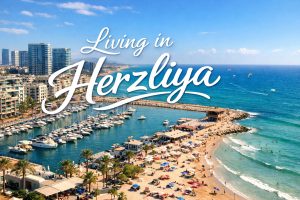 Living in Herzliya means positioning yourself at the intersection of Mediterranean lifestyle and Israeli economic strength. Located just north of Tel Aviv, Herzliya has evolved from a quiet agricultural town into one of Israel’s most desirable residential markets. It combines beaches, high-tech headquarters, international schools, luxury villas, and strong property demand within a compact geographic footprint.
But Living in Herzliya is not a lifestyle fantasy. It is a calculated decision involving pricing pressure, municipal taxation, neighbourhood selection, and long-term investment outlook. Some residents choose it for proximity to the high-tech corridor; others for beachfront prestige; others for Anglo-friendly infrastructure.
This guide breaks down Living in Herzliya from a practical, financial, and lifestyle perspective.
Geography, Structure, and Urban Layout
Herzliya Pituach: The Prestige Strip
Herzliya Pituach is the coastal western side of the city. It contains some of the most expensive residential real estate in Israel. Large detached villas, gated compounds, and luxury apartment towers dominate the landscape.
Living in Herzliya Pituach means:
- Walking distance to the Mediterranean
- High arnona (municipal tax)
- Strong demand from diplomats and foreign executives
- Significant privacy compared to Tel Aviv towers
Property prices here often exceed central Tel Aviv on a per-square-metre basis for land-based properties. The area is also home to many global tech offices and embassies.
However, the prestige comes with exposure: coastal humidity, salt corrosion, and higher maintenance costs.
Central Herzliya: Practical and Connected
Central neighbourhoods provide mid-rise apartment blocks, renovated older buildings, and family-friendly streets. This area attracts Israeli professionals who want access to Tel Aviv without Tel Aviv density.
Living in Herzliya’s central districts offers:
- Better value per sqm compared to Pituach
- Access to schools and community centres
- Strong public transport connectivity
- Urban but not chaotic atmosphere
Apartments range from 3-room units in older 1970s buildings to new Tama 38 projects and boutique developments.
Herzliya Hills and New Developments
On the eastern side, newer developments such as Herzliya Hills provide modern towers with underground parking, security lobbies, and proximity to the business district.
For buyers evaluating Living in Herzliya as an investment, these newer areas offer lower entry price points than beachfront properties while maintaining strong rental demand.
The Beach and Marina Lifestyle
Mediterranean Access
The coastline is a major factor in Living in Herzliya. Wide sandy beaches, maintained promenades, and organised bathing areas create a consistent draw for residents and tourists.
Unlike parts of Tel Aviv, Herzliya’s beaches are less crowded during weekdays. Early mornings are dominated by joggers and surfers rather than nightlife overflow.
Herzliya Marina
The Herzliya Marina is one of the most developed marinas in Israel. It includes waterfront restaurants, yacht docking, and high-end residential buildings overlooking the harbour.
Marina apartments are popular for short-term executive rentals. Investors considering Living in Herzliya as a rental strategy often focus on marina properties because of liquidity and international appeal.
However, these units can experience seasonal fluctuation in demand.
Economic Engine: High-Tech and Business District
Herzliya as a Tech Hub
Herzliya hosts major international technology companies and Israeli start-ups. The industrial zone has effectively transformed into a high-tech cluster.
Living in Herzliya offers proximity to:
- Corporate headquarters
- Venture capital offices
- Research centres
- Co-working spaces
This employment base stabilises rental demand. Engineers and executives prefer short commutes and quality housing stock.
Income Demographics
Herzliya’s median income ranks among the highest in Israel. That affects:
- School funding
- Local retail quality
- Restaurant pricing
- Real estate resilience during downturns
High-income residents create a stable municipal tax base, which supports infrastructure investment.
Property Prices and Financial Reality
Purchase Prices
Living in Herzliya is expensive. Approximate ranges:
- Standard 4-room apartment (central area): 3.2–4.5 million NIS
- New tower apartment: 4–6 million NIS
- Marina apartment: 5–8 million NIS
- Detached villa in Herzliya Pituach: 12–30+ million NIS
Land value drives pricing in western areas. In eastern neighbourhoods, pricing is more apartment-driven.
Rental Market
Rental ranges:
- 4-room apartment: 9,000–14,000 NIS/month
- Luxury apartment: 15,000–25,000 NIS/month
- Villa rentals: significantly higher, depending on plot size
For investors analysing Living in Herzliya, gross yields typically range between 2.5%–3.5%. This is lower than peripheral cities but reflects capital stability rather than cash-flow optimisation.
Arnona and Ongoing Costs
Municipal tax in Herzliya is higher than many Israeli cities. Additionally:
- Building maintenance in luxury towers can exceed 1,000–2,000 NIS monthly
- Coastal homes require higher upkeep
- Private security systems are common in Pituach
Living in Herzliya demands liquidity beyond mortgage servicing.
Education and Family Infrastructure
Schools
Herzliya offers strong public schools and several private/international frameworks. Anglo families often prioritise English support programmes.
Proximity to international education is a reason some expatriates choose Living in Herzliya over central Tel Aviv.
Youth and Community Facilities
The municipality invests in:
- Sports complexes
- Community centres
- Music conservatories
- Tennis clubs
Family infrastructure is a key reason long-term residents remain even after children leave school.
Transportation and Accessibility
Road Connectivity
Herzliya benefits from proximity to Highway 2 (Coastal Road) and Highway 20 (Ayalon). Driving to Tel Aviv can take 15–25 minutes outside rush hour.
However, peak-hour congestion is severe. Anyone choosing Living in Herzliya while working daily in Tel Aviv must factor commute variability.
Rail Access
Herzliya Train Station connects to Tel Aviv, Haifa, and beyond. This supports professionals who prefer public transport.
Lifestyle, Culture, and Daily Living
Restaurants and Retail
Herzliya Pituach includes high-end dining. Central Herzliya offers more casual neighbourhood options.
Retail is anchored by Seven Stars Mall, local shopping streets, and marina boutiques.
Living in Herzliya means access to quality services without Tel Aviv’s density or nightlife intensity.
Atmosphere
The city is quieter at night compared to Tel Aviv. It attracts:
- Families
- Diplomats
- High-tech executives
- Affluent retirees
If someone seeks nightlife energy, Tel Aviv remains dominant.
Risks and Limitations
Pricing Exposure
High entry prices limit upside percentage growth. Herzliya is already premium-priced.
Coastal Environmental Risk
Sea proximity increases:
- Humidity damage
- Infrastructure wear
- Long-term climate considerations
Socioeconomic Bubble Effect
The city’s high-income demographic creates insulation but also limits diversity. Some critics argue Living in Herzliya can feel socially homogeneous.
Comparison to Nearby Cities
Herzliya vs Tel Aviv
Tel Aviv offers density, nightlife, and cultural volume. Herzliya offers space, quieter beaches, and villas.
Price differences vary by micro-location.
Herzliya vs Raanana
Raanana is more suburban and strongly Anglo. It lacks coastline but offers lower entry pricing.
Living in Herzliya carries a stronger international prestige perception.
Investment Perspective
Living in Herzliya as an owner-occupier makes sense for lifestyle buyers prioritising coastal access and high-income environment.
As an investor:
- Capital preservation is strong
- Liquidity is high
- Yield is moderate to low
- Tenant profile is financially stable
Short-term rental regulation should always be reviewed before purchase.
Who Should Consider Living in Herzliya?
- High-income professionals in tech
- Families seeking strong schools and beaches
- Diplomats and foreign executives
- Buyers prioritising capital stability over yield
It is not ideal for:
- First-time buyers with limited capital
- Yield-focused investors seeking 5%+ returns
- Individuals seeking urban nightlife intensity
Long-Term Outlook
Herzliya continues to benefit from:
- Tech sector expansion
- Coastal desirability
- Limited land supply
- International buyer interest
Urban renewal projects (Tama 38 and Pinui-Binui) will reshape central neighbourhoods over the next decade.
Living in Herzliya remains anchored by scarcity. Coastal land cannot expand. That structural constraint underpins pricing resilience.
Neighbourhood Deep Dive: Micro-Market Differences That Matter
Herzliya Green and Gan Rashal
Herzliya Green and Gan Rashal sit inland from the coast but remain highly desirable. These neighbourhoods are characterised by lower-rise buildings, quieter streets, and a more established residential feel compared to the newer tower clusters.
For families evaluating Living in Herzliya, these areas often represent a strategic compromise:
- Lower purchase price than Herzliya Pituach
- Strong school proximity
- Community-driven environment
- Less exposure to coastal corrosion
Apartments here are frequently found in 3–5 story buildings from the 1980s–1990s, with ongoing urban renewal projects gradually modernising stock. Tama 38 upgrades have increased property values but also temporarily disrupt streets during construction phases.
From an investment perspective, these neighbourhoods show steady appreciation driven by scarcity and consistent family demand rather than speculative spikes.
Neve Amal and Yad HaTish’a
These areas are more mixed socioeconomically. Historically less expensive, they are undergoing gradual transformation due to redevelopment plans and spillover demand from central Herzliya.
Buyers considering Living in Herzliya at a lower entry point sometimes explore these districts. However:
- Building quality varies significantly
- Some blocks require structural renovation
- Urban renewal plans may take years to materialise
The upside potential exists, but it carries execution risk. Investors should verify approved Pinui-Binui status rather than relying on rumours.
International Community and Anglo Presence
Herzliya has a notable international population. Diplomats, tech executives, and returning Israelis from the United States and Europe often choose the city.
Living in Herzliya appeals to Anglos because:
- English is widely spoken
- International schools are accessible
- Coastal lifestyle mirrors parts of California or southern Europe
- High-tech environment feels globally integrated
However, this international layer also drives price inflation. Foreign buyers often transact in cash or with strong equity positions, compressing negotiation leverage for standard mortgage buyers.
For long-term planners, this global appeal increases liquidity during resale. A property in Herzliya is easier to market internationally than a comparable inland asset.
Synagogues, Religious Spectrum, and Community Life
Herzliya is not defined by one religious identity. It includes:
- Secular majority populations
- Traditional Israeli families
- Religious Zionist communities
- Smaller Haredi clusters
Synagogues are spread throughout the city, though it is not comparable in density to cities like Bnei Brak or Jerusalem.
Living in Herzliya allows residents to choose proximity to religious institutions without the city being religiously dominated. This flexibility attracts diverse demographics.
For observant families, walking distance to synagogue should be assessed street by street. Micro-location matters.
Healthcare Infrastructure
Herzliya benefits from strong medical access:
- Kupot Cholim branches across neighbourhoods
- Private clinics
- Proximity to major hospitals in Tel Aviv
Additionally, the private Herzliya Medical Center is located in Herzliya Pituach and attracts international medical tourism.
Living in Herzliya therefore provides immediate access to both public and private healthcare channels, an important consideration for retirees and families.
Commercial and Office Real Estate Influence
The business district in Herzliya Pituach significantly influences residential pricing.
When tech hiring expands, rental demand rises. When tech slows, vacancy risk increases, particularly in high-end rental units.
Living in Herzliya is therefore indirectly tied to:
- Venture capital cycles
- NASDAQ trends
- Global tech valuations
While Herzliya is resilient, it is not isolated from macroeconomic shocks.
Urban Renewal and Construction Disruption
Over the next decade, central Herzliya will undergo substantial redevelopment.
Tama 38 and Pinui-Binui projects aim to:
- Strengthen old buildings against earthquakes
- Increase density
- Add underground parking
- Modernise facades
For residents already Living in Herzliya, this creates temporary inconvenience:
- Noise
- Dust
- Parking limitations
However, long-term impact includes increased property value and improved building standards.
Buyers must check:
- Whether a building has signed majority consent
- Whether permits are approved
- Developer financial backing
Speculative renewal promises should not justify inflated purchase prices.
Security and Strategic Considerations
Herzliya is part of central Israel and benefits from Iron Dome coverage and established civil defence infrastructure.
Compared to southern or northern border regions, Living in Herzliya involves lower direct security exposure. However, it remains within missile range in large-scale conflict scenarios.
Strategic infrastructure concentration in the greater Tel Aviv area means Herzliya is not risk-free. Buyers should avoid unrealistic assumptions about total insulation from national security events.
Climate and Environmental Factors
The Mediterranean climate brings:
- Humid summers
- Mild winters
- Occasional coastal storms
Humidity accelerates wear on:
- Metal fixtures
- Air conditioning units
- Window frames
Living in Herzliya close to the shoreline amplifies these maintenance cycles. Buyers of older beachfront properties must budget accordingly.
Long-term climate considerations include rising sea levels and coastal erosion management, though Israel’s coastal engineering infrastructure remains robust.
Rental Strategy Analysis
For landlords, Living in Herzliya presents two primary tenant segments:
- Corporate expatriates
- Israeli high-income families
Short-term executive leases can produce premium monthly rents but carry vacancy risk between contracts.
Long-term family rentals provide stability but lower per-month revenue.
Gross yields remain modest, so capital growth and liquidity drive return profiles rather than rental cash flow.
Liquidity and Resale Outlook
Herzliya’s liquidity is among the strongest in Israel.
Properties in Herzliya Pituach, especially villas, often transact discreetly off-market.
Apartments near the marina or new towers benefit from international marketing channels.
Living in Herzliya therefore offers:
- Strong exit optionality
- Broad buyer pool
- Reduced resale friction compared to peripheral cities
However, ultra-luxury segments above 20 million NIS may take longer to sell due to narrower buyer brackets.
Cost of Living Beyond Housing
Daily expenses reflect affluence:
- Restaurants priced above national average
- Private tutoring common
- Gym memberships and sports clubs premium-priced
Living in Herzliya requires aligning income expectations with social norms. The peer environment influences spending patterns, particularly for families with school-age children.
Public Spaces and Recreation
Herzliya invests in:
- Park Herzliya (large urban park)
- Coastal promenades
- Sports facilities
- Cycling paths
For families assessing Living in Herzliya, access to open space within an urban coastal framework is a major draw.
The city successfully balances development density with recreational infrastructure.
Mortgage Considerations
High property values mean significant equity is required.
Israeli mortgage regulations typically require:
- 25% minimum equity for first homes
- Higher equity for investors
Given price levels, down payments can exceed 1 million NIS easily.
Living in Herzliya with high leverage increases exposure to interest rate fluctuations. Buyers should stress-test repayments under rising rate scenarios.
Demographic Trends
Herzliya’s population includes:
- Young tech professionals
- Established high-net-worth households
- International residents
- Growing retirement segment
Age diversity supports retail and municipal stability.
Unlike purely retirement towns, Living in Herzliya maintains workforce dynamism due to proximity to employment hubs.
Schools and Academic Achievement
Herzliya consistently ranks strongly in matriculation performance. Municipal investment in education is visible.
Parents considering Living in Herzliya for academic outcomes often compare it favourably to:
- Ramat HaSharon
- Raanana
School quality contributes directly to sustained property demand.
Strategic Advantages Summarised
Living in Herzliya provides:
- Coastal access without Tel Aviv density
- High-tech employment base
- Strong municipal services
- International buyer liquidity
- Premium lifestyle positioning
Strategic Limitations Summarised
- High entry cost
- Low rental yield
- Exposure to tech economic cycles
- Elevated ongoing maintenance costs
- Traffic congestion during peak hours
Final Assessment and Strategic Conclusion
Living in Herzliya sits firmly in Israel’s top-tier residential bracket. Choosing to buy here reflects both financial strength and deliberate lifestyle priorities. Coastal scarcity, high-income demographics, proximity to Tel Aviv, and sustained international demand underpin long-term resilience.
That said, resilience is not immunity. Buyers must assess cash flow sustainability, exposure to tech-driven market cycles, micro-neighbourhood differences, and construction quality — particularly in older or beachfront properties. Entry prices, arnona, and maintenance costs are materially higher than the national average.
Living in Herzliya combines Mediterranean access, economic depth, and residential prestige. For those with sufficient capital and disciplined financial planning, it remains one of Israel’s most stable and defensible residential choices.
Israel Homes Is a Guide to Finding, Understanding, and Buying Property in Israel