Neighbourhood Comparisons for Anglos in Israel: A Complete Guide to Choosing the Right Community
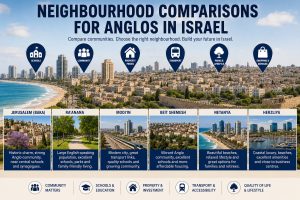 Finding the right place to live is one of the biggest decisions anyone makes after moving to Israel. While many new immigrants focus on choosing a city, experienced residents know that selecting the right neighbourhood is often even more important. Neighbourhood comparisons for Anglos in Israel help families, retirees, professionals and investors understand how different communities fit different lifestyles.
Whether you are making aliyah, relocating within Israel or purchasing an investment property, this guide to neighbourhood comparisons for Anglos in Israel explores the country’s most popular English-speaking communities and explains what makes each one unique.
Why Neighbourhood Comparisons for Anglos in Israel Matter
Israel’s cities can vary dramatically from one neighbourhood to another. Two areas only a few kilometres apart may have completely different schools, demographics, property prices, public transport, religious communities and lifestyle.
When researching neighbourhood comparisons for Anglos in Israel, consider:
- Religious atmosphere
- English-speaking population
- Schools
- Public transport
- Employment opportunities
- Property prices
- Rental demand
- Shopping and services
- Community organisations
- Parks and recreation
Many Anglos prefer neighbourhoods where English-speaking families already have established communities, making integration much easier.
Jerusalem Neighbourhood Comparisons
Jerusalem remains the number one destination for many English-speaking immigrants.
Baka
Baka is consistently one of the highest-ranked communities in neighbourhood comparisons for Anglos in Israel.
The neighbourhood offers:
- Strong Anglo community
- Walking distance to the Old City
- Cafés and restaurants
- Beautiful historic homes
- Excellent synagogues
- High-quality schools
Property prices are among Israel’s highest, but demand remains extremely strong.
Ideal for:
- Religious Zionist families
- Retirees
- Professionals
- Overseas buyers
German Colony
The German Colony combines history with modern convenience.
Advantages include:
- Emek Refaim shopping street
- English-speaking residents
- Family atmosphere
- Parks
- Restaurants
- Easy transport
Properties include restored Templar homes alongside luxury apartments.
Arnona
Arnona has become increasingly popular with young Anglo families.
Highlights include:
- New developments
- Larger apartments
- Good schools
- Growing English-speaking population
- Quiet streets
Prices are often lower than nearby Baka.
Katamon
Katamon offers several distinct areas.
Residents enjoy:
- Strong Religious Zionist community
- Many Anglo families
- Walking distance to city centre
- Good schools
- Parks
New apartment projects continue attracting buyers.
Rehavia
Rehavia remains one of Jerusalem’s most prestigious addresses.
Benefits include:
- Elegant streets
- Cultural institutions
- Hebrew University proximity
- Mature trees
- Synagogues
Apartments command premium prices.
Har Homa
Har Homa offers more affordable housing.
Popular because of:
- Modern apartments
- Family-friendly planning
- Schools
- Parks
- Good transport
Many young families begin their property journey here.
Tel Aviv Neighbourhood Comparisons
Old North
The Old North regularly appears in neighbourhood comparisons for Anglos in Israel due to its lifestyle.
Features include:
- Beaches
- Cafés
- High-end shopping
- Public transport
- Vibrant nightlife
Suitable for professionals and young couples.
Ramat Aviv
One of Tel Aviv’s most desirable residential districts.
Advantages:
- Excellent schools
- Quiet streets
- Parks
- University
- Shopping centres
Family-oriented environment.
Neve Tzedek
Historic charm attracts both Israelis and overseas buyers.
Expect:
- Boutique cafés
- Luxury properties
- Art galleries
- Walkability
Property prices remain among the country’s highest.
Ra’anana
Ra’anana is perhaps Israel’s best-known Anglo city.
Central Ra’anana
One of the strongest communities featured in neighbourhood comparisons for Anglos in Israel.
Benefits include:
- Large English-speaking population
- Excellent schools
- Parks
- Shopping
- Synagogues
Families often choose Ra’anana because everyday life can be comfortably managed in English.
Neve Zemer
New residential district offering:
- Modern apartments
- Green spaces
- Young families
- Contemporary infrastructure
Growing rapidly.
Modi’in
Modi’in offers an excellent balance between Jerusalem and Tel Aviv.
Buchman
Popular among Anglo families.
Advantages:
- Modern housing
- Schools
- Parks
- Community activities
- Family atmosphere
Kaiser
Known for:
- Shopping centres
- Rail access
- Affordable apartments
- Young families
Ideal for commuters.
Beit Shemesh
Ramat Beit Shemesh Aleph
One of Israel’s largest English-speaking communities.
Residents enjoy:
- Numerous synagogues
- Schools
- Community organisations
- Shopping
Ideal for religious families.
Ramat Beit Shemesh Gimmel
Rapidly expanding.
Benefits include:
- New construction
- Larger apartments
- Lower prices
- Growing Anglo community
Netanya
Ir Yamim
A coastal favourite.
Features:
- Beaches
- Modern towers
- Shopping
- Parks
Popular with retirees.
Poleg
Excellent family neighbourhood.
Advantages:
- Schools
- Sea access
- Business parks
- Restaurants
Herzliya
Herzliya Pituach
Luxury living defines this neighbourhood.
Highlights:
- Villas
- Beaches
- International community
- High-end restaurants
Premium prices.
Herzliya Green
Family-friendly option offering:
- Parks
- Schools
- Transport
- Shopping
Ramat Gan
Ramat Chen
Growing popularity among Anglos.
Benefits:
- Good transport
- Schools
- Parks
- Easy Tel Aviv commute
Ramat Efal
Known for:
- Quiet environment
- Larger homes
- Green streets
Haifa
Carmel Centre
Excellent value compared with central Israel.
Advantages:
- Sea views
- Universities
- Hospitals
- Shopping
Popular among professionals.
Ahuza
Offers:
- Strong schools
- Medical facilities
- Green surroundings
- Good transport
Efrat
Efrat continues to attract Religious Zionist families.
Dekel
Popular because of:
- Community spirit
- Schools
- Parks
- Synagogues
Tamar
Known for:
- New homes
- Young families
- Scenic views
Givat Shmuel
A fast-growing city close to Tel Aviv.
Advantages:
- Religious Zionist population
- Universities nearby
- Modern apartments
- Transport links
Increasingly popular among English-speaking buyers.
Pardes Hanna-Karkur
Many Anglos seeking a quieter lifestyle compare this area.
Benefits include:
- Green environment
- Creative community
- Independent cafés
- Larger homes
Suitable for remote workers.
Zichron Yaakov
Historic charm meets modern living.
Popular features:
- Boutique shopping
- Wine culture
- Sea views
- Family atmosphere
Many overseas buyers purchase homes here.
Ashdod
Several neighbourhoods now attract English-speaking families.
Advantages:
- Beaches
- Employment
- Synagogues
- Affordable housing compared with Jerusalem
Growing Anglo population.
Be’er Sheva
The capital of the Negev offers excellent value.
Benefits include:
- Ben-Gurion University
- Technology employment
- Affordable apartments
- Medical facilities
Appealing for younger buyers.
What Anglos Should Compare Before Buying
Every family has different priorities. When making neighbourhood comparisons for Anglos in Israel, consider:
Schools
Research:
- English support
- Religious stream
- Academic performance
- Special education
- Transport
Synagogues
Many Anglos choose neighbourhoods based upon:
- Nusach
- Community
- Rabbi
- Programmes
- Youth activities
Transport
Important questions include:
- Railway stations
- Bus frequency
- Jerusalem access
- Tel Aviv access
- Airport travel
Healthcare
Nearby services may include:
- Health funds
- Specialists
- Hospitals
- Emergency clinics
Shopping
Convenience matters.
Compare:
- Supermarkets
- Kosher options
- Pharmacies
- Banks
- Restaurants
Green Space
Families often prioritise:
- Parks
- Walking trails
- Playgrounds
- Sports facilities
Property Prices
One of the biggest factors in neighbourhood comparisons for Anglos in Israel is affordability.
Compare:
- Apartment prices
- Rental prices
- Property taxes
- Future development
- Capital appreciation potential
Investment Potential
Some neighbourhoods have shown strong long-term appreciation because of:
- Urban renewal
- New railway stations
- Employment growth
- School improvements
- Population increases
Investors should examine both lifestyle and future infrastructure before purchasing.
Rental Demand
Neighbourhoods with strong rental demand typically offer:
- Universities
- Hospitals
- Business districts
- Public transport
- International residents
This can improve long-term investment performance.
Safety and Community
Many Anglos prioritise neighbourhoods with:
- Active community organisations
- Youth programmes
- Well-maintained streets
- Community security
- Local events
A strong community often makes settling into Israel significantly easier.
Future Development
Before purchasing, investigate:
- Planned construction
- Road improvements
- Light rail projects
- Shopping centres
- Schools
- Parks
Infrastructure projects can significantly affect future property values.
Lifestyle Considerations
Different neighbourhoods suit different lifestyles.
Young professionals may prefer Tel Aviv or central Jerusalem.
Families often favour Ra’anana, Modi’in, Beit Shemesh or Givat Shmuel.
Retirees frequently choose Netanya, Herzliya or Zichron Yaakov.
Remote workers increasingly consider Pardes Hanna-Karkur because of its relaxed atmosphere.
Tips for Choosing the Right Neighbourhood
When evaluating neighbourhood comparisons for Anglos in Israel, it is worth spending time in each area before committing to a purchase.
Visit during:
- Weekdays
- Evenings
- Fridays
- School hours
- Holidays
Speak with local residents, visit schools, attend synagogue services if relevant, and explore local shopping areas. Online research is valuable, but experiencing a neighbourhood in person often reveals details that statistics cannot.
Remember that the “best” neighbourhood is not necessarily the most expensive one. The ideal choice depends on your family’s budget, religious outlook, commuting needs, preferred lifestyle and long-term plans in Israel.
Common Mistakes Anglos Make When Choosing a Neighbourhood
Many newcomers focus almost entirely on the appearance of an apartment while overlooking the surrounding community. A beautiful property may not compensate for a long commute, limited public transport or the absence of schools that meet your family’s needs.
When making neighbourhood comparisons for Anglos in Israel, avoid these common mistakes:
- Buying after visiting only once.
- Ignoring future development plans.
- Not researching municipal taxes (Arnona).
- Assuming all neighbourhoods within a city are similar.
- Overlooking parking availability.
- Failing to check public transport during evenings and weekends.
- Not speaking with local residents.
- Ignoring noise levels near schools, entertainment areas or major roads.
- Buying solely because friends live nearby.
- Focusing only on today’s needs instead of where your family may be in five or ten years.
Taking time to compare neighbourhoods thoroughly can prevent costly mistakes and improve long-term satisfaction.
Cost of Living Differences Between Neighbourhoods
One of the biggest reasons people research neighbourhood comparisons for Anglos in Israel is understanding the true cost of daily life.
Monthly living expenses can vary considerably depending on the area. Factors include:
Housing Costs
Housing is usually the largest expense.
Compare:
- Purchase prices
- Rental prices
- Building maintenance fees
- Municipal taxes
- Renovation costs
Even within the same city, prices can differ dramatically between neighbouring districts.
Food and Shopping
Some neighbourhoods have:
- Premium supermarkets
- Local markets
- International food shops
- English product availability
- Kosher speciality stores
These differences can noticeably affect a household budget.
Transport Costs
Living close to a railway station or major bus routes may reduce the need for a second car.
Compare:
- Train access
- Bus services
- Parking costs
- Fuel expenses
- Walking distance to everyday amenities
Best Neighbourhoods for Young Families
Young families often prioritise:
- Safe streets
- Parks
- Good schools
- Community activities
- Family-friendly synagogues
- Affordable larger apartments
Popular choices include:
- Ra’anana
- Modi’in
- Beit Shemesh
- Givat Shmuel
- Arnona
- Har Homa
- Poleg
- Buchman
Each offers different advantages depending on budget and religious lifestyle.
Best Neighbourhoods for Retirees
Retirees usually prioritise convenience, healthcare and community.
Popular locations include:
- Netanya
- Herzliya
- Baka
- German Colony
- Carmel Centre
- Zichron Yaakov
Many retirees also look for neighbourhoods with active English-speaking social groups and easy access to medical services.
Best Neighbourhoods for Remote Workers
Remote working has become increasingly common.
Many professionals now value:
- Quiet streets
- Reliable internet infrastructure
- Cafés
- Green spaces
- Short journeys to larger cities when needed
Popular choices include:
- Pardes Hanna-Karkur
- Modi’in
- Ra’anana
- Zichron Yaakov
- Efrat
These areas combine quality of life with access to business centres.
Best Neighbourhoods for Property Investors
Investors often look beyond today’s prices.
Important considerations include:
- Planned transport projects
- Urban renewal
- Population growth
- New employment centres
- Rental demand
- Future infrastructure
Areas undergoing regeneration can sometimes outperform already established luxury neighbourhoods over the long term.
Questions to Ask Before Buying
Before committing to a purchase, ask:
- What is the average selling time for homes?
- Are prices rising steadily?
- Are new schools being built?
- What are the future transport plans?
- Is there significant new construction nearby?
- Are there active community organisations?
- How strong is rental demand?
- What are the municipality’s future development plans?
- How many parks and public spaces are nearby?
- Does the neighbourhood match your long-term lifestyle?
These questions can reveal important information that may not appear in property advertisements.
Building a Community
One of the greatest strengths of many Anglo neighbourhoods is the sense of community.
Look for areas offering:
- Volunteer organisations
- Community centres
- Adult education
- Youth movements
- English-speaking social events
- Cultural activities
- Holiday programmes
- Support for new immigrants
A welcoming community often makes settling into Israel much easier than simply finding the right apartment.
Frequently Asked Questions Neighbourhood Comparisons for Anglos in Israel
Which city has the largest English-speaking community in Israel?
Ra’anana, Jerusalem and Beit Shemesh are generally considered to have some of Israel’s largest and most established English-speaking communities. Each offers different lifestyles, budgets and religious environments.
Are neighbourhoods more important than cities?
In many cases, yes. Two neighbourhoods within the same city can differ significantly in schools, housing prices, atmosphere, transport and community life. This is why neighbourhood comparisons for Anglos in Israel are so valuable.
Which neighbourhoods are best for Religious Zionist families?
Popular choices include Baka, Katamon, Arnona, Efrat, Givat Shmuel, Modi’in and parts of Beit Shemesh, although suitability depends on individual preferences and community expectations.
Which neighbourhoods offer the best value for money?
Neighbourhoods in Modi’in, Be’er Sheva, Haifa, Ashdod and some newer areas of Beit Shemesh often provide larger homes at lower prices than central Jerusalem or Tel Aviv.
Should I rent before buying?
Many new immigrants benefit from renting for six to twelve months. This allows them to experience daily life, explore different communities and make more informed decisions before purchasing property.
How important is proximity to schools?
For families with children, it is often one of the most important considerations. Walking distance to suitable schools can significantly improve quality of life.
Which neighbourhoods are best for commuters?
Neighbourhoods close to railway stations in Modi’in, Ra’anana, Herzliya, Netanya and parts of Tel Aviv offer convenient commuting to major employment centres.
Are newer neighbourhoods a better investment?
Not necessarily. Some established neighbourhoods continue to appreciate strongly, while certain new developments may take years to mature. Buyers should consider infrastructure, demand and future development rather than age alone.
How can I compare neighbourhoods effectively?
Visit several times at different times of the day, speak with residents, review transport options, research schools, compare property prices and investigate future municipal development plans.
Where can I find reliable information about neighbourhoods in Israel?
Local residents, real estate professionals, municipal websites and specialist property resources can all provide useful information. Combining several sources generally produces the most accurate picture of a neighbourhood before making a decision.
Final Thoughts neighbourhood comparisons for Anglos in Israel
Choosing where to live is about far more than selecting a city. Every neighbourhood has its own character, community, property market and opportunities. Careful neighbourhood comparisons for Anglos in Israel allow buyers and renters to identify communities that align with their personal goals, whether they prioritise strong English-speaking networks, excellent schools, easy commuting, investment potential or a vibrant social life.
By comparing neighbourhoods rather than cities alone, Anglos can make better-informed decisions and enjoy a smoother transition into life in Israel. Thorough research, multiple visits and conversations with local residents can make all the difference when finding a place that truly feels like home.