
Housing Opportunities for Olim: A Strategic Guide to Buying and Renting in Israel
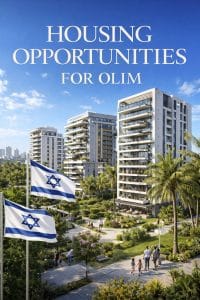 Relocating to Israel is a structural life decision, not a temporary move. For new immigrants, housing is the largest financial commitment after aliyah. Understanding housing opportunities for olim requires clarity about subsidies, geography, financing coshenstraints, taxation, rental structure, long-term capital preservation, and demographic positioning.
Israel’s property market operates under permanent supply constraints. Roughly 93% of land is state-owned, planning approval cycles are slow, and population growth remains structurally high. Demand pressure is not theoretical; it is demographic. Olim entering this environment must treat housing opportunities for olim as capital allocation decisions, not lifestyle purchases alone.
Government Support and Eligibility Framework
The State provides assistance through the Ministry of Aliyah and Integration and the Ministry of Construction and Housing.
Core support mechanisms include:
- Rental assistance based on income thresholds
- Preferential mortgage eligibility certificates
- Reduced purchase tax for first residential property
- Limited access to public housing
- Absorption centre programmes during initial settlement
However, subsidies rarely bridge the affordability gap in central Israel. Rental assistance may reduce short-term pressure, but it does not fundamentally change price levels in cities such as Jerusalem, Ra’anana, or Netanya. Mortgage assistance improves structure slightly but does not compensate for insufficient equity.
Realistic evaluation of housing opportunities for olim therefore begins with total available capital, income durability, and risk tolerance.
Geographic Distribution of Housing Opportunities for Olim
The distribution of housing opportunities for olim clusters around employment corridors, transport lines, and established immigrant communities. Below is a structural overview of primary absorption cities.
Jerusalem
Jerusalem remains a central destination for religious and traditional olim.
Structural strengths:
- Deep Anglo and French networks
- Religious institutions and education infrastructure
- Stable rental demand
- Cultural anchoring
Structural risks:
- High price per square metre
- Elevated Arnona
- Limited expansion land
Jerusalem offers durable housing opportunities for olim, but entry requires disciplined leverage and long holding periods.
Beit Shemesh
Beit Shemesh has transformed into one of the largest Anglo absorption centres.
Strengths:
- Large-scale new developments
- Diverse religious sub-communities
- Relative affordability compared to Jerusalem
Risks:
- Infrastructure strain
- Heavy construction cycles
- Transport congestion
It represents growth-oriented housing opportunities for olim positioned between affordability and central access.
Netanya – French and Anglo Presence
Netanya is widely recognised for French immigration, but it also hosts a substantial Anglo population, especially in Ir Yamim and southern districts.
Strengths:
- Coastal living
- High rental liquidity
- French institutions and expanding English-speaking synagogues
- Proximity to the Tel Aviv employment corridor
Risks:
- Sensitivity to overseas capital flows
- Premium pricing along the seafront
Netanya provides upper-tier housing opportunities for olim seeking international community alignment and Mediterranean access.
Raanana
4
Raanana remains one of the strongest Anglo urban concentrations.
Strengths:
- English widely spoken
- High educational standards
- Tech corridor proximity
- Strong resale liquidity
Risks:
- High pricing
- Limited expansion supply
For professionals, Ra’anana offers stable housing opportunities for olim tied to employment density.
Modiin
Modi’in-Maccabim-Re’ut attracts mixed Anglo-Israeli families seeking geographic balance.
Strengths:
- Central between Tel Aviv and Jerusalem
- Modern urban planning
- Strong family infrastructure
Risks:
- Competitive pricing
- Demand pressure for larger units
Modiin presents balanced housing opportunities for olim prioritising commute symmetry.
Haifa
Haifa offers northern access and more moderate pricing.
Strengths:
- Academic presence
- Mixed socio-economic profile
- Lower entry cost
Risks:
- Neighbourhood variability
- Slower appreciation than central corridor
Haifa expands affordable housing opportunities for olim while maintaining urban infrastructure.
Ashdod
Ashdod attracts French and traditional communities.
Strengths:
- Coastal access
- Growing transport connectivity
- Moderate pricing
Risks:
- Employment concentration
- Overbuilding cycles
Ashdod presents transitional housing opportunities for olim entering the coastal market at lower cost.
Southern and Peripheral Cities
Ashkelon, Kiryat Gat, Beer Sheva and Tiberias offer lower entry thresholds.
Strengths:
- Affordable purchase pricing
- Government-backed development zones
- Industrial expansion in select areas
Risks:
- Liquidity sensitivity
- Security exposure in southern regions
- Slower capital appreciation
These represent budget-tier housing opportunities for olim suitable for long-term positioning.
Emerging and Niche Locations for Olim
Beyond major cities, additional housing opportunities for olim exist in smaller municipalities.
Efrat
Efrat attracts religious Zionist Anglos.
Strengths:
- Strong community cohesion
- Detached housing stock
- Jerusalem proximity
Risks:
- Political sensitivity
- Transport reliance on private vehicles
Givat Shmuel
Givat Shmuel appeals to young Anglo professionals.
Strengths:
- Central location near Tel Aviv
- Modern apartment towers
- Growing religious community
Risks:
- Rising pricing
- Limited detached housing
Herzliya
Herzliya attracts high-income olim.
Strengths:
- Tech hub proximity
- Marina district
- Strong rental yields
Risks:
- High entry threshold
- Luxury market volatility
These diversified cities expand the spectrum of housing opportunities for olim beyond traditional absorption hubs.
Renting First vs Buying Immediately
Renting offers flexibility and market familiarisation. Buying offers equity formation and protection from rent inflation.
Short-term rental allows:
- School assessment
- Employment stability testing
- Geographic adjustment
Immediate purchase allows:
- Price lock-in
- Mortgage subsidy utilisation
- Stability
Selecting between these depends on income certainty and equity reserves. Sustainable housing opportunities for olim require cash-flow modelling.
Mortgage Structure and Leverage Risk
Israeli mortgages combine fixed and variable tracks, often indexed to CPI. Maximum loan-to-value for first residence is typically 75%.
Risks include:
- Interest rate exposure
- Inflation-linked principal increases
- Early repayment penalties
Olim using foreign income face documentation complexity. Overleveraging erodes flexibility within otherwise strong housing opportunities for olim.
Developer vs Second-Hand Purchases
Developer purchases provide staged payments and warranties but expose buyers to delays and potential market shifts before delivery.
Second-hand purchases offer:
- Immediate use
- Established community data
- Negotiation leverage
However, renovation risk must be priced accurately.
Liquidity reserves are essential when pursuing these housing opportunities for olim.
Hidden Costs in Israeli Housing
Beyond purchase price, olim must account for:
- Arnona (municipal tax)
- Va’ad Bayit (building fees)
- Legal fees
- Agent commission
- Renovation contingencies
- Mortgage arrangement costs
Failure to budget for these erodes capital efficiency within housing opportunities for olim.
Demographic and Market Resilience
Israel’s population growth rate remains high relative to OECD peers. This creates structural housing demand. However, appreciation is micro-location dependent.
Central corridors outperform peripheral oversupply zones. Premium coastal markets fluctuate with foreign capital. Peripheral cities are more income-sensitive.
Durable housing opportunities for olim align with transport access, employment nodes, and school demand.
Strategic Framework for Decision-Making
Before committing to housing opportunities for olim, families should define:
- Equity available
- Stable income forecast
- Community requirements
- Risk tolerance
- Time horizon
Short holding periods in Israel are expensive due to purchase tax and transaction friction. Long-term intent improves resilience.
Urban Renewal and Tama 38 Opportunities
One area often overlooked when evaluating housing opportunities for olim is Israel’s urban renewal framework. Many central neighbourhoods in Jerusalem, Netanya, Haifa, and even peripheral cities are undergoing reinforcement or demolition-rebuild projects under urban regeneration programmes.
Urban renewal projects typically fall into two categories:
- Building reinforcement and expansion
- Full demolition and reconstruction
For olim, these projects present potential advantages:
- Discounted entry price relative to new developments
- Increased future value once project completes
- Upgraded infrastructure and elevators in older buildings
However, risks are material:
- Project delays
- Legal complexity
- Tenant displacement during construction
- Developer insolvency
Urban renewal requires legal due diligence. Not every announced project reaches completion. Evaluating these housing opportunities for olim demands reviewing signed agreements, building majority consent, municipal approval status, and developer financial stability.
Price Segmentation: Entry-Level vs Premium Markets
Not all property markets in Israel behave uniformly. Understanding segmentation is critical when analysing housing opportunities for olim.
Entry-Level Markets
These include parts of Beer Sheva, Ashkelon, Tiberias, and certain neighbourhoods in Haifa.
Characteristics:
- Price sensitivity to interest rates
- Higher investor presence
- Greater volatility during downturns
These markets attract olim with limited capital. However, liquidity can contract quickly if investor demand weakens.
Mid-Tier Family Markets
Cities like Beit Shemesh, Modiin, Ashdod, and parts of Netanya fall into this category.
Characteristics:
- Family-driven demand
- School proximity premium
- Relatively stable turnover
Mid-tier housing opportunities for olim often provide balance between affordability and long-term resilience.
Premium Coastal and Central Markets
Herzliya, Ra’anana, coastal Netanya, and prime Jerusalem neighbourhoods operate differently.
Characteristics:
- High-income buyer base
- International capital exposure
- Lower relative supply
These markets are less sensitive to local income cycles but more exposed to foreign capital trends.
Community Density and Price Inflation
Olim often cluster geographically. Anglo neighbourhoods, French districts, and religious enclaves frequently experience concentrated demand.
Concentration produces:
- School-driven price premiums
- Reduced negotiation flexibility
- Emotional purchasing decisions
Community density is not inherently negative. It improves integration speed. But over-concentration can inflate pricing beyond structural fundamentals.
When analysing housing opportunities for olim, families should compare price per square metre across adjacent neighbourhoods with similar infrastructure but lower demographic pressure.
New Construction in Peripheral Corridors
Government policy periodically pushes development toward peripheral areas through discounted land tenders and tax incentives.
Cities such as:
- Kiryat Malakhi
- Ofakim
- Yokne’am
offer lower price entry.
Advantages:
- Larger apartments
- New infrastructure
- Modern planning
Risks:
- Slower resale cycles
- Employment dependence on regional growth
- Limited rental liquidity
Peripheral housing opportunities for olim require longer holding periods and employment stability.
Security and Geographic Exposure
Housing decisions cannot ignore geopolitical realities. Southern and northern border regions periodically experience security tensions.
Security exposure affects:
- Rental liquidity
- Insurance cost
- Short-term resale demand
However, historical data shows that long-term capital erosion is less severe than short-term sentiment suggests. Market recovery often follows periods of stability.
When evaluating housing opportunities for olim, short-term volatility should be distinguished from structural decline.
School Catchment Premiums
Israeli real estate frequently prices according to school zones. This is particularly visible in:
- Jerusalem neighbourhood clusters
- Ra’anana family districts
- Modi’in central areas
Properties within preferred catchment zones command measurable premiums. Olim prioritising specific schools must price this into affordability models.
Failing to understand catchment-driven pricing can distort evaluation of otherwise comparable housing opportunities for olim.
Transportation Infrastructure and Rail Expansion
Rail connectivity significantly influences long-term appreciation.
The Tel Aviv–Jerusalem high-speed rail, coastal train lines, and future metro planning increase the value of cities connected to employment centres.
Cities benefiting include:
- Netanya
- Ashdod
- Be’er Sheva
- Modi’in
Proximity to rail access strengthens housing opportunities for olim by reducing commute friction.
However, announced infrastructure does not equal guaranteed completion. Planning delays are common.
Rental Yield Considerations
Some olim initially purchase with partial rental intentions.
Rental yield in Israel typically ranges between:
- 2%–3% in prime central areas
- 3%–4% in mid-tier cities
- Higher in select peripheral zones
Gross yield must be adjusted for:
- Vacancy risk
- Maintenance
- Arnona
- Tax obligations
Israeli rental yields are modest compared to certain international markets. Most housing opportunities for olim are capital-preservation strategies rather than income-maximisation vehicles.
Taxation and Transaction Friction
Beyond purchase tax reductions for olim, transaction costs include:
- Legal fees (0.5%–1.5%)
- Agent commissions (up to 2% + VAT)
- Mortgage arrangement fees
- Renovation
Selling within a short period triggers additional tax exposure.
Because transaction friction is high, housing opportunities for olim are structurally long-term plays. Short-term speculation increases financial risk.
Psychological Factors in Housing Decisions
Aliyah is emotionally charged. Families seek familiarity, community, and identity continuity. These are valid drivers.
However:
- Emotional urgency inflates willingness to overpay
- Community recommendations are not always financially neutral
- Social proof can distort pricing perception
Structured comparison of square metre pricing, renovation cost, and liquidity potential protects decision-making when analysing housing opportunities for olim.
Multi-Generational Planning
Some olim purchase with multi-generational intent. Israel’s demographic profile supports long-term occupancy.
Detached homes in:
- Efrat
- Zichron Ya’akov
- Pardes Hanna-Karkur
attract families seeking space and continuity.
Detached housing carries:
- Higher maintenance
- Municipal tax variance
- Slower turnover
But offers lifestyle value beyond pure financial return.
These specialised housing opportunities for olim require long-term income visibility.
The Role of Professional Guidance
Navigating housing opportunities for olim without local expertise increases risk.
Professional involvement may include:
- Real estate lawyer
- Mortgage broker
- Engineer inspection
- Tax advisor
Due diligence prevents structural defects, registration issues, and financial misalignment.
The Israeli system is contract-driven. Once signed, reversal options are limited.
Market Cycles and Timing
Israeli property does not move in smooth upward lines. Interest rate shifts, global liquidity contraction, and regulatory changes affect momentum.
Short-term price stagnation does not necessarily signal structural weakness. Likewise, rapid appreciation periods do not justify excessive leverage.
Olim evaluating housing opportunities for olim should prioritise affordability under conservative rate assumptions.
Cash Flow Stress Testing
Before purchase, families should model:
- Mortgage payment at higher interest
- Temporary employment disruption
- Unexpected repair expenses
- Exchange rate volatility (if income is foreign)
Stress testing ensures resilience within chosen housing opportunities for olim.
Comparing Urban vs Suburban Models
Urban apartments in Jerusalem, Netanya, or Haifa offer liquidity and rental demand. Suburban houses in Modi’in outskirts or Efrat offer space but reduced liquidity.
Trade-offs include:
- Maintenance intensity
- Community density
- Infrastructure access
- Commute duration
Urban liquidity generally improves resale prospects within housing opportunities for olim.
Integration Speed vs Capital Preservation
Some olim prioritise immediate immersion in a concentrated community. Others prioritise affordability and long-term appreciation.
These objectives can conflict.
A city with high integration support may carry elevated pricing. A city with stronger financial fundamentals may lack linguistic support.
Balancing these variables defines sustainable housing opportunities for olim.
Final Structural Reflection
Israel’s property market is shaped by land scarcity, demographic growth, and regulatory friction. These forces create both opportunity and constraint.
Olim entering the market must understand:
- Subsidies reduce friction but do not alter structural pricing
- Community clustering influences price premiums
- Peripheral affordability requires employment alignment
- Liquidity risk varies by city and segment
Well-structured housing opportunities for olim emerge when:
- Leverage is conservative
- Time horizon is long
- Infrastructure access is prioritised
- Emotional pressure is moderated
Housing in Israel is not merely shelter. It is strategic positioning within a geographically constrained and demographically expanding country.
Disciplined analysis transforms housing opportunities for olim from uncertain entry points into durable foundations for life and capital stability.
Conclusion: Discipline in a Constrained Market
Israel offers wide-ranging housing opportunities for olim across central, coastal, and peripheral cities. Each carries trade-offs between affordability, liquidity, employment alignment, and demographic demand.
Sustainable outcomes depend on:
- Conservative leverage
- Geographic employment alignment
- Liquidity reserves
- Long-term perspective
In constrained markets, structural discipline outperforms emotional momentum.
Well-evaluated housing opportunities for olim become stable foundations for integration, capital preservation, and long-term positioning within Israel’s evolving property ecosystem.
Israel Homes Is a Guide to Finding, Understanding, and Buying Property in Israel