
Living in Eilat: A Practical Guide to Israel’s Southern Coastal City
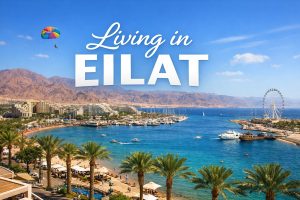 Living in Eilat is fundamentally different from living anywhere else in Israel. Situated at the country’s southernmost tip, bordered by the Red Sea and framed by desert mountains, Eilat operates in its own economic, climatic, and social reality. Anyone considering Living in Eilat must understand both its advantages and structural limitations. This is not Tel Aviv with better weather. It is a peripheral, tourism-driven, geographically isolated city with a unique tax structure and lifestyle rhythm.
This guide examines Living in Eilat from a practical standpoint: housing, costs, employment, infrastructure, risks, and long-term viability.
Overview of Eilat: Geography, Climate, and Strategic Position
Location and Borders
Eilat sits on the Red Sea, adjacent to Aqaba in Jordan and near Taba. It is approximately 350 km from Tel Aviv and nearly 5 hours by car from central Israel. That distance defines much of the reality of Living in Eilat: logistics are expensive, travel is long, and the city functions almost as an island.
Its geopolitical position has strategic value. The port of Eilat connects Israel to Asian and African trade routes without passing through the Mediterranean. However, this does not automatically translate into diversified local employment.
Climate and Environmental Conditions
Living in Eilat means extreme desert heat. Summer temperatures regularly exceed 40°C, with very low humidity. Winters are mild and short. There is minimal rainfall.
The climate attracts tourism and retirees. It also increases electricity costs (air conditioning is not optional) and affects daily routines. Outdoor work is limited in peak summer hours.
Population Profile
Eilat has a population of roughly 55,000–60,000 residents. The demographic mix includes long-term locals, hospitality workers, retirees, and seasonal employees. Living in Eilat does not offer the dense professional networks found in central Israel. Social life is smaller and more concentrated.
Housing Market and Property Prices
Property Types
Housing stock includes:
- Older apartment buildings from the 1970s–1990s
- Low-rise residential neighbourhoods
- Luxury seafront projects
- Detached villas in upscale areas
Unlike cities in the centre, Eilat has horizontal expansion potential due to surrounding desert land.
Purchase Prices
Prices are lower than Tel Aviv but not “cheap.” As of recent years:
- Standard 3–4 room apartment: mid-range compared to Be’er Sheva
- Sea-view or new projects: significantly higher
- Villas: premium pricing relative to southern cities
Living in Eilat for investment requires caution. Rental demand is heavily seasonal and tourism-driven.
Rental Market
Long-term rentals exist, but short-term holiday rentals compete aggressively. Investors hoping for steady yields must analyse occupancy rates carefully. Summer occupancy differs from winter patterns.
Living in Eilat as a renter can be affordable compared to central Israel, but supply fluctuates due to tourism cycles.
Cost of Living and Tax Advantages
VAT Exemption
One structural advantage of Living in Eilat is the VAT exemption on many goods and services. Purchases in Eilat are typically VAT-free, making certain products cheaper.
However, this does not mean overall cost of living is low. Logistics costs raise food prices, and limited competition in some sectors reduces price pressure.
Food and Daily Expenses
Supermarket prices can be slightly higher than in central Israel due to transportation. Fresh produce depends on supply routes. There is less variety than in metropolitan areas.
Utilities
Air conditioning drives high electricity consumption. Water usage is moderate, but energy bills during summer months can be substantial. Living in Eilat requires budgeting for climate-related costs.
Employment and Economic Structure
Tourism Dependency
Eilat’s economy is heavily dependent on tourism. Major hotels such as those affiliated with Israeli chains dominate the employment landscape.
Hospitality, retail, diving instruction, and airport-related services are primary sectors. Economic downturns or regional instability directly impact job security.
Remote Work and Digital Professions
Living in Eilat can work for remote professionals. High-speed internet is available, and the quiet environment suits certain lifestyles. However, networking opportunities are limited.
Public Sector and Services
Municipal employment, education, healthcare, and port operations provide more stable positions. But the overall job market is narrower than in Haifa or Tel Aviv.
Anyone relocating for employment must secure work in advance. The local market does not easily absorb mid-career professionals without tourism relevance.
Education and Family Life
Schools and Education Quality
Eilat has public secular and religious schools, as well as some private options. Class sizes are moderate. Academic reputation is not comparable to elite schools in central Israel.
Families considering Living in Eilat must evaluate long-term educational plans, especially for high school and university preparation.
Youth Environment
Outdoor lifestyle dominates. Beaches, desert hikes, and water sports define childhood experiences. However, cultural institutions (theatres, universities, advanced extracurricular programmes) are limited.
Higher Education Access
There is no major university campus in Eilat comparable to institutions in Jerusalem or Tel Aviv. Students often relocate north for academic studies.
Healthcare and Infrastructure
Medical Services
Eilat has a local hospital branch and clinics operated by national health funds. Complex procedures often require transfer to Be’er Sheva or central hospitals.
Living in Eilat with chronic health needs demands realistic planning regarding travel for specialised care.
Transport Connections
The city is served by Ramon Airport, which connects to domestic destinations and limited international routes.
Highway 90 links Eilat to the rest of Israel. Bus services operate regularly but travel times are long.
Geographic isolation remains a structural constraint. Living in Eilat means planning around distance.
Lifestyle and Community
Beach-Centric Living
The Red Sea coastline defines the city. Diving, snorkelling, and marine life are central to identity. Living in Eilat offers access to coral reefs and year-round swimming.
This lifestyle appeals to retirees, outdoor enthusiasts, and those seeking a slower pace.
Community Dynamics
Because of its size, social circles overlap. Reputation travels fast. This can foster cohesion or create social limitations depending on personality.
Living in Eilat suits those comfortable with smaller community ecosystems.
Nightlife and Culture
Nightlife revolves around tourism zones and hotels. Cultural offerings exist but are limited in scale. Residents seeking frequent high-level cultural events may feel restricted.
Risks and Structural Limitations
Economic Volatility
Tourism dependency makes income streams unstable during crises (pandemics, regional tensions, economic downturns).
Geopolitical Sensitivity
Border proximity to Jordan and Egypt adds a strategic dimension. While generally stable, regional shifts affect perception and insurance considerations.
Resale and Liquidity
Property resale liquidity is slower than in central Israel. Investors must price risk appropriately. Living in Eilat is less liquid from an asset perspective.
Comparison with Other Southern Cities
Compared with Be’er Sheva, Eilat offers coastline and tourism but lacks university-driven economic diversification. Compared with Ashkelon, Eilat is more isolated but less affected by central congestion.
Living in Eilat is not a substitute for Tel Aviv urbanism. It is a niche lifestyle choice.
Who Should Consider Living in Eilat?
- Retirees seeking warm climate
- Remote workers with independent income
- Hospitality professionals
- Water-sport enthusiasts
- Individuals prioritising climate over career mobility
Who should be cautious:
- Professionals requiring diversified job markets
- Families prioritising elite academic pathways
- Investors expecting rapid appreciation
Financial Planning for Living in Eilat
Budget categories to model:
- Electricity (summer peak)
- Travel to central Israel (flights or fuel)
- Healthcare travel contingencies
- Seasonal rental fluctuations (if investing)
Living in Eilat requires conservative financial modelling, not optimistic assumptions.
Long-Term Outlook
Government development plans periodically aim to strengthen the southern periphery. Infrastructure improvements, airport expansion, and tourism investments continue.
However, structural geography does not change. Distance remains distance. Climate remains extreme. Economic concentration remains tourism-heavy.
Living in Eilat works best for individuals aligned with its constraints rather than those attempting to reshape them.
Neighbourhood Breakdown: Where Exactly Are You Living in Eilat?
Understanding micro-locations is essential before committing to Living in Eilat. The city is not large, but neighbourhood quality varies meaningfully in age, density, noise exposure, and long-term value retention.
Shahamon: Upper-Market Residential Zone
Shahamon is generally considered the strongest purely residential area. It sits slightly elevated, offering cleaner air flow and, in some cases, sea views. Housing includes villas and mid-rise apartment buildings built in the last two decades.
For Living in Eilat with children or for long-term stability, Shahamon tends to attract families with higher purchasing power. Property prices reflect that demand. Liquidity here is stronger than in older parts of the city.
City Centre and Older Districts
Central Eilat contains older housing stock. Buildings from the 1970s–1980s may require renovation. Lifts, plumbing, and external insulation are critical inspection points.
Living in Eilat in these areas can reduce entry price, but maintenance risk increases. Investors must calculate building condition, not just purchase cost.
Marina and Seafront Projects
Luxury developments near the marina target higher-income buyers and holiday property owners. These units can perform well in short-term rental markets.
However, Living in Eilat in seafront areas may mean higher management costs and exposure to tourism noise. For full-time residents, proximity to hotels is not always an advantage.
Building Standards, Renovation Risks, and Structural Issues
Heat Insulation and Construction Quality
Desert conditions expose weak construction. Poor insulation translates directly into higher electricity bills. Double-glazing and modern insulation standards matter more here than in northern cities.
Before committing to Living in Eilat, evaluate:
- Roof insulation
- Window quality
- External wall condition
- Air conditioning system capacity
A cheaper apartment with weak insulation becomes expensive quickly.
Urban Renewal Potential
Unlike dense central cities, Eilat has limited high-rise redevelopment momentum. TAMA-style projects exist but are not dominant.
Capital appreciation from aggressive urban renewal should not be assumed. Living in Eilat as a capital growth strategy requires conservative expectations.
Water, Environment, and Natural Constraints
Desalination and Water Security
Eilat depends heavily on desalination infrastructure and pipeline supply. While Israel’s water management is advanced, the city’s peripheral location increases vulnerability to infrastructure disruption.
Living in Eilat does not currently face water shortages, but long-term resilience planning matters.
Environmental Protection Zones
Coral reefs in the Red Sea are ecologically sensitive. Strict environmental regulations limit coastal overdevelopment. This protects natural beauty but constrains large-scale expansion.
Environmental policy affects construction permits. Living in Eilat near protected marine zones may include regulatory limitations.
Security Considerations and Regional Stability
Border Proximity
Eilat borders Jordan and lies near Egypt’s Sinai Peninsula. Relations with Jordan are stable, but regional dynamics shift periodically.
Security infrastructure is strong. The city has historically remained insulated from many northern escalations. Still, Living in Eilat requires awareness of its strategic geography.
Civil Defence and Infrastructure
Residential buildings include reinforced rooms (mamad) in newer construction. Older buildings may lack them.
Security standards should be part of property evaluation when planning Living in Eilat long-term.
Transport Reality: The Cost of Distance
Driving North
Driving to central Israel takes approximately 4.5–5 hours under normal conditions. Fuel, tolls, and time must be factored into lifestyle planning.
Frequent travel reduces the perceived isolation advantage. Living in Eilat works best for people who do not need weekly presence in Tel Aviv or Jerusalem.
Air Travel via Ramon Airport
Ramon Airport provides domestic flights and limited international connections. Flight frequency fluctuates seasonally.
Air travel mitigates distance but introduces schedule dependency. Missed flights are costly in time.
Community Composition and Social Structure
Long-Term Residents vs Seasonal Workers
Eilat has two overlapping populations:
- Permanent residents
- Tourism-sector seasonal employees
This dual structure shapes social stability. Living in Eilat among permanent communities offers cohesion, but turnover in tourism sectors creates fluctuation.
Religious and Cultural Mix
Eilat includes secular, traditional, and religious communities. Synagogues and community centres exist, though density is lower than in Jerusalem or Be’er Sheva.
Families seeking specific educational or religious ecosystems must research carefully before committing to Living in Eilat.
Retirement in Eilat: Strengths and Weaknesses
Climate Advantage
Warm winters attract retirees from colder Israeli regions. Joint pain and seasonal depression are less common in southern climates.
Healthcare Limitation
Retirement planning must consider hospital distance for complex procedures. Transfers to Be’er Sheva are routine for specialised care.
Living in Eilat as a retiree works best for healthy individuals with mobility flexibility.
Investment Analysis: Is Eilat a Growth Market?
Tourism-Linked Yields
Short-term rental potential exists, but occupancy depends on:
- Domestic tourism cycles
- Security stability
- Airline route activity
Revenue volatility is real. Conservative modelling is mandatory.
Long-Term Appreciation
Capital growth historically lags central Israel. Scarcity of land is less extreme due to surrounding desert.
Living in Eilat as an investment decision must prioritise cash flow realism over speculative growth.
Education Beyond Schooling: Cultural Capital
Limited Higher Education Infrastructure
Students often relocate to institutions such as Ben-Gurion University of the Negev for higher studies.
This outflow affects demographic continuity. Young adults frequently leave and do not always return.
Cultural Exposure
The city offers concerts, beach events, and tourism-driven entertainment. However, museums, theatres, and large academic networks are limited.
Parents evaluating Living in Eilat must balance outdoor lifestyle benefits against academic exposure limitations.
Business Ownership Opportunities
Tourism-Facing Businesses
Restaurants, diving schools, boat charters, and hospitality services dominate entrepreneurial activity.
Margins fluctuate seasonally. Fixed costs remain constant.
Local Service Gaps
Peripheral cities sometimes offer opportunities in:
- Specialised trades
- Professional consulting
- Remote service businesses
Living in Eilat with a digital or niche business model can succeed if client base is external.
Climate Resilience and Future Outlook
Rising Temperatures
Climate change projections suggest increasing heat intensity. Energy demand for cooling will likely rise.
Urban planning may require improved shading and infrastructure upgrades. Living in Eilat means long-term exposure to climate extremes.
Desert Urban Planning
Expansion is possible geographically, but economic drivers limit large population growth.
Unless economic diversification occurs, Living in Eilat will likely remain a niche urban environment rather than a high-growth metropolitan hub.
Psychological Fit: Isolation vs Freedom
Isolation Factor
Some residents thrive on distance from central noise. Others experience cabin-effect isolation.
Living in Eilat requires honest psychological self-assessment. If you require constant external stimulation, it may feel restrictive.
Freedom and Space
The desert horizon offers visual and psychological openness. Lower density reduces daily friction.
The value of Living in Eilat is often intangible — calm, clarity, proximity to nature.
Comparative Lifestyle Analysis
Compared with Haifa, Eilat lacks industrial diversity and academic scale but offers warmer winters.
Compared with Jerusalem, it provides secular tourism culture rather than political and religious intensity.
Living in Eilat is a deliberate deviation from mainstream Israeli urban life.
Practical Checklist Before Relocation
Before deciding on Living in Eilat:
- Secure employment or remote income.
- Inspect insulation and building quality.
- Model electricity costs conservatively.
- Test lifestyle with extended visit in peak summer.
- Evaluate healthcare travel logistics.
- Assess resale liquidity.
- Analyse school options carefully.
Avoid emotional relocation decisions driven purely by climate.
Infrastructure Development Projects
Periodic state investments aim to strengthen the southern corridor. Road improvements along Highway 90 and airport infrastructure upgrades attempt to reduce isolation.
However, geography imposes limits. Living in Eilat will never replicate the dense connectivity of central Israel.
Tourism Cycles and Economic Sensitivity
Domestic Tourism
Israeli holiday seasons drive demand spikes. Political calm increases international tourism.
External Shocks
Pandemics demonstrated vulnerability. Hotel closures directly impacted employment.
Living in Eilat tied to hospitality must include contingency savings planning.
Realistic Summary: Strategic, Not Romantic
Living in Eilat offers:
- Warm climate
- Access to the Red Sea
- VAT advantages
- Smaller community dynamics
It also involves:
- Geographic isolation
- Tourism-dependent economy
- Higher summer utility costs
- Limited higher education access
- Slower property liquidity
The decision to pursue Living in Eilat must align with financial structure, career flexibility, health considerations, and psychological preference.
For remote earners, retirees in good health, or hospitality professionals, the city can deliver high quality of life. For career climbers dependent on central networks, it may restrict opportunity.
Living in Eilat is not inherently better or worse than living elsewhere in Israel. It is structurally different. Those who accept its constraints often thrive. Those who ignore them eventually relocate north.
The decisive factor is alignment between personal profile and structural reality.
Final Assessment
Living in Eilat offers sun, sea, and relative calm. It also offers geographic isolation, economic concentration, and infrastructure limits. The VAT exemption is a financial benefit, but it does not offset structural realities.
Anyone considering Living in Eilat must evaluate career stability, educational pathways, healthcare access, and resale liquidity. Romantic narratives about endless summer ignore real costs.
For the right profile — financially stable, remote income, lifestyle-driven — Living in Eilat can provide high quality of life. For others, the trade-offs may outweigh the climate.
The decision is strategic, not emotional.
Israel Homes Is a Guide to Finding, Understanding, and Buying Property in Israel