
Understanding TAMA 38 and Urban Renewal Projects
Overview & Definitions
Explanation understanding TAMA 38 and urban renewal
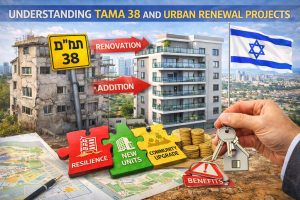 The topic of Understanding TAMA 38 and urban renewal projects is crucial for apartment owners, emphasizing the importance of Understanding TAMA 38 and Urban Renewal Projects in the context of modern Israeli real estate. This understanding is especially relevant in ageing neighbourhoods where buildings were constructed before contemporary seismic codes. TAMA 38 originated as a national earthquake-reinforcement programme but gradually evolved into one of Israel’s major redevelopment engines. It was not only about safety; it became a housing-supply tool, a value-creation mechanism, and a catalyst for densification.
As Israel faces both population growth and an ageing housing stock, urban renewal has become a top national objective. For buyers, investors, and homeowners, the ability to analyse these projects in urban areas rationally is essential. Misunderstanding the incentives, rights, or risks leads to poor decisions and costly mistakes.
Gaining a comprehensive grasp of Understanding TAMA 38 and Urban Renewal Projects is vital for making informed decisions in real estate investments.
Key data points understanding TAMA 38 and urban renewal projects
- Most buildings constructed before 1980 were eligible under traditional TAMA 38 frameworks.
- Over 60% of buildings in central cities fit the ageing, non-reinforced profile.
- Urban renewal now accounts for a significant share of new residential supply, especially in Tel Aviv, Ramat Gan, Bat Yam, and Givatayim.
- Value uplift ranges widely depending on municipality, building rights, and market demand for new apartments.
Practical implications
Understanding the rules determines whether a given building is:
Gaining insights into Understanding TAMA 38 and Urban Renewal Projects can provide a competitive edge in the market.
- An opportunity
- A future demolition site
- A financial trap
- Or a long-term waiting game
A property in a pending renewal building may appreciate or suffer depending on clarity, timelines, and developer performance.
Examples relevant to Israel
Examples of Understanding TAMA 38 and Urban Renewal Projects can highlight different approaches taken by municipalities.
- Tel Aviv often allows vertical expansion, making reinforcement-based projects viable under the new permit regulations.
- Givatayim frequently supports full demolition projects due to strategic densification goals.
- Haifa may prefer reinforcement rather than demolition because demand and profitability differ from the centre.
Legal Framework & Regulations
Explanation
The legal framework behind understanding TAMA 38 and urban renewal projects is shaped by a combination of national planning laws, municipal guidelines, and the Urban Renewal Law. Although TAMA 38 officially expired in 2022, thousands of buildings remain under its transitional system. Meanwhile, the dominant mechanism today is Pinui-Binui, governed by the Urban Renewal Authority.
Awareness of Understanding TAMA 38 and Urban Renewal Projects is essential when navigating municipal policies.
Consent thresholds, planning committees, and local policy differences mean that two identical buildings in different cities can have completely different renewal prospects.
Key data points
-
- Owner-consent thresholds for renewal programs must be clearly defined.
- 66% for TAMA 38/1 (reinforcement).
- 80% for TAMA 38/2 (demolition & rebuild).
- 80% for Pinui-Binui under the Urban Renewal Law.
- Developers must secure:
- Bank guarantees
- Evacuation arrangements
- Construction insurance
- Compliance with municipal demands
- Municipalities may impose strict conditions relating to traffic, parking, green space, and infrastructure upgrades.
Understanding the nuances of Understanding TAMA 38 and Urban Renewal Projects can uncover hidden opportunities.
Practical implications
A buyer cannot rely on verbal assurances or neighbourhood rumours. Legal feasibility is only proven once:
- A developer contract is signed,
- The project appears in the municipal planning system, and
- A statutory plan is progressing through approval channels.
Projects may be frozen or cancelled due to infrastructure strain, municipal elections, or planning reversals.
Examples relevant to Israel
- Ramat Gan halted numerous TAMA 38 projects due to severe infrastructure overload.
- Jerusalem has height restrictions in many zones, limiting feasibility for demolition projects.
- Holon and Bat Yam encourage larger Pinui-Binui complexes due to metro-adjacent strategic planning.
Financial Impact & Price Factors
Explanation
Financial analysis is critical to understanding the feasibility of renewal programs. understanding TAMA 38 and urban renewal projects. Property values shift depending on project status, developer strength, expected additions, and market sentiment. Buyers frequently misjudge the financial uplift or underestimate hidden risks.
A building under renewal may command a premium because buyers expect future modern flats. Yet uncertainty, delays, or unfeasible plans may push prices downward instead.
Key data points
-
- Reinforcement (38/1) typically adds:
Understanding TAMA 38 and Urban Renewal Projects is crucial for evaluating property potential.
- Balconies
- Safe rooms, known as mamad, are essential in new developments for enhanced security.
- Elevators
- Strengthened foundations are necessary to reinforce buildings against earthquakes.
- Demolition (38/2) usually provides:
- A new flat with an additional mamad can significantly enhance its market appeal. 10–25 m²
- Modern infrastructure
- Parking
- Improved environmental design
- Price increases can range from 8–30%, depending on certainty and the national outline plan timeline.
Practical implications
The financial cycle of a TAMA 38 or urban renewal project typically includes:
- Speculation phase – little substance, high risk, often artificially inflated asking prices.
- Developer engagement – value begins to stabilise as feasibility improves.
- Planning approval – the largest predictable increase.
- Construction – prices may dip due to noise and inconvenience.
- Post-completion – prices reflect “new build” premiums.
Examples relevant to Israel
The implications of Understanding TAMA 38 and Urban Renewal Projects are far-reaching in the real estate market.
- Flats in north Tel Aviv under approved TAMA 38/2 plans often transact at a premium long before demolition begins.
- In Haifa, reinforcement projects add limited value because the broader market is less sensitive to ageing building conditions.
- In Lod and Ramla, long delays have caused certain projects to be abandoned, devaluing units temporarily.
Risks, Pitfalls & Red Flags
Explanation
Many buyers misunderstand the risks behind TAMA 38 and urban renewal projects. These projects can fail, stall, or become financially impossible. Developers may withdraw, municipalities may change zoning policy, and owners may disagree internally, leading to litigation.
The probability of delays is high, and without proper due diligence, buyers risk overpaying for a property tied to an uncertain project.
Key data points
- Over 30–40% of early-stage renewal discussions never materialise.
- Delays of 5–10 years are not uncommon.
- Projects may be blocked for reasons unrelated to the building itself, such as traffic-load analyses or political pressure.
- Weak developers collapse financially mid-project, leaving buildings in limbo.
Practical implications
Red flags include:
Awareness of Understanding TAMA 38 and Urban Renewal Projects can help buyers avoid pitfalls.
- No reputable developer attached
- No bank guarantee
- Owners divided or in litigation over the terms of their permit agreements.
- Unrealistic architectural plans
- Poor financial feasibility (insufficient added units)
- Municipal freeze or restrictive neighbourhood plan
If any of these factors appear, the project may be unviable.
Examples relevant to Israel
- In Bat Yam, prior to improved transport planning, many TAMA 38 proposals stalled due to insufficient profitability.
- In Tel Aviv, neighbourhood masterplans overrode existing TAMA 38 rights, cancelling previously viable proposals.
- In Jerusalem, heritage restrictions often cause unpredictable delays.
Buyer Checklist & Strategic Recommendations
Explanation
Anyone buying into an existing building that is renewal-eligible needs a structured due-diligence process. Understanding how TAMA 38 and urban renewal projects influence future value requires verifying legal, financial, and planning realities—not relying on estate-agent claims or neighbor speculation, particularly regarding quality of life.
Understanding TAMA 38 and Urban Renewal Projects will greatly enhance your strategic approach to property investments.
Key data points
A proper buyer checklist should include:
- Confirmation of the building’s legal status
- Whether an approved developer exists
- Stage: concept, contract, municipal submission, approval, or execution
- Feasibility analysis: number of units added, parking, height limits
- Review of owner agreements and consent percentages
- Review of evacuation arrangements and guarantees for demolition projects
- Assessment of the developer’s track record and financial capacity
- Estimated timeline and alternative scenarios if the pinui binui projects stall.
Practical implications
Buyers should treat renewal as a project in Israel that can enhance property value. bonus, not a certainty. Pricing should reflect the quality of life improvements associated with modernized infrastructure. actual stage of the process. A flat marketed at a “future value” price without proof of feasibility is overpriced.
Avoid emotional decisions based on belief in future upgrades. Decisions must be grounded in statutory documentation.
Examples relevant to Israel
- In Givatayim, where renewal is highly institutionalised, projects with advanced approvals reliably transform property values.
- In Netanya’s older neighbourhoods, some renewal plans have been repeatedly cancelled due to shifting municipal priorities.
- In Petah Tikva, masterplan updates turned previously viable reinforcement projects into full demolition zones, altering feasibility and timelines.
Municipal Planning Policies & Their Influence on Feasibility
Explanation
Municipal planning policy is one of the most decisive factors in understanding TAMA 38 and urban renewal projects. Two identical buildings, built in the same year and with identical structural conditions, may face entirely different renewal prospects simply because they fall under different municipal philosophies. Some cities actively encourage densification to improve quality of life, while others restrict it to protect heritage, infrastructure, or neighbourhood character.
Municipal planning policies shape the essence of Understanding TAMA 38 and Urban Renewal Projects.
Key data points
- Cities such as Givatayim and Ramat Gan often promote full demolition (38/2) to increase density.
- Jerusalem and Haifa rely more on reinforcement due to heritage considerations or weaker economic incentives.
- Municipalities can reject projects even if they meet national guidelines.
Practical implications
Buyers must analyse city-specific policies before assuming renewal is likely. This requires examining municipal masterplans (Taba), neighbourhood-specific policies, and planning committee documents, especially those related to high-demand areas. A project might look attractive on paper yet remain unfeasible due to traffic-load limits or insufficient parking allowances.
Examples relevant to Israel
- Tel Aviv’s district plan (TA/5000) reshaped feasibility in many neighbourhoods by restricting excessive height additions.
- Kiryat Ono’s local plans enabled entire blocks to undergo Pinui-Binui rather than isolated TAMA 38 upgrades.
Demographic Shifts & Long-Term Neighbourhood Impact
Explanation
Urban renewal is not only a construction issue; it reshapes demographic patterns, infrastructure demand, and community dynamics in urban areas. A proper understanding of TAMA 38 and urban renewal projects requires analysing long-term neighbourhood evolution, not just the building itself.
Understanding TAMA 38 and Urban Renewal Projects is necessary for anticipating demographic shifts.
Key data points
- Redeveloped blocks usually attract younger families due to new lifts, parking, and safe rooms.
- Densification increases demand for schools, transport, and public spaces.
- Prices may rise faster in neighbourhoods undergoing coordinated—not fragmented—renewal.
Practical implications
Buyers expecting a quiet or low-density environment must anticipate changes. A renewed building may significantly increase foot traffic, cars, and school registration pressure. Conversely, coordinated renewal can uplift entire neighbourhoods, raising living standards and long-term value.
Examples relevant to Israel
- In Yehud and Or Yehuda, renewal near the light-rail routes has already changed demographics and increased demand from young professionals.
- In Ramat Gan, clusters of TAMA 38 projects produced a ripple effect, leading to new cafés, parks, and services.
Contractor Quality, Engineering Standards & Execution Risks
Explanation
A critical yet overlooked part of the initiative to modernize urban spaces is the role of local authorities. understanding TAMA 38 and urban renewal projects is assessing the engineering quality and construction standards of the developer. Some buyers focus exclusively on the “extra space” or “new flat” while ignoring the developer’s history of defects, delays, or litigation.
Key data points
-
- A strong developer provides bank guarantees, insurance, and transparent communication.
A deep dive into Understanding TAMA 38 and Urban Renewal Projects will reveal the importance of contractor quality.
- Poor-quality contractors may cut corners on waterproofing, accessibility, or insulation.
- Engineering audits often reveal deficiencies that owners never anticipated.
Practical implications
Before buying into a building undergoing TAMA 38, buyers should assess:
- The developer’s contractor classification.
- Previous projects and defect claims related to old buildings.
- Whether engineering reports (including seismic-strength assessments) are available and credible.
Examples relevant to Israel
- Some TAMA 38 buildings in central Israel experienced post-renewal water intrusion due to low-cost contractors.
- Major developers in Tel Aviv and Givatayim maintain high execution standards, leading to strong resale values of new apartments.
Taxation, Betterment Levies & Financial Obligations
Explanation
Understanding TAMA 38 and urban renewal projects requires awareness of taxation and levies that may apply. Misunderstanding these financial obligations leads to budgeting errors, disputes with developers, and incorrect assumptions about final profitability, particularly in high-demand projects.
Awareness of taxation related to Understanding TAMA 38 and Urban Renewal Projects is vital for financial planning.
Key data points
- Hetel Hashbacha (Betterment Tax) may apply when additional building rights increase property value.
- Some municipalities offer exemptions for earthquake-reinforced projects, but these vary widely.
- Buyers may face taxation on capital gains when selling a pre-renewal unit that increased in value.
Practical implications
Financial planning must account for potential costs associated with demolition and reconstruction.
- Potential municipal levies
- VAT on construction inputs can significantly affect the overall cost of demolition and reconstruction.
- Changes in Arnona (municipal property tax) for renewed buildings
- Legal fees associated with multiple contract phases
Examples relevant to Israel
- In Tel Aviv, betterment taxes can be substantial due to high land values, reducing developer profit margins.
- In peripheral cities with lower demand, municipalities sometimes waive levies entirely to encourage renewal initiatives.
Tenant–Developer Disputes & Legal Conflict Scenarios
Explanation
Disputes between developers and owners are a major risk factor within understanding TAMA 38 and urban renewal projects. Even if a project appears promising, conflicts over compensation, timelines, or plan revisions can halt progress for years.
Understanding TAMA 38 and Urban Renewal Projects can significantly mitigate legal disputes.
Key data points
- Disputes often revolve around unit size, exposure, floor assignment, and balcony orientation.
- Some owners refuse consent due to distrust, leading to litigation.
- Legal processes against “refusing tenants” can take many months or years.
Practical implications
Blind optimism is dangerous. Buyers must evaluate:
- Whether owners are aligned
- Whether a professional legal representative is coordinating the building’s interests
- Whether the developer offers clear timelines and obligations
A building with internal disputes among apartment owners is a major red flag.
Examples relevant to Israel
- A number of Tel Aviv renewal projects have been delayed because one or two owners blocked agreements until courts intervened.
- In Haifa and Lod, disputes over parking allocations derailed otherwise feasible projects.
Long-Term Value Appreciation & Exit Strategies for Buyers
Explanation
Understanding TAMA 38 and urban renewal projects also means analysing the long-term implications for resale, rental potential, and exit timing. A renewed unit may outperform the market, but timing the purchase and sale is critical.
For successful investments, Understanding TAMA 38 and Urban Renewal Projects is key to maximizing long-term value.
Key data points
- Renewed buildings typically command higher Arnona but also higher market value.
- Rental demand increases due to modern amenities.
- Newly built units often attract foreign buyers seeking modern standards not found in older stock.
Practical implications
Buyers should consider:
- The stage of the renewal cycle when purchasing
- Holding strategy (pre-renewal, during renewal, post-renewal)
- Expected rental yield once the building is modernised
- Liquidity of the neighbourhood
Examples relevant to Israel
- Ramat Gan’s renewed buildings have fetched premiums of 20–40% over original units.
- In Jerusalem, renewed buildings near transit lines show sustained demand from students and families.
Ultimately, a solid foundation in Understanding TAMA 38 and Urban Renewal Projects will empower buyers to make informed decisions.
Israel Homes Is a Guide to Finding, Understanding, and Buying Property in Israel