
Living in Negev: A Practical, Unsanitised Guide
What Living in Negev Actually Means
Not One Region, Not One Lifestyle Living in Negev
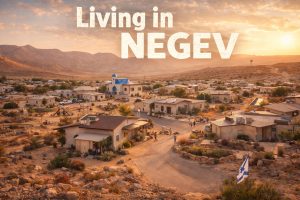 Living in Negev is not a single experience and treating it as such is a strategic error. The Negev spans more than half of Israel’s landmass and includes urban centres, development towns, kibbutzim, moshavim, community settlements, and Bedouin localities. Each has different governance, infrastructure quality, and service access. People who speak about living in Negev as a unified lifestyle are usually speaking ideologically rather than operationally. In reality, outcomes depend heavily on micro-location.
Commitment Over Flexibility
Unlike central Israel, living in Negev reduces optionality. Schools, medical services, employment hubs, and even supermarkets are fewer and farther apart. This forces commitment to a specific system rather than allowing easy substitution. For some households this creates stability and clarity. For others it creates pressure and dependency. The difference lies in tolerance for friction and long-term planning capacity.
State Priority vs Personal Reality
The Negev is nationally prioritised, but personal outcomes lag policy intentions. Some towns receive sustained investment; others stagnate despite repeated announcements. Living in Negev requires separating political narrative from lived reality. Decisions must be based on what exists today, not what may arrive in five or ten years.
Geography, Climate, and Daily Friction Living in Negev
Heat as a Structural Factor
Climate is not cosmetic when living in Negev; it dictates daily behaviour. Extended heat periods affect housing design, energy costs, and health. Air conditioning is not a luxury but a baseline utility. Homes with poor insulation or orientation impose long-term financial penalties. Anyone underestimating heat impact is mispricing daily life.
Distance and Transport Dependency
Living in Negev means distance is built into routine. Public transport is limited outside major corridors, making car ownership essential. This increases exposure to fuel prices, vehicle maintenance, and road reliability. Errands require planning rather than spontaneity. Over time, this either becomes normalised or exhausting.
Service Access Friction
Healthcare, specialist services, and bureaucracy require more coordination. A routine appointment may involve significant travel and time loss. For families with medical or care needs, living in Negev amplifies logistical risk. The environment is manageable, but only with deliberate systems.
Housing and Property Economics Living in Negev
Why Prices Are Lower
Housing affordability is the main draw to living in Negev, but lower prices reflect structural realities. Land supply is high, demand growth is capped, and resale liquidity is weaker. This is not a discount; it is risk pricing. Buying property here should be treated as a long-term consumption decision.
Buying vs Renting
Buying makes sense for households with long-term certainty. Renting provides flexibility but options can be limited in smaller towns. Renting first is often the rational approach when testing living in Negev, especially for those relocating from central Israel.
The Infrastructure Trap
Many buyers assume future development guarantees appreciation. This assumption has trapped capital for decades in some locations. Infrastructure announcements are not infrastructure delivery. Living in Negev rewards those who buy after services arrive, not before.
Employment and Income Reality
Local Job Market Limits
Employment in the Negev is concentrated in the public sector, education, healthcare, and defence-linked industries. Private-sector diversity is thin. Job loss has higher consequences because replacement options are limited.
Remote Work as a Partial Solution
Remote work has improved the feasibility of living in Negev, but it introduces new dependencies. Internet quality varies, and professional advancement can slow without proximity to networks. Remote income reduces risk but does not eliminate it.
Commuting Trade-offs
Commuting to central Israel is possible but costly in time and energy. Over time, commuting erodes the quality-of-life gains people seek from living in Negev. It often becomes unsustainable long-term.
Education, Healthcare, and Core Services
Education Variability
Education quality differs sharply by town. Choice is limited by geography, not preference. Some schools excel; others struggle. Families must assess specific institutions rather than relying on regional averages.
Healthcare Capacity
Routine healthcare is adequate in urban hubs, but specialist access often requires travel. Mental health services are particularly stretched. Living in Negev increases the importance of proactive healthcare planning.
Bureaucracy and Access
Government and municipal services operate at slower speeds. Residents must be persistent and organised. Living in Negev favours those comfortable navigating systems rather than expecting convenience.
Community, Security, and Long-Term Outlook
Community Density
One of the strengths of living in Negev is community cohesion. Smaller populations foster stronger social ties. This can be supportive or restrictive depending on personality. Privacy exists physically but not socially.
Security Reality
The Negev has strategic importance and a strong security presence. Escalations occur but are usually contained. Psychological tolerance varies, and this should be factored honestly.
Long-Term Development Outlook
The Negev will continue to develop unevenly. Success depends on choosing locations aligned with confirmed infrastructure, not slogans. Living in Negev is sustainable when approached as a calculated trade, not an act of faith.
Cost of Living Beyond Housing
Energy, Cooling, and Utilities
One of the most consistently underestimated aspects of living in Negev is energy consumption. While housing prices are lower, monthly operating costs can be materially higher than in central or northern Israel. Cooling is not seasonal but structural. Air conditioning runs for long hours across extended periods, and homes with poor insulation or inefficient systems incur persistent costs. Solar adoption is growing and can offset expenses, but upfront installation costs are non-trivial and not always permitted depending on local planning rules. Water usage is also higher due to climate conditions, particularly for families with gardens or private homes.
Transport as a Fixed Cost
Living in Negev converts transport from a discretionary expense into a fixed one. Car ownership is effectively mandatory outside a few urban corridors. Fuel, maintenance, insurance, and depreciation must be treated as baseline costs rather than optional lifestyle choices. Public transport gaps mean redundancy is low; when a car is unavailable, mobility collapses. This is a structural difference from denser regions.
Food, Services, and Availability
Basic goods are not necessarily cheaper. Limited competition in smaller towns can increase prices for groceries, repairs, and professional services. Online shopping mitigates some of this, but delivery times and availability vary. Living in Negev rewards households that plan consumption carefully rather than relying on convenience.
Social Mobility and Long-Term Career Trajectories
Career Ceiling Effects
Living in Negev can introduce a career ceiling for certain professions. Senior roles, lateral moves, and industry switching are harder without proximity to dense labour markets. This is especially relevant for younger professionals whose career paths are still evolving. Early career decisions made while living in Negev can have long-term compounding effects.
Network Density
Professional networks thin out quickly with distance. Conferences, informal meetings, and spontaneous collaboration are rarer. Digital tools help, but they do not fully replace physical presence. Living in Negev requires intentional network maintenance or acceptance of slower professional momentum.
Dual-Income Households
For households relying on two incomes, risk compounds. If one partner loses employment, replacement options may not exist locally. Living in Negev works best when at least one income is geographically independent or institutionally stable.
Children, Teenagers, and Retention Risk
Early Childhood vs Adolescence
Living in Negev often works better for families with young children than for those with teenagers. Younger children benefit from space, safety, and community. Teenagers, however, face limited social, educational, and cultural options. This creates pressure for frequent travel or eventual relocation.
Informal Education and Enrichment
Extracurricular opportunities exist but are fewer and less specialised. Sports, arts, and advanced academic programmes often require travel to regional hubs. Parents must actively compensate for this gap. Living in Negev shifts enrichment from market-provided to parent-managed.
Long-Term Retention
Many families leave the Negev when children reach late adolescence. This creates emotional and financial churn. Anyone planning living in Negev should consider whether their household can realistically stay through all life stages.
Planning, Bureaucracy, and Local Governance
Municipal Capacity Gaps
Local councils in the Negev vary widely in competence and responsiveness. Some are efficient and transparent; others struggle with staffing, budgets, and execution. Living in Negev increases dependence on municipal performance because alternatives are distant.
Planning and Building Constraints
Despite abundant land, planning approval can be slow and inconsistent. Zoning restrictions, infrastructure sequencing, and environmental constraints delay projects. Private building requires patience, legal literacy, and contingency budgeting. Living in Negev is not a shortcut around bureaucracy.
Self-Advocacy as a Skill
Residents who succeed long-term tend to be proactive, persistent, and comfortable navigating systems. Passive reliance on institutions leads to frustration. Living in Negev rewards those who treat bureaucracy as a process to manage rather than a service to consume.
Security, Resilience, and Psychological Load
Day-to-Day Security Reality
Security incidents in the Negev are generally localised but psychologically salient. Military presence is normalised, and alerts occur periodically. Most residents adapt, but individual tolerance varies. Living in Negev is not inherently unsafe, but it does require mental resilience.
Emergency Response and Redundancy
Emergency services function well in urban centres but response times can increase in remote areas. Households must be more self-reliant during short-term disruptions. Preparedness matters more than it does in denser regions.
Psychological Trade-offs
Quiet and space reduce some stresses while amplifying others. Isolation, heat, and distance can weigh heavily during difficult periods. Living in Negev works best for people with stable internal routines and external support systems.
Investment, Speculation, and Common Financial Errors
End-User vs Investor Logic
Living in Negev should not be conflated with investing in the Negev. End-user purchases can make sense based on lifestyle value. Pure investment plays face low liquidity, uneven demand, and long holding periods. Confusing these frameworks leads to poor outcomes.
Government Incentives
Grants and benefits exist but rarely compensate for weak fundamentals. Incentives reduce entry cost, not exit risk. Living in Negev based solely on financial inducements is structurally fragile.
The “Future Growth” Fallacy
Every decade produces a new Negev growth narrative. Some areas eventually benefit; many do not. The difference is infrastructure delivery, not intent. Living in Negev should be based on confirmed realities rather than projected maps.
Decision Framework: Who Should and Shouldn’t Move
Strong Fit Profiles
Living in Negev works best for:
- Long-term planners
- Remote or institutional earners
- Families prioritising space and community
- People tolerant of heat and distance
Poor Fit Profiles
Living in Negev works poorly for:
- Career-volatile professionals
- Households with complex medical needs
- People dependent on dense cultural life
- Anyone assuming easy resale or fast appreciation
The Core Test
If your plan fails when one assumption breaks—job, health, infrastructure—then living in Negev is a risk, not a strategy.
Long-Term Outlook Without Illusions
The Negev will continue to develop, but unevenly and slowly. Some towns will strengthen; others will plateau. Living in Negev is neither heroic nor reckless—it is a calculated trade. Those who thrive treat it as a system to design, not a dream to inhabit. Space, affordability, and community are real advantages. Distance, friction, and illiquidity are real costs. Ignoring either side leads to regret.
Israel Homes Is a Guide to Finding, Understanding, and Buying Property in Israel