
Renting prices for apartments with a Mamad are higher than apartments without a Mamad
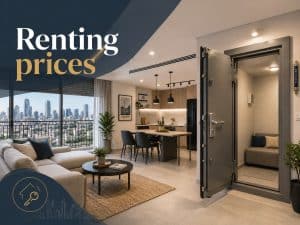 In many Israeli cities, the presence of a Mamad has become one of the most visible differences between similar apartments. A Mamad is not simply another bedroom or storage corner. It is a reinforced protected room built into the apartment, designed to give residents immediate access to shelter without leaving the home. Because security is part of everyday housing decisions, tenants often treat this feature as a practical necessity rather than a bonus. Monthly rents reflect that change in priorities, especially when families compare two apartments of the same size, location, and general condition.
The rise in renting prices reflects the value tenants place on safety features, such as a Mamad. As renting prices shift, understanding this dynamic is crucial for both landlords and tenants.
The reason is simple: people pay for certainty. A tenant who chooses an apartment with a Mamad gains a level of convenience and safety that an older apartment without one cannot fully match. In an emergency, walking to a shared shelter, using a stairwell, or relying on a public protected space can be stressful. Parents with children, elderly tenants, people with limited mobility, and anyone working from home may value the ability to reach a protected room within seconds. That value becomes part of the monthly rent. This is why a protected room is best understood as both utility and reassurance: it changes how tenants imagine daily routines, night alarms, children’s sleep, guest visits, remote work, and the difficult moments when every second inside the apartment matters.
Ultimately, the impact of these features is seen in the renting prices that tenants are willing to pay for added security. Renting prices can vary significantly based on market demand.
A Mamad can also affect how quickly an apartment is rented. In competitive neighborhoods, listings that include a protected room may receive more inquiries, more serious visits, and fewer objections during negotiation. When demand is stronger, owners have more confidence asking for a premium. Renting prices therefore rise not only because the feature is useful, but also because tenants compete for the limited stock of homes that include it.
This competition for secure living environments drives up renting prices, making apartments with a Mamad highly sought after.
The safety premium tenants are willing to pay
Housing decisions are emotional as well as financial. Tenants compare rent, sunlight, parking, floor level, building condition, noise, schools, and commute time, but safety can outweigh several of these factors. A slightly smaller apartment with a Mamad may feel more attractive than a larger apartment without one. The room can serve ordinary daily purposes, such as a bedroom, office, playroom, or storage space, while still being available when needed. That dual use makes the premium easier to justify.
Furthermore, the relationship between safety and renting prices highlights the importance of these features in modern housing.
Renting prices are influenced by perceived risk. When security concerns are high, tenants become more sensitive to protection features. During calmer periods, they may still prefer a Mamad because it reduces future uncertainty. In this sense, the room works like insurance built into the home. The tenant does not need to use it every day for it to matter. The knowledge that it is there can create peace of mind, and peace of mind has market value.
The direct link between perceived safety and renting prices cannot be ignored, as tenants are increasingly seeking peace of mind.
Families often lead this demand. Parents may reject apartments without a Mamad before even scheduling a visit. They may ask the agent immediately whether the apartment has one, where it is located, how large it is, and whether it can function as a bedroom. When many families apply the same filter, the pool of potential tenants for apartments without a Mamad becomes smaller. A smaller pool can mean longer vacancy, more negotiation, or a lower final rent.
These demands reflect a shift in market trends, with renting prices being influenced heavily by the presence of a Mamad.
Why apartments without a Mamad face pressure
Older buildings can still offer strong advantages. They may have larger rooms, central locations, mature neighborhoods, lower building fees, and character that newer buildings lack. However, when an apartment lacks a Mamad, tenants often compare it against modern alternatives with a built in protected room. Renting prices for these older apartments may need to compensate for the missing feature, especially when the apartment is on a high floor, far from a shared shelter, or in a building without an easy protected space.
This increase in renting prices for units with a Mamad underlines the competitive nature of the rental market.
The discount is not always dramatic, because location remains a powerful factor. A renovated apartment without a Mamad in a prime area may still rent for more than a less attractive apartment with a Mamad in a weaker location. Yet when two units are otherwise similar, the one with the protected room usually has an advantage. This advantage becomes clearer in neighborhoods where tenants have enough options to choose from. The missing Mamad becomes a negotiation point, just like lack of parking, no elevator, or poor insulation.
Landlords of apartments without a Mamad often need to emphasize other strengths. They can highlight renovation quality, large balconies, public shelter access, proximity to schools, flexible move in dates, lower rent, or included appliances. These features can reduce tenant hesitation, but they do not erase the safety gap. Renting prices may still need to be more flexible because the tenant is accepting a practical limitation that many renters now notice immediately.
Overall, the evolution of renting prices suggests a growing recognition of the importance of safety features in rental properties.
How landlords calculate the Mamad premium
There is no single formula for the rent gap between an apartment with a Mamad and one without it. The premium depends on city, street, building age, apartment size, floor, condition, and the quality of competing listings. In a new building where nearly every apartment includes a Mamad, the feature may be expected rather than exceptional. In an older area where protected rooms are rare, the same feature can stand out and create a stronger premium. Renting prices move according to scarcity as much as usefulness.
As the market adjusts, renting prices will continue to reflect the value tenants place on protected living spaces.
A landlord usually begins by comparing current listings and recent rental deals. The comparison should be narrow. A three room apartment with a Mamad should be compared with other three room apartments nearby, not with luxury towers across town or unrenovated walk ups on a different street. The landlord then considers how the Mamad functions. Is it large enough for a bed and closet? Does it have proper ventilation, light, and internet access? Is it part of the living layout, or does it feel like an awkward storage room? A usable Mamad supports a higher premium than one that is technically present but poorly integrated.
Timing also matters. In periods when demand rises, landlords may test a higher asking rent. If inquiries arrive quickly, the market confirms the premium. If the listing receives little interest, the price may need adjustment. Renting prices are ultimately set by what tenants are ready to sign, not only by what owners believe the feature is worth.
This feedback loop influences the overall renting prices tenants encounter in the market.
Tenant budgeting and value comparison
For tenants, the key question is not only whether an apartment with a Mamad costs more, but whether the added cost creates fair value. A premium can be reasonable when the protected room also works as a needed bedroom or home office. In that case, the tenant is not paying only for safety. The tenant is paying for usable space, privacy, flexibility, and comfort. Renting prices should be judged against the full living experience.
Thus, understanding the factors driving renting prices is essential for informed decision-making.
A useful comparison is the monthly difference divided by daily convenience. If the rent gap is modest and the Mamad replaces the need for a larger apartment, the higher rent may be efficient. If the gap is very large and the tenant rarely needs the extra room, a lower priced apartment without a Mamad may still make sense. Single tenants, short term renters, and people who live near a well maintained shared shelter may weigh the issue differently from families with young children.
Tenants should also inspect the room carefully. A Mamad should not be treated as a label on a listing. It should have a proper door, usable dimensions, a functional window, adequate electrical points, and a layout that matches the tenant’s needs. The best protected room is one that can be part of daily life without feeling like wasted space. Renting prices feel more justified when the room supports normal routines and emergency readiness at the same time.
In this light, evaluating renting prices alongside the practicality of a Mamad becomes crucial for potential tenants.
Location, building quality, and the wider market
The Mamad premium does not exist in isolation. Neighborhood reputation, school zones, access to trains or buses, parking availability, building maintenance, elevator access, and noise levels still shape rent. A protected room is important, but it is one part of a larger pricing picture. Renting prices may be higher for apartments with a Mamad, yet a neglected apartment with a protected room can lose value if the kitchen is old, the building is dirty, or the commute is difficult.
This broader context informs the dynamics at play in current renting prices.
Newer buildings often combine a Mamad with other features that also push rent upward, such as underground parking, balconies, elevators, lobbies, better insulation, and modern plumbing. In such cases, part of the higher rent comes from the full package, not only from the protected room. Separating the exact Mamad premium can be difficult because tenants are paying for a newer standard of living. Still, the protected room is often one of the first items renters mention because it represents a clear difference from older apartments.
In older buildings that have undergone reinforcement or addition projects, the Mamad can signal broader improvement. An apartment may gain not only a protected room but also updated facades, stronger structure, new elevators, balconies, and better common areas. Renting prices in these buildings can rise because the entire building feels more modern and secure. The Mamad becomes both a safety feature and a symbol of upgrade.
Consequently, investing in a Mamad can correlate with increased renting prices in various neighborhoods.
Negotiation strategies for both sides
Tenants should enter negotiations with realistic comparisons. It is not enough to say that another apartment is cheaper if that apartment lacks a Mamad, is farther away, or is in worse condition. A stronger argument compares similar apartments and shows the actual rent gap. If the apartment with a Mamad is priced far above comparable units, the tenant can ask for a reduction, included appliances, flexible entry, or a longer lease at a stable rent. Renting prices are negotiable when the asking price is not supported by the market.
This reality underscores the importance of realistic comparisons in rental negotiations, especially regarding renting prices.
Landlords should avoid exaggerating the premium. A Mamad attracts attention, but it does not automatically justify any rent level. Overpricing can lead to weeks of vacancy, and lost vacancy time can erase the benefit of a higher monthly amount. A clear listing, accurate photos, and a practical description usually work better than vague claims. Owners should show how the room can be used, mention its size when possible, and explain whether it is suitable as a bedroom or office.
Both sides should remember that value is personal. For one tenant, the Mamad is essential. For another, it is helpful but not decisive. This difference creates room for negotiation. Monthly rents settle where the owner’s expectations and the tenant’s priorities meet.
Ultimately, a thorough understanding of renting prices can empower both tenants and landlords in negotiations.
The long term rental outlook
The preference for apartments with a Mamad is likely to remain strong because it is tied to safety, family planning, and modern housing standards. As more tenants learn to ask about protected rooms at the beginning of their search, apartments without one may face a clearer disadvantage. The gap may widen in areas where supply is limited and demand is driven by families. It may narrow in luxury areas where other features dominate, or in neighborhoods where nearly every newer apartment already includes a Mamad.
This evolving market landscape will continually influence renting prices as tenants prioritize safety.
What investors and tenants should learn
For investors, the lesson is that a Mamad can support stronger demand and reduce vacancy risk. It can make a property easier to market, easier to justify, and easier to rent during uncertain periods. For tenants, the lesson is to compare the premium with real daily use, not only with fear or emotion. A protected room that functions as an extra bedroom or office can make higher rent practical, while a poorly planned room may be less valuable.
Thus, both investors an
d tenants must navigate the implications of changing renting prices in the current environment.
The psychology of apartment comparison
Another factor is the psychology of comparison during apartment visits. Tenants rarely evaluate a home in isolation. They usually view several apartments within a short period, and every feature becomes part of a mental ranking. When one unit includes a Mamad and another does not, the difference is easy to remember. Even if the apartment without a Mamad has nicer flooring or a better view, the protected room may stay in the tenant’s mind because it answers a deeper concern. This memory effect can influence the final choice. A tenant may return home after several showings and say that the safer apartment simply felt more responsible. That feeling is hard for competing landlords to overcome.
This psychological aspect highlights how crucial renting prices are for tenant satisfaction.
Why trust matters in rental marketing
The effect is also connected to trust. A building with a Mamad often feels more aligned with current expectations, while a building without one can feel less prepared for modern life. This does not mean older homes are unsafe or undesirable, but it does mean the tenant may ask more questions. Where is the shared shelter? Is it clean? Is it unlocked? How long does it take to reach it from the apartment? Are there stairs? Would children need to leave the unit at night? Each question creates friction. In rental marketing, friction matters. The easier it is for a tenant to imagine living comfortably and safely in the apartment, the easier it is for the landlord to defend the monthly price.
Addressing these concerns can significantly impact the renting prices landlords are able to command.
The kind of tenant a Mamad attracts
The Mamad can also influence the type of tenant attracted to the property. Apartments with protected rooms often appeal to families seeking stability and longer leases. Longer stays are valuable for owners because they reduce turnover, advertising costs, repairs between tenants, and periods without income. A landlord may accept a slightly lower increase from a reliable family if the apartment’s features encourage them to remain for several years. At the same time, the same feature can justify a higher starting rent because the tenant sees the apartment as a longer term solution. For the owner, the premium is not only about one month of income; it is about the overall quality and predictability of the tenancy.
In this way, the influence of the Mamad extends beyond the individual apartment to affect overall renting prices.
Remote work and daily use
Remote work has added another layer to the value of the Mamad. Many tenants now need a quiet room for calls, study, or concentrated work. A protected room can serve that function well when it has enough outlets, lighting, ventilation, and internet coverage. In smaller apartments, this can make a major difference. A couple may choose a three room apartment with a usable Mamad instead of searching for a more expensive four room apartment. In that case, the protected room does not merely raise the price; it changes the apartment’s practical category. It can turn a standard home into a flexible home, which gives it an advantage when tenants balance budget and lifestyle.
Such considerations can directly affect the demand and thus the renting prices in specific markets.
Honest presentation by landlords
For landlords, presentation should be honest and specific. A listing should not only state that the apartment has a Mamad; it should show how the room works in daily life. Photos should be bright, tidy, and realistic. If the room can fit a bed, desk, wardrobe, or crib, the description should say so. If it is currently used as an office, a child’s room, or a guest room, that use can help tenants imagine their own furniture inside. The more practical the room appears, the more valuable it becomes. A bare, cluttered, or poorly photographed Mamad may fail to create the emotional response that supports a premium, even if the technical feature exists.
By presenting the Mamad effectively, landlords can justify higher renting prices.
Avoiding overpayment for one feature
Tenants, however, should be careful not to overpay only because of one feature. The best decision balances protection with the entire housing package. A Mamad cannot fully compensate for serious problems such as moisture, poor maintenance, unsafe electrical systems, constant noise, lack of natural light, or an inconvenient location. A tenant should ask whether the premium still makes sense after considering commute, building fees, parking, schools, and expected daily comfort. The protected room is important, but the apartment still has to function as a good home. A wise renter compares the total value rather than focusing on one attractive line in the advertisement.
Ultimately, understanding the complete context of renting prices is crucial for both parties.
How floor level affects the rent gap
The rent gap may also vary by floor. In a low floor apartment, reaching a shared shelter may be easier, so the absence of a Mamad might be less damaging. On a high floor, the lack of an internal protected room can feel more serious because movement through stairs or elevators during an alert may be less practical. Families with babies, elderly residents, or pets may especially notice this point. Therefore, the same missing feature can affect two apartments differently. A third floor unit without an elevator and without a Mamad may face stronger objections than a ground floor unit near a maintained protected area.
The location and floor level impact how renting prices are perceived by potential tenants.
Seasonality and tenant choice
Seasonality can matter as well. During periods when many leases expire, tenants may have more alternatives and can compare safety features more aggressively. During periods of limited supply, they may compromise because they need housing quickly. Even then, the Mamad remains a powerful filter. Some renters will stretch their budget or reduce expectations in other areas to secure one. Others will choose a cheaper apartment without it but expect a meaningful saving. This creates a clearer two tier market, where protected apartments compete against protected apartments, and unprotected apartments must succeed through price, location, space, or renovation.
During peak seasons, renting prices may fluctuate, emphasizing the Mamad’s value even more.
Why accurate documentation matters
The importance of documentation should not be ignored. Tenants may ask whether the room is officially a Mamad or simply a reinforced room described casually in the listing. Misleading descriptions can damage trust and weaken negotiations. Owners should use accurate language and avoid promising more than the apartment provides. If the room meets the expected standard, clarity helps the landlord. If it does not, honesty prevents disappointment during visits. A tenant who arrives expecting a proper protected room and finds something else may lose confidence in the entire listing.
This clarity around renting prices and the presence of a Mamad is vital for tenant confidence.
From optional feature to expected standard
Over time, the Mamad may become similar to other features that once felt optional but later became expected in many areas. Elevators, balconies, parking, and air conditioning all influence tenant behavior differently by city and building type. The protected room has joined that list, but with a stronger emotional dimension. It affects the sense of security inside the home, not only convenience. That is why the premium can remain resilient even when tenants try to reduce costs. People may compromise on design, size, or luxury, but they are often less willing to compromise on a feature connected to immediate safety.
Thus, the evolution of renting prices continues to shape tenant expectations moving forward.
Renovation and long term asset value
For property owners considering renovation, the question is complex. Adding a Mamad to an existing building or apartment can involve planning, permits, engineering, cost, and cooperation with other owners. It is not always possible or financially sensible. Yet when such an upgrade is realistic, it can improve marketability and long term asset value. The return may appear through higher rent, shorter vacancy, stronger tenant quality, and better resale appeal. Owners should compare the cost of improvement with realistic market gains rather than assuming the upgrade will pay for itself immediately. Still, the direction of demand suggests that protected rooms will continue to matter.
Investments in safety features like a Mamad can justify higher renting prices in a competitive market.
How a Mamad changes the tenant relationship
The broader message is that a Mamad changes the relationship between apartment and tenant. It gives the home an added role: not only a place to live, but also a place to feel prepared. That role affects emotion, search behavior, negotiation, and final willingness to pay. Apartments without one can compete, but they must offer persuasive advantages elsewhere. Apartments with one begin the conversation with a built in answer to a question many tenants now ask first, before viewing the apartment itself.
Consequently, understanding these shifts in renting prices can benefit both landlords and tenants alike.
Final view of renting prices
Renting prices for apartments with a Mamad are generally higher because the market rewards safety, flexibility, and peace of mind. Renting prices without a Mamad can still be attractive, especially when they offer excellent location, renovation, space, or a lower monthly cost. Yet the protected room has become a meaningful line in the rental market. It changes demand, strengthens landlord positioning, and gives tenants a reason to pay more when the rest of the apartment meets their needs. Renting prices reflect these dynamics and highlight the evolving landscape of tenant priorities.
Israel Homes Is a Guide to Finding, Understanding, and Buying Property in Israel