
Living in Tzfat (Safed): A Practical Guide to Life in Israel’s Northern Hill City
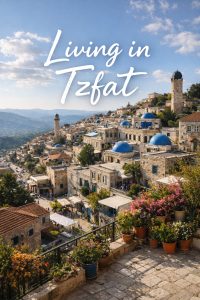 Living in Tzfat attracts people for reasons that go beyond property prices or scenery. This northern city in the Upper Galilee is shaped by altitude, religion, and geography in ways that strongly influence daily life. Also known internationally as Safed, the city offers a lifestyle that is slower, more inward-looking, and far removed from Israel’s economic centres. That difference is precisely what draws some people in — and pushes others away.
This guide examines living in Tzfat without mysticism or marketing language. The focus is on realities: housing, work, education, infrastructure, and long-term sustainability.
Geographic Location and Climate
Tzfat sits at one of the highest elevations of any city in Israel. Its mountain location directly affects climate, transport, and housing quality.
Weather Conditions
Summers are cooler than most of the country, particularly compared to coastal cities. Winters, however, are cold by Israeli standards. Rain, fog, and occasional snowfall are part of normal life. Heating costs are not optional, especially in older stone buildings common throughout Safed.
Anyone considering living in Tzfat should factor in higher winter utility costs and reduced mobility during bad weather.
Accessibility and Distance
The city is remote. Travel to Tel Aviv or Jerusalem is long and impractical for daily commuting. Haifa is closer but still not convenient. Safed functions as a regional centre rather than a connected suburb. This isolation shapes employment, healthcare access, and social life.
Population and Community Structure
Understanding who lives in the city is essential before relocating.
Demographics
The population is predominantly religious, including Haredi, religious Zionist, and traditional Jewish communities. There is a smaller secular minority and a mix of immigrant populations. Social life is community-based and highly visible.
Living in Tzfat suits people comfortable in a religiously dominant environment. Cultural pluralism exists but is limited.
Community Expectations
Neighbourhoods are close-knit. Community involvement is expected, and privacy is reduced compared to larger cities. Safed offers strong informal support networks but also social pressure to conform to local norms.
Housing and Property Market
Housing affordability is one of the city’s main attractions.
Property Prices and Demand
Prices are significantly lower than in central Israel. Entry-level apartments and family-sized homes remain accessible. This makes living in Tzfat financially viable for families who would otherwise be priced out of the market.
However, property liquidity is limited. Selling can take time, and price growth is inconsistent. Safed is not a speculative market.
Old City vs Newer Areas
The Old City offers historical character but comes with infrastructure challenges such as limited parking, steep access routes, and ageing utilities. Newer neighbourhoods provide better planning, easier access, and more modern buildings.
Choosing where to live in Safed often means deciding between atmosphere and functionality.
Employment and Income Reality
Employment is the city’s biggest constraint.
Local Job Market
Most jobs are in education, religious institutions, healthcare, retail, or municipal services. Salaries are generally below national averages. There is no major private-sector engine.
Living in Tzfat without an external income source requires careful budgeting and realistic expectations.
Remote Work
Remote employment has improved viability, but infrastructure varies. Internet reliability depends on neighbourhood, and winter weather can disrupt services. Safed supports remote work, but not at a metropolitan standard.
Education and Family Life
Families form the backbone of the population.
Schools and Education
There is a wide range of religious schools across different streams. Secular education options are limited. Families considering living in Tzfat must align schooling choices with their values before moving.
Children and Lifestyle
Children benefit from safety, community involvement, and proximity to nature. Exposure to diverse cultural and professional pathways is narrower than in central Israel. Parents often supplement education independently.
Healthcare and Services
Medical Access
Basic healthcare is available locally, including a hospital and clinics. Specialist treatment often requires travel to larger cities. For older residents or those with complex medical needs, this is a serious consideration.
Living in Tzfat requires planning for healthcare logistics over the long term.
Culture, Religion, and Daily Rhythm
Spiritual and Cultural Life
Religious study, prayer, and community events dominate daily life. The artists’ quarter and tourism provide some cultural diversity, but activity is seasonal and inconsistent.
Safed appeals to those who want tradition to structure daily life rather than consumption or nightlife.
Tourism Impact
Tourism provides income but also instability. Holiday periods bring congestion and noise; off-seasons can feel economically quiet. Businesses open and close frequently.
Transport and Infrastructure
Public Transport and Roads
Public transport exists but is limited. Travel times are long, and frequency is low. Car ownership is effectively essential.
Infrastructure investment lags behind demand. Living in Tzfat requires patience with inefficiencies and slower municipal development.
Advantages and Trade-Offs
Key Advantages
- Relatively affordable housing
- Strong religious and community life
- Cooler climate
- Quiet, non-urban pace
Key Disadvantages
- Limited employment opportunities
- Geographic isolation
- Weaker infrastructure
- Narrow educational options
Living in Tzfat is a conscious trade-off, not a lifestyle upgrade for everyone.
Daily Life When Living in Tzfat
Daily life when living in Tzfat moves at a noticeably different pace from central Israel. Shops open later, close earlier, and often shut entirely for religious or seasonal reasons. This is not inefficiency; it is cultural prioritisation. Time is structured around prayer schedules, Shabbat preparation, and the Jewish calendar rather than consumer convenience. For residents of Safed, this rhythm quickly becomes normal, but newcomers often underestimate how deeply it shapes everyday logistics.
Errands require planning. Banking hours are limited, specialist shops may only exist in one part of town, and delivery services are less reliable than in larger cities. Living in Tzfat rewards those who think ahead and penalises those used to last-minute solutions. This is especially true before holidays, when Safed becomes crowded and local services stretch thin.
Social interaction is frequent and informal. People know their neighbours. Encounters in the street often turn into conversations. Privacy exists, but anonymity does not. For some, this is grounding; for others, it feels intrusive. Either reaction is rational.
Cost of Living Beyond Housing
While housing costs are lower, overall cost of living is not proportionally cheap.
Utilities and Maintenance
Heating costs in winter are a real expense. Older properties in Safed often require space heaters, gas systems, or upgraded insulation. Maintenance costs are higher in stone buildings due to moisture, cold, and ageing infrastructure. Living in Tzfat without budgeting for these realities leads to unpleasant surprises.
Water pressure can vary by neighbourhood due to elevation differences. Power outages during winter storms still occur. These are not frequent, but they are not rare either.
Food and Shopping
Basic groceries are available locally, but variety is limited. Kosher standards are strict, which is positive for some residents and restrictive for others. Many households travel periodically to larger cities to stock up on specialised items. Living in Tzfat often involves bulk buying and home storage.
Safed is not a cheap dining city. Restaurants are limited and largely tourism-focused. Eating out is an occasional activity rather than a lifestyle.
Neighbourhood Differences Inside the City
Tzfat is not uniform. Where you live matters more than in many other Israeli cities.
Old City Neighbourhoods
The Old City attracts people for atmosphere, history, and proximity to synagogues and cultural sites. However, living conditions vary dramatically from building to building. Renovation quality is inconsistent, access is difficult, and parking is often impossible.
Living in Tzfat’s Old City suits people who value character over convenience. It does not suit families with mobility issues or those dependent on cars.
Peripheral and Newer Areas
Newer neighbourhoods on the outskirts offer better access, modern construction, and improved services. These areas are less picturesque but far more practical. Safed’s growth is slowly shifting outward, and these neighbourhoods are where most new families settle.
Religious Infrastructure and Its Impact
Religion is not a side feature of Safed; it is the organising principle.
Synagogues and Study
There is no shortage of synagogues. Every neighbourhood has multiple options, often aligned with specific traditions or communities. Torah study frameworks are extensive, ranging from full-time institutions to evening programmes.
Living in Tzfat without religious engagement is possible, but it places residents on the margins of social life.
Shabbat and Holidays
Shabbat is deeply observed. Public transport shuts down, shops close, and streets quiet significantly. For many residents, this is a weekly reset. For others, it feels restrictive. Safed becomes extremely crowded during major holidays, especially those associated with pilgrimage or religious tourism.
Security and Regional Stability
Security concerns are part of life in northern Israel, though often misunderstood.
Day-to-Day Reality
Most of the time, daily life in Safed feels safe. Crime rates are relatively low, and community vigilance is strong. However, regional tensions can escalate quickly, affecting mobility and services.
Living in Tzfat requires emotional resilience and acceptance of periodic uncertainty. This is not unique to the city, but its proximity to sensitive borders increases exposure.
Long-Term Viability and Ageing in Tzfat
A critical but often ignored question is whether the city works long-term.
Ageing Population Considerations
For younger families, Safed can be manageable. For older residents, challenges increase. Sloped streets, limited specialist healthcare, and distance from major hospitals become more significant with age.
Living in Tzfat into retirement requires advance planning: suitable housing, family support, and transport solutions.
Intergenerational Retention
Many young adults leave the city for education or work and do not return. This affects long-term economic diversity. Safed remains stable due to religious institutions and state support, but economic dynamism is limited.
Investment Perspective on Property in Safed
From an investment standpoint, the city requires realism.
Rental Market
Rental demand exists, particularly among religious students, families, and lower-income households. Yields can be reasonable, but tenant turnover is higher than average. Property management requires involvement.
Living in Tzfat as a landlord is not passive income. Distance complicates oversight.
Capital Growth
Capital appreciation is slow and uneven. Safed does not benefit significantly from national infrastructure projects or employment growth. Buyers should treat property here as lifestyle-driven rather than growth-driven.
Psychological Fit: Who Thrives and Who Struggles
This is the most important factor.
Who Thrives
- Families prioritising religious life
- People with stable remote income
- Individuals comfortable with isolation
- Those seeking slower pace and routine
For these groups, living in Tzfat can feel coherent and meaningful.
Who Struggles
- Career-driven professionals
- Secular households seeking diversity
- People dependent on urban services
- Those who dislike social visibility
Safed magnifies personal preferences. It does not soften them.
Cultural Identity and External Perception
Tzfat carries a symbolic weight that affects how residents are perceived.
Inside Israel
Within Israel, Safed is often viewed as peripheral, religious, and economically weak. This perception influences funding, employment prospects, and political priorities.
Living in Tzfat means accepting a degree of marginalisation in national narratives.
International Image
Internationally, Safed is romanticised. Tourists see mysticism and beauty, not daily friction. Residents live with the gap between image and reality.
Practical Advice Before Moving
Before committing to living in Tzfat, several steps are essential.
Trial Period
Rent before buying. Experience winter. Experience holidays. Live through a full annual cycle in Safed before making irreversible decisions.
Neighbourhood Research
Visit at different times of day. Talk to residents, not agents. Infrastructure quality varies street by street.
Income Security
Secure income before moving. Local employment should be treated as supplementary, not primary.
Final Strategic View
Living in Tzfat is not a neutral choice. It is a values-driven decision with clear trade-offs. Safed offers affordability, community, and spiritual depth, but demands compromise in employment, access, and convenience.
For those aligned with its structure, the city provides stability and meaning. For those who are not, its limitations become suffocating rather than grounding.
Tzfat does not adapt to residents. Residents adapt to Tzfat.
Tzfat is neither a suburb nor a city in the conventional sense. It is a self-contained environment shaped by faith, geography, and distance from Israel’s economic core. People who thrive here usually do so because they actively chose its constraints along with its benefits.
Safed works best for families and individuals who value community, affordability, and religious life more than career mobility or urban convenience. For everyone else, the city’s limitations tend to outweigh its appeal.
Israel Homes Is a Guide to Finding, Understanding, and Buying Property in Israel