
Best Air-Conditioning Units for Israeli apartments: Electra and Tadiran
Overview & Key Concepts
Explanation
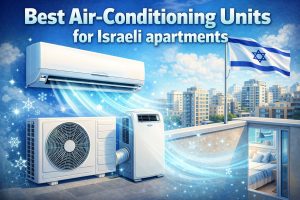 For anyone in the market for the best air-conditioning units for Israeli apartments, it’s important to do thorough research and consider various factors that contribute to efficiency and comfort.
Choosing the best air-conditioning units for Israeli apartments requires understanding three forces that shape local demand: Israel’s intense summer heat, compact urban apartment layouts, and strict energy-efficiency expectations driven by high electricity costs. Unlike colder countries where heating is dominant, Israel relies heavily on cooling for eight to nine months a year, meaning Air Conditioner systems are not optional appliances but core infrastructure.
When selecting the best air-conditioning units for Israeli apartments, it’s crucial to consider factors such as energy efficiency, installation quality, and the specific needs of your living space. The best air-conditioning units for Israeli apartments not only provide effective cooling but also help manage electricity costs.
Israeli homes typically use four configurations:
- Mini-central (מיני מרכזי) – A ducted system serving multiple rooms from a single outdoor compressor provides efficient temperature control.
- Multi-split inverter – Individual wall units connected to one outdoor compressor.
- Single split inverter – A standard one-room unit, the most common nationwide.
- VRF systems – High-efficiency multi-room inverter-driven split air systems for premium apartments and penthouses.
The best air-conditioning units for Israeli apartments are not just the strongest or most expensive central air conditioners available. They are the ones correctly sized for each room, configured to match usage patterns (who sleeps where, at what hours, with which doors open), and installed with attention to airflow, drainage, and electrical infrastructure. A mediocre unit installed well often outperforms a premium unit installed badly.
Understanding the various models of the best air-conditioning units for Israeli apartments can lead to informed decisions that cater to comfort and efficiency. Additionally, the best air-conditioning units for Israeli apartments should be chosen based on personal preferences and the layout of the home.
Key Data Points
- Israeli summers reach 32–40°C, with humidity above 70% near the coast.
- Cooling demand is highest from May to October, with partial use in shoulder seasons.
- Electricity is relatively expensive compared to many OECD countries. Any inefficiency shows up quickly in monthly bills.
- Most new builds assume at least one air-conditioning solution per room; resale value suffers when flats lack modern systems.
- Newer units use inverter technology, which adjusts compressor speed rather than simply switching on and off.
Practical Implications
- For the air conditioning system, it is essential to consider energy efficiency. best air-conditioning units for Israeli apartments, inverter technology is effectively mandatory; non-inverter units are false economy.
- Apartment layout dictates more than half of the decision. A long, narrow railway-style flat in Jerusalem needs a different strategy from a square 4-room flat in Be’er Sheva.
- In many cases, the balcony is the bottleneck: if there is room for only one compressor, multi-split or mini-central become more attractive, despite their downsides.
Examples Relevant to Israel
- Tel Aviv: Small apartments with tiny balconies often combine one powerful salon unit with a compact bedroom unit, to avoid overloading space with compressors.
- Haifa: Steep topography and humid air mean that even evening temperatures stay uncomfortable; quiet, efficient VRF air units matter.
- Modiin and Beit Shemesh: Many family flats use a mini-central system in the open-plan salon/kitchen and individual splits for bedrooms, balancing comfort and energy use.
How to Size an AC for an Israeli Apartment
Explanation
Even the most economical air conditioning units can provide adequate cooling if chosen wisely. best air-conditioning units for Israeli apartments fail when incorrectly sized. Oversized units short-cycle (turning on/off frequently), leading to higher wear, poor humidity control, and wasted electricity. Undersized units run at full power constantly, never quite achieving comfort.
Key Data Points
A very rough rule of thumb many installers use is:
- 1 HP for 10–12 m² in a well-insulated room.
- 25–1.5 HP for 12–16 m² or poorly insulated rooms.
- 2–2.5 HP for salons of 20–30 m², depending on sun exposure and glass surfaces.
However, these are only starting points. Ceiling height, insulation quality, the number of external walls, and glazing type can easily shift required capacity by 20–30%.
Practical Implications
- South- or west-facing rooms with large windows often need one “step” higher capacity than raw floor area suggests.
- In Jerusalem or Safed, you may accept slightly lower capacity because nights are cooler, but daytime heat still demands a robust unit.
- In Tel Aviv, Netanya, Ashdod and other coastal cities, humidity loads can be as important as heat loads; units must handle both.
Example Calculation
A 90 m², 4-room apartment in Rishon LeZion might use:
- Salon + kitchen (open plan, 28 m², large west-facing window): 2.5 HP inverter.
- Master bedroom (14 m², one external wall): 1.25 HP inverter.
- Two children’s rooms (10–11 m² each, one external wall): 1 HP inverter each.
You can achieve this via individual splits (three compressors) or a multi-split with one compressor and four indoor units. The best air-conditioning units for Israeli apartments In this case, the air conditioning units are not necessarily the most powerful, but those that stay within efficient operating ranges without overshooting.
Pricing, Costs & Financial Breakdown
Explanation
Evaluating the best air-conditioning units for Israeli apartments means looking beyond list prices or seasonal sales. You need to calculate total cost of ownership: purchase, installation, maintenance, and electricity over the system’s realistic lifespan.
In addition to pricing, consider the long-term benefits of investing in the best air-conditioning units for Israeli apartments. A well-informed choice can lead to significant savings in both energy costs and maintenance.
Key Data Points
Typical ranges (equipment + basic installation) for central air conditioners vary widely based on efficiency and brand.
- Single split inverter (1–2.5 HP): 2,000–4,000 NIS for an economical air conditioning system.
- Multi-split (2–4 indoor units): 8,000–22,000 NIS
- Mini-central (ducted) for 3–4 rooms: 15,000–35,000 NIS
- VRF systems for large/premium apartments: 30,000–80,000+ NIS
Maintenance and running costs:
- Annual professional service (per compressor): 300–600 NIS
- Filter cleaning: DIY every few weeks, or professional cleaning for heavily used central air units.
- Electricity can easily exceed 3,000–5,000 NIS per year per family if systems are inefficient or used carelessly
Practical Implications
When comparing options, it’s not enough to ask, “Which brand is cheaper?” You need to ask:
- How many hours per year will this system run?
- Is the apartment owner planning long-term occupation or short-term rental?
- How much is saved by choosing the best air-conditioning units for Israeli apartments Would you prefer units with higher efficiency instead of the cheapest air conditioning units available?
A system that costs 3,000 NIS more but saves 120 NIS a month in electricity will usually pay for itself in just over two years, after which the savings are pure profit.
Examples Relevant to Israel
- Family in Ashkelon running a 2.5 HP salon unit 10–12 hours daily in summer can easily see 400–600 NIS monthly just for cooling if using an older, non-inverter unit. Switching to a high-efficiency inverter unit may reduce that by 30–40%.
- Student flat in Be’er Sheva might only run bedroom units at night; cheaper mid-range models are often acceptable, as total annual hours are lower.
Smart Control, Timers & Home-Automation Integration
Explanation
Smart control is increasingly central when choosing the best air-conditioning units for Israeli apartments. The unit itself may be standard, but a good smart controller can drastically improve comfort and reduce costs.
Key Functions
-
- Wi-Fi control – Switch the air conditioning units on or off while commuting, and avoid running the AC unit all day in an empty flat.
- Scheduling – Night schedules with slightly higher setpoint (e.g., 25°C instead of 22°C) reduce electricity use while preserving comfort.
- Geofencing – AC turns off automatically when all household members leave the flat, ensuring electricity savings.
The best air-conditioning units for Israeli apartments are often those that incorporate energy-saving technologies which can greatly reduce operating costs over time.
- Energy monitoring – Some systems estimate consumption and help you identify waste.
Practical Implications
The best air-conditioning units for Israeli apartments often are not those with the fanciest remote, but those that integrate smoothly with smart controllers (whether the brand’s own app or third-party systems). A mediocre unit combined with intelligent control can outperform a high-end model used carelessly.
Smart controls can enhance the performance of the best air-conditioning units for Israeli apartments, making them more efficient and user-friendly.
For landlords, locking certain settings (e.g., maximum minimum temperature, or running time limits) protects against extreme tenant behaviour that causes huge electricity bills in inclusive-rent arrangements.
Examples Relevant to Israel
- In Tel Aviv, where many tenants work long hours and socialise late, schedules that pre-cool before arrival home and switch off automatically after midnight can significantly cut bills.
- In Jerusalem, smart systems can automatically prioritise heating mode in winter mornings and cooling in shoulder seasons, without manual switching.
Risks, Limitations & Critical Notes
Explanation
The best air-conditioning units for Israeli apartments also have failure modes and trade-offs. Ignoring these leads to expensive mistakes.
Key Risks
- Underestimating Electrical Infrastructure
- Old buildings may have weak panels and limited capacity. Adding a large mini-central unit plus multiple split air conditioners can trip breakers constantly.
- Upgrading the panel and main feed can cost several thousand shekels.
- Noise & Nuisance Complaints
- Compressors placed too close to neighbours’ windows or bedrooms can spark building disputes.
- Some municipalities and buildings have strict rules about where condensers may be installed.
- Hidden Installation Shortcuts
- Inadequate insulation on refrigerant lines → energy loss + condensation damage.
- Poor drainage routing → internal leaks or mould.
- Over-long piping runs beyond manufacturer’s spec → reduced capacity and compressor strain.
- Brand Availability & Service Network
- The best air-conditioning units for Israeli apartments are useless if you cannot get spare parts or qualified technicians.
- Cheap off-brand units may have no local support, turning simple repairs into unit replacement.
Practical Implications
You need to interrogate installers about the air conditioning systems they recommend.
- Are you using manufacturer-approved piping and insulation?
- How long is the refrigerant line between indoor and outdoor units?
- Where will the condensate drain? Is there a slope?
- What happens if the system needs gas recharge or PCB (control board) replacement?
If an installer cannot answer clearly, it’s a warning sign, no matter how attractive the unit’s price or spec sheet.
Examples Relevant to Israel
- Coastal corrosion: In Ashdod, Ashkelon, and Netanya, salty air corrodes coils and outdoor units more quickly. Choosing models with anti-corrosion protection and scheduling regular cleaning is non-negotiable.
- Top-floor overheating: Roof-level apartments in Be’er Sheva or Tiberias may need slightly overspec’d units because roofs absorb enormous solar gain.
Comparison & Practical Recommendations
Explanation
To compare the best air-conditioning units for Israeli apartments, you must look at four dimensions:
- Efficiency – Seasonal efficiency ratings and inverter performance.
- Durability – Coil quality, casing strength, and electronics robustness.
- Service Network – Number and responsiveness of trained technicians.
- Noise and Comfort – Indoor fan noise, outdoor compressor noise, humidity control.
Key Data Points by Category (Qualitative)
- Electra / Tadiran are among the leading companies in Israel offering innovative cooling solutions.: Well-adapted to Israeli climate, robust service networks, good mid- to high-range offers.
- Tornado: Competitive on price, widely installed in rentals and budget-conscious homes.
- Daikin / Mitsubishi: Premium imports; higher upfront cost but strong reliability and comfort, particularly for demanding environments and VRF.
- Value imports (e.g., Midea, AUX): Offer good value-to-price ratio but may have shorter lifespans and less consistent service coverage.
Practical Recommendations by Apartment Type
- Small Urban Flat (up to 60–70 m²)
- Configuration:
- 5–2 HP inverter in salon + 1–1.25 HP inverter in bedroom for optimal electricity savings.
- Why:
- Separate control for sleeping and living areas increases comfort and reduces waste.
- What to choose:
- Mid-range Electra or Tornado for cost-conscious owners; premium Daikin only if noise and fine-grained control justify extra cost.
- Smart layer:
- Wi-Fi remote control for tenants is often enough; full-blown home automation is optional.
- Standard 4-Room Family Apartment (85–110 m²)
- Configuration Option 1 – Hybrid:
- Mini-central for salon + kitchen (2.5–3 HP)
- Individual splits for bedrooms (1–1.25 HP each)
- Configuration Option 2 – Multi-Split:
- One outdoor unit connected to 4 indoor units
- Trade-offs:
- Hybrid offers better redundancy: if one compressor in the air conditioning system fails, the rest still work.
- Multi-split saves balcony space but creates a single-point-of-failure.
- Best practice:
- Many families find the hybrid approach to central air more resilient and easier to service. In this context, the best air-conditioning units for Israeli apartments are often mid- to upper-mid branded inverters that balance efficiency and repairability.
- Large Penthouse or Duplex (120+ m²)
- Configuration:
- VRF or multiple inverter compressors zoned by floor and zone (day/night).
- Why:
- High ceilings, open spaces and large glazing make load profiles complex; VRF or advanced multi-split systems handle variable loads better.
- Best practice:
- Best practice:
Examples Relevant to Israel
- New projects in Netanya and Herzliya Pituach often feature advanced central air conditioners. commonly install VRF systems as standard for sea-facing luxury units.
- Tama 38 and urban renewal buildings often pre-design duct shafts and compressor positions, leaving buyers to select the specific models but not the configuration type.
Environmental & Health Considerations
Explanation
The best air-conditioning units for Israeli apartments must also address indoor air quality, environmental impact, and temperature control for maximum comfort.
Choosing the best air-conditioning units for Israeli apartments also involves understanding how these units can affect indoor air quality, contributing to a healthier living environment.
Key Points
- Filters: Basic units only remove dust. Higher-end units add anti-bacterial or HEPA-like filters, but these require regular replacement.
- Mould prevention is essential for maintaining indoor air quality in central air conditioners.: Proper drainage and periodic “dry” cycles reduce moisture accumulation on coils.
- Refrigerants: Modern units use R32 or similar gases with lower global warming potential than older R410A, but leaks are still environmentally harmful.
Practical Implications
-
- Families with asthma or allergies should check filter options and maintenance routines before purchase.
- Overcooling a flat (e.g., running at 19–20°C) not only wastes energy but can create condensation and mould, especially on external walls. The best air-conditioning units for Israeli apartments support fine temperature and humidity control, not just extreme cooling.
Furthermore, the best air-conditioning units for Israeli apartments facilitate precise temperature and humidity control, ensuring optimal comfort throughout the year.
Final Buyer/Owner Checklist
Explanation
This checklist pulls together the key steps to avoid common mistakes and select the most cost-effective air conditioning system. best air-conditioning units for Israeli apartments for your specific property.
Key Data Points – Step-by-Step
Step 1 – Define Usage Profile
- How many hours per day will each room be cooled in peak summer?
- Are you cooling only at night, or also in the daytime (e.g., work-from-home)?
- Are there babies, elderly residents, or people with health needs requiring tighter control?
Step 2 – Map the Apartment
- Draw a rough floorplan with dimensions.
- Mark external walls and big windows; highlight south- and west-facing glazing.
- Identify possible compressor locations and balcony limitations.
Step 3 – Choose Configuration
- One compressor per room (single splits) → maximum redundancy and control, needs more balcony space.
- Multi-split → saves balcony space but creates dependency on one outdoor unit.
- Mini-central + splits → often a good compromise for 4–5 room flats, providing effective temperature control.
- VRF → for high-value, complex apartments.
Step 4 – Shortlist Brands and Models
- Eliminate non-inverter units.
- Check energy labels and efficiency ratings.
- Research service network quality and warranty conditions.
Step 5 – Interrogate Installers
Ask pointed questions:
- What capacity (HP) per room, and why?
- How long will the refrigerant pipes be for the split air system? Are they within manufacturer limits?
- How will drainage be routed? What prevents backflow or leaks?
- How will you minimise noise for neighbours?
- What is included in the warranty for labour vs parts?
Step 6 – Plan Smart Control
- Decide if you want simple Wi-Fi remotes or full integration with smart home systems.
- Define schedules in advance: night temperatures, away modes, eco settings.
Step 7 – Maintenance Plan
- Commit to filter cleaning intervals.
- Schedule yearly or bi-yearly professional inspection, depending on usage intensity.
- Monitor electricity bills for anomalies indicating leaks or inefficiencies in the condensing unit.
Practical Implications
Owners who follow this systematic process almost always end up with a better match between their air conditioning units and lifestyle. Rather than just buying what the installer pushes, they actively choose the most cost-effective solutions. best air-conditioning units for Israeli apartments based on hard constraints and long-term economics.
Examples Relevant to Israel
- A landlord in Bat Yam offering “all bills included” has a strong incentive to install high-efficiency units plus smart control to limit waste, even if the upfront cost is higher.
- A family in Jerusalem who primarily need heating in winter and modest cooling in summer will favour inverter units with strong heating performance curves at low outdoor temperatures, not just headline cooling capacity.
Israel Homes Is a Guide to Finding, Understanding, and Buying Property in Israel