
Living in Ashdod: A Practical Guide to Life on Israel’s Mediterranean Coast
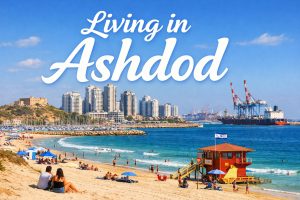 Living in Ashdod means choosing a coastal Israeli city that combines working-class pragmatism, strategic infrastructure, and growing residential appeal. Unlike Tel Aviv’s inflated pricing or Jerusalem’s political intensity, Ashdod operates on a different logic: it is industrial, port-driven, religiously diverse, and structurally expanding. Anyone considering Living in Ashdod needs to understand the economic engine behind the city, the neighbourhood segmentation, and the long-term risk and opportunity profile.
This guide analyses Living in Ashdod from a housing, lifestyle, financial, and infrastructure perspective without romanticising or dismissing the city.
Economic Foundation and Strategic Importance
The Port as the Core Driver
The presence of Port of Ashdod defines the city. It is one of Israel’s two major Mediterranean ports and a critical logistics gateway for imports and exports. Living in Ashdod therefore means residing in a city tied directly to national supply chains.
Employment linked to shipping, customs, logistics, warehousing, and heavy industry stabilises parts of the local economy. However, port dependence also exposes the city to automation risk and labour disputes. Port reforms and technological upgrades may reduce manual employment over time. Anyone assessing Living in Ashdod as an investment thesis should factor in how the port modernises over the next decade.
Industrial Zones and Employment Diversity
Ashdod is not only a port town. It has industrial zones, energy infrastructure, and proximity to central Israel. Residents often commute to Tel Aviv (roughly 30–40 minutes by train) while benefiting from lower housing costs.
This hybrid dynamic matters. Living in Ashdod is viable not only for port employees but also for tech workers, teachers, healthcare professionals, and small business owners seeking cost arbitrage relative to central Israel.
Urban Structure and Neighbourhood Breakdown
Ashdod is organised into numbered quarters (“Rova”). This creates strong micro-market differences.
Rova Alef and Bet – Older Core Areas
These areas contain older apartment blocks from the 1960s–1980s. Prices are lower per square metre compared to new developments.
Advantages:
- Affordable entry points
- Proximity to services
- Established communities
Risks:
- Ageing infrastructure
- Limited parking
- Urban renewal uncertainty
Living in Ashdod in these districts often attracts first-time buyers and investors seeking rental yield rather than lifestyle prestige.
Rova Tet and Yud – Religious and Family Areas
Certain quarters have strong religious communities, including large Haredi and traditional populations. Social cohesion is high, but lifestyle compatibility must be assessed carefully. For secular buyers, Living in Ashdod requires attention to Shabbat traffic restrictions, schooling environments, and community norms.
Marina and Beachfront Developments
Ashdod Marina represents the city’s aspirational face. Waterfront towers, sea views, and luxury apartments define this zone.
Benefits:
- High resale desirability
- Sea proximity
- Rental demand from short-term visitors
Constraints:
- Higher entry cost
- Maintenance fees
- Exposure to coastal corrosion
For those prioritising quality of life over yield, Living in Ashdod near the water delivers lifestyle value.
Housing Market and Pricing Dynamics
Purchase Prices
Ashdod remains cheaper than Tel Aviv and Jerusalem but more expensive than peripheral southern towns.
Approximate pricing bands:
- Older 3-room flats: lower tier pricing relative to central Israel
- New 4–5 room apartments: mid-range coastal pricing
- Sea-view penthouses: premium segment
Living in Ashdod offers a middle ground: not peripheral pricing, but not centre-of-country extremes either.
Rental Yields
Gross rental yields are generally moderate. Investors analysing Living in Ashdod should evaluate:
- Student demand (limited compared to university cities)
- Port worker stability
- Population growth
The rental market is stable but not explosive.
Transportation and Accessibility
Rail Connectivity
Ashdod has a direct rail line to Tel Aviv and links toward the south. Commuting is realistic and widely used.
For professionals priced out of central Israel, Living in Ashdod becomes a strategic commute play.
Road Access
Highways connect Ashdod northwards and southwards efficiently. However, traffic during peak hours can affect quality of life. Any buyer relying on daily commuting must test real commute times, not theoretical ones.
Demographics and Community Profile
Ashdod is one of Israel’s most diverse cities.
Population components include:
- Veteran Israeli families
- Large Russian-speaking community
- Significant French immigrant population
- Religious and secular segments
This diversity creates resilience but also segmentation. Living in Ashdod requires clarity about which sub-community aligns with personal lifestyle.
Education and Family Considerations
Schools and Religious Streams
The city offers secular, religious-Zionist, and Haredi schools. Parents evaluating Living in Ashdod must research school reputations per district rather than assuming uniform standards.
Higher Education Access
While Ashdod does not host a major university, proximity to Tel Aviv and other regional colleges compensates.
Healthcare Infrastructure
Ashdod has expanded healthcare services significantly, including Assuta Ashdod Hospital. This improved local medical access and reduced dependence on hospitals in nearby cities.
For families and retirees, Living in Ashdod now offers stronger healthcare proximity than in previous decades.
Lifestyle and Environment
Beaches and Outdoor Life
Ashdod’s coastline is a core lifestyle advantage. Wide beaches and promenade areas provide daily access to the Mediterranean.
Unlike overcrowded sections of Tel Aviv, Ashdod’s beaches are generally less dense. Living in Ashdod means regular sea access without central-city congestion.
Cultural Life
Cultural institutions, community centres, and municipal events serve varied communities. However, nightlife intensity does not compare to Tel Aviv.
Those seeking constant urban stimulation may find Living in Ashdod quieter than desired.
Risks and Constraints
Security Exposure
Ashdod’s southern location places it within rocket range during escalations from Gaza. This is not theoretical. Security risk is part of the Living in Ashdod calculation and directly influences insurance, building standards, and resale psychology.
Property Age
Large portions of the housing stock are ageing. Urban renewal (Tama 38 / Pinui Binui) exists but progresses unevenly.
Buying into older buildings while expecting immediate renewal uplift is speculative. Investors should assume delays.
Port and Industrial Pollution
Industrial proximity can affect air quality in specific zones. Due diligence should include checking environmental data and wind patterns before committing to Living in Ashdod.
Comparison with Competing Cities
Ashdod vs Tel Aviv
- Lower cost base
- Less nightlife
- More family-oriented
- Weaker salary ecosystem
Living in Ashdod works if housing cost efficiency matters more than urban status.
Ashdod vs Ashkelon
Ashkelon is cheaper but closer to Gaza. Ashdod offers slightly stronger economic infrastructure and port-based employment.
Ashdod vs Rishon LeZion
Rishon LeZion sits closer to central Israel and may command higher prices. Ashdod competes primarily on coastal affordability.
Investment Outlook
Living in Ashdod as an owner-occupier differs from buying purely for investment.
Owner-occupier thesis:
- Coastal access
- Moderate pricing
- Diverse community
Investor thesis:
- Stable but moderate yield
- Urban renewal upside (uncertain timing)
- Port-driven economic anchor
Speculation on dramatic appreciation should be treated cautiously. Ashdod grows steadily, not explosively.
Who Should Consider Living in Ashdod?
Suitable Profiles
- Families seeking sea proximity without Tel Aviv pricing
- Port and logistics employees
- Commuters willing to travel
- Religious families seeking established communities
Less Suitable Profiles
- High-income professionals requiring central-city proximity
- Those seeking intense nightlife
- Buyers unwilling to tolerate periodic security escalations
Living in Ashdod suits pragmatic buyers rather than prestige-driven ones.
Practical Buyer Checklist
Before committing to Living in Ashdod:
- Visit the exact Rova at different times of day.
- Measure commute times personally.
- Review building maintenance status.
- Check urban renewal status via municipality.
- Assess proximity to industrial zones.
- Speak to neighbours.
- Evaluate school quality if relevant.
Assume nothing based on city-wide averages.
Long-Term Development Potential
Ashdod continues to expand residential projects, especially in newer quarters. Infrastructure investment, rail connectivity, and healthcare improvements increase baseline attractiveness.
However, long-term performance depends on:
- National economic stability
- Port modernisation outcomes
- Security environment
- Coastal development regulation
Living in Ashdod will likely remain a mid-tier coastal option rather than transform into a Tel Aviv equivalent.
Infrastructure Development and Urban Planning
Coastal Protection and Environmental Regulation
Living in Ashdod involves more than choosing proximity to the sea; it also means understanding coastal regulation. Israel enforces coastal building limits, and Ashdod’s shoreline is partially protected to prevent overdevelopment. This reduces the risk of uncontrolled beachfront construction but limits rapid supply growth in prime areas.
From an investment perspective, restricted supply near the water can support pricing stability. However, it also means that most large-scale new developments occur inland rather than directly on the shoreline. Buyers expecting endless new luxury towers on the beach should recognise the regulatory ceiling.
Environmental oversight also matters because of the nearby industrial zones. Municipal planning increasingly incorporates green spaces, pedestrian paths, and park development to offset industrial presence. Living in Ashdod in newer districts often includes access to structured parks and family-oriented infrastructure rather than dense high-rise clustering.
Expansion Zones and New Construction
New residential quarters on the city’s eastern and northern edges are gradually shifting Ashdod’s demographic balance. These areas typically include:
- Larger apartments (4–5 rooms standard)
- Underground parking
- Modern safe rooms (mamad)
- Improved insulation and infrastructure
For families comparing older central Rova buildings with new developments, Living in Ashdod presents a classic trade-off: central convenience versus structural modernity.
New builds command higher prices per square metre, but maintenance costs are often lower in the early years. Investors should factor in long-term building fund (va’ad bayit) projections when calculating true cost of ownership.
Cost of Living Analysis
Municipal Taxes (Arnona)
Arnona rates in Ashdod vary by neighbourhood and property size but generally sit below Tel Aviv levels. For middle-income families, Living in Ashdod provides predictable municipal taxation compared to high-demand central municipalities.
That said, arnona increases over time as cities expand infrastructure budgets. Buyers should not assume current rates remain static.
Daily Expenses
Groceries, transportation, and services are broadly comparable to other Israeli cities of similar size. The presence of large retail centres reduces reliance on more expensive central shopping districts.
Living in Ashdod may reduce housing expenses relative to Tel Aviv, but it does not radically lower overall Israeli cost-of-living pressures such as utilities and food prices.
Maintenance and Building Costs
Older buildings often face:
- Elevator upgrades
- Plumbing replacement
- Façade repairs
Prospective buyers should request building committee financial statements before committing. Living in Ashdod in a 1970s structure without reserve funds creates hidden liability.
Security Infrastructure and Civil Preparedness
Rocket Protection Standards
Ashdod’s southern location means most modern apartments include reinforced safe rooms. Older buildings may rely on communal shelters. When evaluating Living in Ashdod, structural protection standards are not optional details — they directly influence safety and resale liquidity.
Newer developments incorporate improved blast-resistant construction and better alarm systems. This increases buyer preference toward post-2000 buildings.
Psychological Considerations
Security exposure is not constant but cyclical. During periods of escalation, market activity can temporarily slow. However, historical patterns show recovery once stability returns.
Investors analysing Living in Ashdod must adopt a long-term horizon. Short-term volatility tied to regional security events should be anticipated rather than treated as anomaly.
Employment and Income Stability
Port Automation Risk
The Port of Ashdod is modernising operations. Automation can reduce manual labour roles over time. Families dependent on port employment should evaluate career adaptability.
Living in Ashdod remains economically viable because employment diversity has increased, but overreliance on traditional logistics roles carries future uncertainty.
Commuter Economy
Rail access to Tel Aviv allows professionals to access higher salaries while benefiting from lower property prices. This commuter model underpins much of Ashdod’s residential demand.
However, commuting costs — time, train fares, fuel — must be integrated into net income analysis. A lower mortgage may be offset by daily transport costs.
Social Fabric and Cultural Identity
Russian and French Communities
Ashdod hosts one of Israel’s largest Russian-speaking populations, alongside a substantial French immigrant presence. This shapes:
- Synagogue language diversity
- Cultural events
- Retail offerings
For new immigrants, Living in Ashdod may provide easier social integration compared to more homogenous towns.
Religious–Secular Coexistence
Ashdod contains strongly religious quarters alongside secular zones. This coexistence works largely through geographic segmentation. Buyers should avoid assuming city-wide norms apply uniformly.
Lifestyle compatibility remains critical when considering Living in Ashdod. Visit on Shabbat to observe traffic patterns and commercial closures in your specific neighbourhood.
Education Quality and Youth Infrastructure
Primary and Secondary Schools
Ashdod offers a range of state, religious, and independent schools. Academic reputation varies by district. Parents evaluating Living in Ashdod must research specific institutions rather than relying on general municipal rankings.
Youth Activities and Sports
The city invests in sports centres, football fields, and community programmes. Coastal access also encourages water sports and outdoor activity. Compared with densely built central cities, Living in Ashdod may offer more physical space for children.
Healthcare Expansion and Accessibility
The development of Assuta Ashdod Hospital significantly strengthened local healthcare capacity. Previously, residents relied heavily on facilities in neighbouring cities.
For families with elderly members, Living in Ashdod now includes improved proximity to emergency and specialist care. This enhances long-term residential viability.
Market Liquidity and Resale Considerations
Buyer Demand Cycles
Ashdod’s market tends to follow national cycles rather than generate independent booms. Liquidity remains moderate. In downturns, time-to-sale may extend, particularly for older apartments.
Living in Ashdod as an owner-occupier reduces exposure to short-term liquidity stress. Investors should maintain sufficient holding power.
Urban Renewal Impact
Pinui-binui projects can dramatically raise value — but timelines are uncertain. Counting on renewal approval within a specific timeframe is speculative.
When analysing Living in Ashdod as an investment, treat renewal as optional upside, not guaranteed outcome.
Comparison with Southern Alternatives
Ashdod vs Ashkelon
Ashkelon offers lower entry prices but closer proximity to Gaza increases perceived risk. Ashdod’s stronger economic infrastructure often justifies price differentials.
Ashdod vs Be’er Sheva
Be’er Sheva functions as a university and tech growth hub. It may provide stronger rental yield in student-heavy areas. However, Living in Ashdod offers coastal access absent in Be’er Sheva.
Climate and Environmental Factors
Ashdod experiences Mediterranean climate conditions:
- Hot summers
- Mild winters
- Sea humidity
Coastal corrosion can affect external building materials. Prospective buyers should inspect balcony railings, window frames, and external façades carefully.
Living in Ashdod near the sea offers lifestyle benefit but requires maintenance awareness.
Commercial Infrastructure and Retail
Shopping centres and commercial strips provide daily convenience. Large supermarkets, local markets, and speciality shops serve diverse communities.
While not matching Tel Aviv for boutique retail, Living in Ashdod provides sufficient commercial infrastructure for family needs.
Public Services and Municipal Governance
Ashdod municipality invests heavily in infrastructure upgrades and public parks. Political stability within the city generally remains consistent.
However, municipal budgeting depends partly on industrial tax revenue. Any disruption in port or industrial performance could influence public spending priorities.
Living in Ashdod is therefore indirectly linked to industrial performance trends.
Real Estate Risk Red-Teaming
To rigorously assess Living in Ashdod, consider worst-case scenarios:
- Port employment declines significantly
- Regional security escalates long-term
- Coastal property insurance costs increase
- Urban renewal stalls
Would your purchase remain viable under those conditions? If the answer is yes, risk tolerance aligns.
Lifestyle Trade-Off Summary
Advantages:
- Sea access
- Moderate housing prices
- Diverse communities
- Rail connectivity
Constraints:
- Security exposure
- Industrial proximity
- Limited high-end employment locally
Living in Ashdod appeals primarily to pragmatic buyers rather than prestige-focused investors.
Long-Term Outlook
Population growth in Israel continues nationally, supporting housing demand broadly. Ashdod’s coastal location ensures ongoing baseline desirability.
However, it is unlikely to transform into a second Tel Aviv. Its economic structure remains industrial and port-driven. Living in Ashdod represents stability with gradual appreciation potential rather than explosive growth.
Final Assessment: Is Living in Ashdod the Right Decision?
Living in Ashdod offers coastal access, diversified communities, strategic infrastructure, and moderate pricing relative to Israel’s most expensive cities. It does not offer central-city glamour, nor does it provide ultra-peripheral pricing.
The decision ultimately depends on trade-offs:
- Price vs prestige
- Stability vs growth speculation
- Commute tolerance vs local employment
- Security exposure vs coastal lifestyle
For buyers who value practicality, sea access, and community structure, Living in Ashdod presents a defensible, balanced choice. For those chasing rapid capital appreciation or metropolitan energy, alternatives may be stronger.
The key is disciplined analysis rather than emotional attraction to the sea.
Israel Homes Is a Guide to Finding, Understanding, and Buying Property in Israel