
Gaza Envelope Communities: Life, Risk, and Resilience on Israel’s Southern Frontier
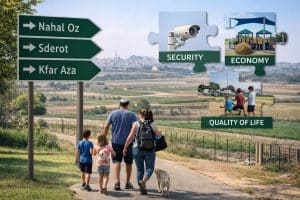 The term Gaza envelope communities refers to the towns, kibbutzim, and moshavim located within close proximity to the Gaza Strip, typically within a range of up to 7 kilometres. These communities occupy one of the most strategically sensitive and emotionally charged regions in Israel. They are not simply rural settlements; they exist at the intersection of agriculture, security policy, ideology, and national identity.
Understanding the reality of Gaza envelope communities requires moving beyond superficial narratives. This is not just a story of resilience or victimhood. It is a complex environment shaped by recurring conflict, state policy decisions, demographic shifts, and economic trade-offs. The people who live there make deliberate choices, often weighing lifestyle benefits against very real risks.
Geography and Strategic Significance
The Gaza envelope communities stretch across Israel’s southern district, bordering the Gaza Strip. This geographic positioning places them directly within range of short-range rockets, mortars, and infiltration attempts. The terrain itself is relatively flat and agricultural, making it both economically viable and militarily exposed.
From a strategic standpoint, these communities serve as a civilian buffer zone. Their presence reinforces Israeli territorial continuity and complicates any potential territorial concessions. However, this also means that civilians are effectively positioned on the front line of a prolonged and unresolved conflict.
This dual role—civilian settlement and strategic asset—creates inherent tension. The state promotes development in the region, yet cannot fully mitigate the risks associated with its location.
Historical Development
The origins of the Gaza envelope communities date back to early Zionist settlement efforts, with kibbutzim and moshavim established to secure agricultural land and create a physical presence in contested areas. After Israel’s disengagement from Gaza in 2005, the dynamics shifted significantly.
Rather than reducing friction, the disengagement altered the nature of the threat. Direct military presence inside Gaza was replaced by border fortification, while attacks increasingly took the form of rockets and tunnels. The Gaza envelope communities became more vulnerable to indirect fire and surprise incursions.
Over time, government incentives encouraged population growth in the region. Subsidised housing, tax benefits, and infrastructure investment were used to attract families. This policy has been partially successful, but it raises a critical question: are people being adequately compensated for the risks they assume?
Daily Life Under Persistent Threat
Living in the Gaza envelope communities involves a routine that would be considered abnormal anywhere else. Air raid sirens, known as “Red Alerts,” provide residents with extremely limited time—sometimes as little as 5 to 15 seconds—to reach shelter.
This reality affects every aspect of daily life. Schools are built with reinforced structures. Public spaces include protected rooms. Children grow up internalising emergency procedures as part of their normal routine.
The psychological impact is significant. Studies and anecdotal reports consistently point to elevated levels of anxiety, particularly among children. While resilience is often highlighted, it would be inaccurate to assume that repeated exposure to threat has no long-term consequences.
At the same time, many residents report a strong sense of community cohesion. This is not accidental. In high-risk environments, social bonds often strengthen as a survival mechanism.
Economic Structure and Limitations
The economy of the Gaza envelope communities is heavily based on agriculture, small-scale industry, and increasingly, remote work. Farming remains central, with crops such as vegetables, grains, and dairy production forming the backbone of local income.
However, economic stability is fragile. Periods of escalation disrupt labour, supply chains, and market access. Fields near the border may become inaccessible. Foreign workers, often essential to agricultural operations, may leave during times of conflict.
Government compensation schemes exist, but they are reactive rather than preventive. Payments typically follow damage rather than offsetting ongoing risk. This creates uncertainty for business owners and limits long-term planning.
There is also an emerging gap between the perceived value of property and its actual market liquidity. While prices may be lower than central Israel, the pool of willing buyers is restricted by security concerns.
Security Infrastructure and Its Limits
The Israeli government has invested heavily in defensive measures around the Gaza envelope communities. These include:
- The border barrier designed to prevent tunnel infiltration
- Iron Dome missile defence systems
- Reinforced buildings and shelters
- Rapid response military units
These systems have reduced casualties and improved response times, but they are not foolproof. Iron Dome, for example, is designed to intercept rockets heading towards populated areas, not to eliminate all incoming fire. Mortars and short-range threats can still bypass defences due to their trajectory and speed.
Security infrastructure mitigates risk; it does not eliminate it. This distinction is often blurred in public discourse but is critical for anyone evaluating the region realistically.
Demographics and Population Trends
The population of the Gaza envelope communities has grown over the past decade, driven by affordability, ideological commitment, and government incentives. Young families, in particular, have been a target demographic.
However, retention is more complicated than recruitment. Some residents leave after experiencing repeated escalations, especially those with young children. Others remain due to economic constraints or strong community ties.
There is also a diversity within these communities that is often overlooked. Not all residents share the same political views or motivations. Some are ideologically driven, while others are primarily seeking affordable housing.
This diversity affects how communities respond to crises and how they perceive government policy.
Education and Youth Experience
Children in the Gaza envelope communities grow up in an environment that blends normalcy with constant preparedness. Schools incorporate security drills into their routine. Classrooms are often located in fortified buildings.
The education system attempts to maintain stability, but disruptions are frequent during periods of escalation. Remote learning becomes necessary, and attendance can drop significantly.
The long-term impact on children is a subject of ongoing debate. Some argue that resilience is developed through exposure. Others point to increased rates of stress-related conditions.
Both perspectives have merit, but neither fully captures the complexity. Resilience and vulnerability can coexist, and policy decisions should account for both.
Real Estate and Housing Dynamics
From a property perspective, the Gaza envelope communities present a paradox. On one hand, prices are significantly lower than in central Israel. On the other, demand is constrained by security concerns.
For buyers, the decision is not purely financial. It involves assessing risk tolerance, lifestyle preferences, and long-term stability. Investors, in particular, must consider liquidity risk. Selling property in these areas during or after a period of conflict can be challenging.
Government subsidies can distort the market by artificially increasing demand. While this supports population growth, it may not reflect underlying market fundamentals.
Anyone evaluating real estate in the Gaza envelope communities needs to factor in not just price per square metre, but also risk-adjusted value.
Community Identity and Social Fabric
One of the defining characteristics of the Gaza envelope communities is their strong social fabric. Many of these areas operate on cooperative models, particularly kibbutzim, where resources and responsibilities are shared.
This structure can provide emotional and practical support during crises. It also creates a sense of belonging that is difficult to replicate in more urban environments.
However, there is a downside. Close-knit communities can also amplify collective stress. When an incident occurs, its impact is not isolated; it is experienced collectively.
This dynamic reinforces resilience but also increases the psychological burden.
Government Policy and Criticism
Government policy towards the Gaza envelope communities is often presented as supportive, but it warrants scrutiny. Incentives for relocation to high-risk areas raise ethical questions.
Is it appropriate to encourage families to move into zones with known security risks? Are compensation and support mechanisms sufficient? These questions are not theoretical; they have direct implications for policy design.
Critics argue that the state relies on civilian presence as a strategic tool without fully internalising the human cost. Supporters counter that these communities are essential for national security and should be strengthened.
Both positions contain valid points, but neither fully resolves the underlying tension between security strategy and civilian welfare.
Media Representation and Public Perception
The portrayal of the Gaza envelope communities in media tends to oscillate between two extremes: heroic resilience and perpetual victimhood. Neither is entirely accurate.
This binary framing simplifies a complex reality. It overlooks economic challenges, internal disagreements, and the diversity of experiences within these communities.
Public perception influences policy and funding decisions. If the narrative is overly simplified, the resulting policies are likely to be equally simplistic.
A more nuanced understanding is necessary for effective decision-making.
Infrastructure, Transport, and Connectivity
Infrastructure in the Gaza envelope communities has improved significantly over the past decade, but it remains uneven when compared to central Israel. Road networks connecting the region to cities like Beersheba and Ashkelon have been upgraded, reducing commute times and making it more feasible for residents to work outside the immediate area.
Public transport, however, is still limited. Bus routes exist but are not always frequent or reliable enough to support a fully mobile workforce. Rail access is improving, particularly through Ashkelon, but many communities still depend heavily on private vehicles. This reliance becomes problematic during security escalations, when road closures or military activity can disrupt movement.
Digital infrastructure tells a more positive story. High-speed internet has enabled a growing number of residents in the Gaza envelope communities to work remotely. This trend accelerated after the COVID-19 period and continues to reshape the local economy. Remote work reduces dependency on local job markets and provides a degree of economic insulation from regional instability. However, it also introduces a dependency on uninterrupted electricity and communications infrastructure, both of which can be vulnerable during conflict.
Healthcare Access and Emergency Response
Healthcare in the Gaza envelope communities operates under constraints that are not typical for most developed regions. Local clinics provide basic services, but more advanced medical care requires travel to larger hospitals in cities such as Beersheba.
Emergency response systems are highly developed due to necessity. Ambulance response times are generally fast, and coordination with military units is tightly integrated. Yet this efficiency should not be mistaken for adequacy. In mass-casualty scenarios or simultaneous incidents, capacity can be stretched quickly.
Mental health services are a critical component of healthcare in the Gaza envelope communities, but they are often under-resourced. The demand for psychological support—particularly following escalations—is consistently high. Government and NGO programmes attempt to fill the gap, but access can be inconsistent depending on the specific community.
Agriculture Under Pressure
Agriculture is both an economic pillar and a vulnerability for the Gaza envelope communities. The proximity to the border means that farmland is often directly exposed to security risks. Fields near the fence may be off-limits during heightened tensions, leading to lost income and disrupted planting cycles.
Water management and irrigation systems are generally advanced, reflecting Israel’s broader agricultural innovation. However, infrastructure can be damaged during conflict, and repairs may not always be immediate.
Labour is another constraint. Many farms rely on foreign workers, who may leave during periods of instability. This creates labour shortages at critical times, particularly during harvest seasons. While mechanisation offers partial solutions, it cannot fully replace manual labour in all types of farming.
The result is an agricultural sector that is technically sophisticated but operationally fragile. Profitability depends not just on market conditions but also on the absence of security disruptions—an assumption that cannot be relied upon.
Business Development and Investment Reality
From an investment perspective, the Gaza envelope communities are often framed as an opportunity due to lower entry costs. This framing is incomplete and potentially misleading.
Lower property prices reflect higher risk. Investors must consider not just purchase price but also long-term appreciation potential, rental demand, and exit liquidity. In stable markets, these variables are relatively predictable. In the Gaza envelope communities, they are not.
There are niche opportunities, particularly in agriculture, renewable energy, and remote-work hubs. Government grants and subsidies can improve initial returns. However, these incentives are policy-dependent and may change over time.
Local entrepreneurship exists but is constrained by market size and risk exposure. Small businesses—restaurants, retail, services—face interruptions during escalations, which directly impact revenue. Insurance can mitigate some losses, but coverage is not always comprehensive.
The bottom line is straightforward: investment in the Gaza envelope communities requires a higher risk tolerance and a longer time horizon. Anyone treating it as a standard real estate or business opportunity is mispricing the risk.
Security Events and Their Economic Aftermath
Each round of escalation has a measurable economic impact on the Gaza envelope communities. Short-term effects include business closures, school shutdowns, and reduced agricultural output. Longer-term effects are more subtle but equally important.
Property markets tend to stall after major incidents. Transactions slow down, and price growth can stagnate or reverse temporarily. Recovery periods vary depending on the severity of the escalation and the broader political context.
Consumer behaviour also shifts. Residents may reduce spending, prioritising savings due to uncertainty. This affects local businesses disproportionately, as they rely on a relatively small customer base.
Government compensation helps stabilise the situation but does not fully offset indirect losses. For example, lost business opportunities, cancelled contracts, and reduced investor confidence are difficult to quantify and therefore often uncompensated.
Social Inequality Within the Region
It would be incorrect to treat the Gaza envelope communities as a uniform entity. There are significant differences between communities in terms of income levels, infrastructure quality, and access to services.
Some kibbutzim have relatively strong financial bases and can invest in better facilities and support systems. Others operate with tighter budgets and are more vulnerable to economic shocks.
Newer residents attracted by affordable housing may have different expectations and lower tolerance for risk compared to long-term residents. This can create internal tensions, particularly when it comes to decisions about staying or leaving after security incidents.
Understanding these internal dynamics is essential. Policy that treats all Gaza envelope communities the same risks misallocating resources and failing to address specific needs.
Role of NGOs and Civil Society
Non-governmental organisations play a significant role in supporting the Gaza envelope communities. These organisations provide services ranging from psychological support to educational programmes and emergency assistance.
Their presence fills gaps left by government systems, particularly in areas like trauma counselling and community rebuilding after incidents. However, reliance on NGOs introduces its own risks. Funding is often inconsistent and can be influenced by external political factors.
Civil society initiatives also contribute to community resilience. Volunteer networks, local leadership, and grassroots organisations help maintain social cohesion. These efforts are valuable but should not be seen as a substitute for systemic support.
Comparison with Other Border Regions
When compared to other border regions globally, the Gaza envelope communities are unusual in the level of state support they receive, but also in the intensity of the threat environment.
For example, border towns in parts of Europe or North America may deal with economic disparities or migration pressures, but they do not typically face regular rocket fire. Conversely, some conflict zones globally experience higher levels of violence but lack the infrastructure and support systems present in Israel.
This comparison highlights a key point: the Gaza envelope communities operate in a hybrid environment. They benefit from advanced infrastructure and state backing, yet remain exposed to persistent security threats. This combination is relatively rare and complicates policy analysis.
Long-Term Strategic Questions
There are several unresolved strategic questions regarding the Gaza envelope communities that go beyond day-to-day management.
First, population policy. Should the state continue to incentivise growth in high-risk areas, or should it shift towards stabilisation rather than expansion?
Second, economic diversification. Can the region develop industries that are less sensitive to security disruptions, or will it remain dependent on agriculture and subsidies?
Third, security doctrine. Are current defensive measures sufficient, or is a fundamentally different approach required to reduce risk?
These questions do not have simple answers, but they are central to the long-term viability of the Gaza envelope communities.
Environmental Considerations
Environmental factors are often overlooked in discussions about the Gaza envelope communities, but they are relevant. Agricultural activity, water usage, and land management all have long-term implications.
Climate conditions in southern Israel include high temperatures and limited rainfall. Efficient water use is essential, and systems like drip irrigation are widely used. However, these systems require maintenance and can be disrupted during conflict.
There is also the issue of land degradation. Repeated disruptions can affect farming practices, leading to soil quality issues over time. Environmental sustainability is therefore linked not just to natural factors but also to security stability.
Future Outlook
The future of the Gaza envelope communities is closely tied to broader geopolitical developments. As long as the conflict with Gaza remains unresolved, the underlying risks will persist.
Technological improvements in defence systems may reduce casualties, but they will not eliminate the threat entirely. Economic diversification could improve stability, but it requires sustained investment and policy support.
Population growth is likely to continue, driven by affordability and incentives, but retention will remain a challenge.
The key issue is sustainability. Can these communities maintain a viable quality of life under current conditions? If not, what adjustments are required—policy, economic, or strategic?
Psychological Resilience and Its Limits
The concept of resilience is frequently used when discussing the Gaza envelope communities, but it deserves closer examination. Resilience is not an unlimited resource. It can be strengthened, but it can also be depleted.
Repeated exposure to stress without adequate recovery periods can lead to burnout, even in tightly knit communities. While many residents develop coping mechanisms, these are not uniformly effective.
Policy discussions often highlight resilience as a strength, which it is. However, over-reliance on this concept can obscure the need for structural solutions. Psychological resilience should complement, not replace, effective policy and security measures.
Conclusion: Expansion vs Sustainability
Extending the analysis of the Gaza envelope communities, the central tension between expansion and sustainability becomes increasingly difficult to ignore when viewed through a long-term lens. Growth in these areas has been actively encouraged through a combination of financial incentives, infrastructure investment, and national messaging aimed at reinforcing civilian presence along a strategically sensitive border. However, growth alone does not equate to stability. Increasing population numbers, expanding housing developments, or improving transport links may create the appearance of progress, but they do not address the underlying structural risks tied to geography and security exposure. In fact, in some respects, continued expansion may intensify the challenge by increasing the number of civilians directly exposed to recurring threats. This raises a critical issue: whether current policy is optimising for visible growth rather than sustainable living conditions.
A genuinely sustainable model for the Gaza envelope communities would require alignment between three core pillars: security, economic stability, and quality of life. At present, these pillars are not fully aligned, and the gaps between them create ongoing instability. Security measures, while advanced, remain fundamentally defensive and reactive, reducing harm but not eliminating risk. Economic incentives, including subsidised housing and tax benefits, may attract residents, but they do not guarantee long-term retention or economic independence. Quality of life, while supported by strong community structures, is consistently affected by disruption, uncertainty, and psychological strain. Improvements in one of these areas are frequently offset by weaknesses in another, resulting in a system that functions but does not reach equilibrium.
If current trends persist, the Gaza envelope communities are likely to remain viable in a narrow, technical sense, but structurally fragile. Viability in this context does not imply that these communities offer stable or predictable living conditions by broader national standards; it simply means that they continue to exist and operate. Fragility, however, indicates that this existence is highly sensitive to external shocks, particularly security escalations. Each round of conflict exposes underlying weaknesses, whether in infrastructure resilience, economic continuity, or psychological endurance. This creates a cyclical pattern in which periods of relative calm are followed by disruption, preventing the development of long-term stability.
The challenge for policymakers is therefore not merely to support these communities, but to reduce their structural fragility without undermining their strategic and social value. This is inherently complex. Strengthening security infrastructure may reduce immediate risk, but it does not change the underlying threat environment. Expanding economic incentives may sustain population levels, but it can also distort market signals and obscure the true cost of living in a high-risk area. Reinforcing community networks may improve resilience, but it cannot fully offset the cumulative effects of prolonged exposure to stress. Each intervention addresses part of the problem, but none resolves it in isolation.
Addressing this imbalance requires more than incremental improvements or reactive policy adjustments. It demands a reassessment of foundational assumptions, particularly regarding how risk is distributed and who ultimately bears its cost. At present, a disproportionate share of that risk is absorbed by civilians living in the Gaza envelope communities, often in exchange for incentives that may not fully reflect long-term exposure. A more sustainable approach would involve not only enhancing protective measures but also rethinking the broader strategic framework that places civilian populations in such close proximity to ongoing conflict dynamics.
Ultimately, the Gaza envelope communities represent one of the most complex living environments in Israel, shaped by an interplay of geography, security policy, economic constraints, and human resilience. Any serious analysis must recognise both their strengths and their limitations. These are not merely symbolic frontiers or narratives of endurance; they are functioning societies operating under continuous pressure. The central question is not whether these communities are resilient—they clearly demonstrate that they are—but whether the current model can sustain acceptable living conditions over the long term. If it cannot, then the focus must shift from maintaining the status quo to implementing structural changes that better balance security, economic viability, and quality of life. Ignoring this question does not remove the underlying risks; it simply delays the need to confront them.
Israel Homes Is a Guide to Finding, Understanding, and Buying Property in Israel